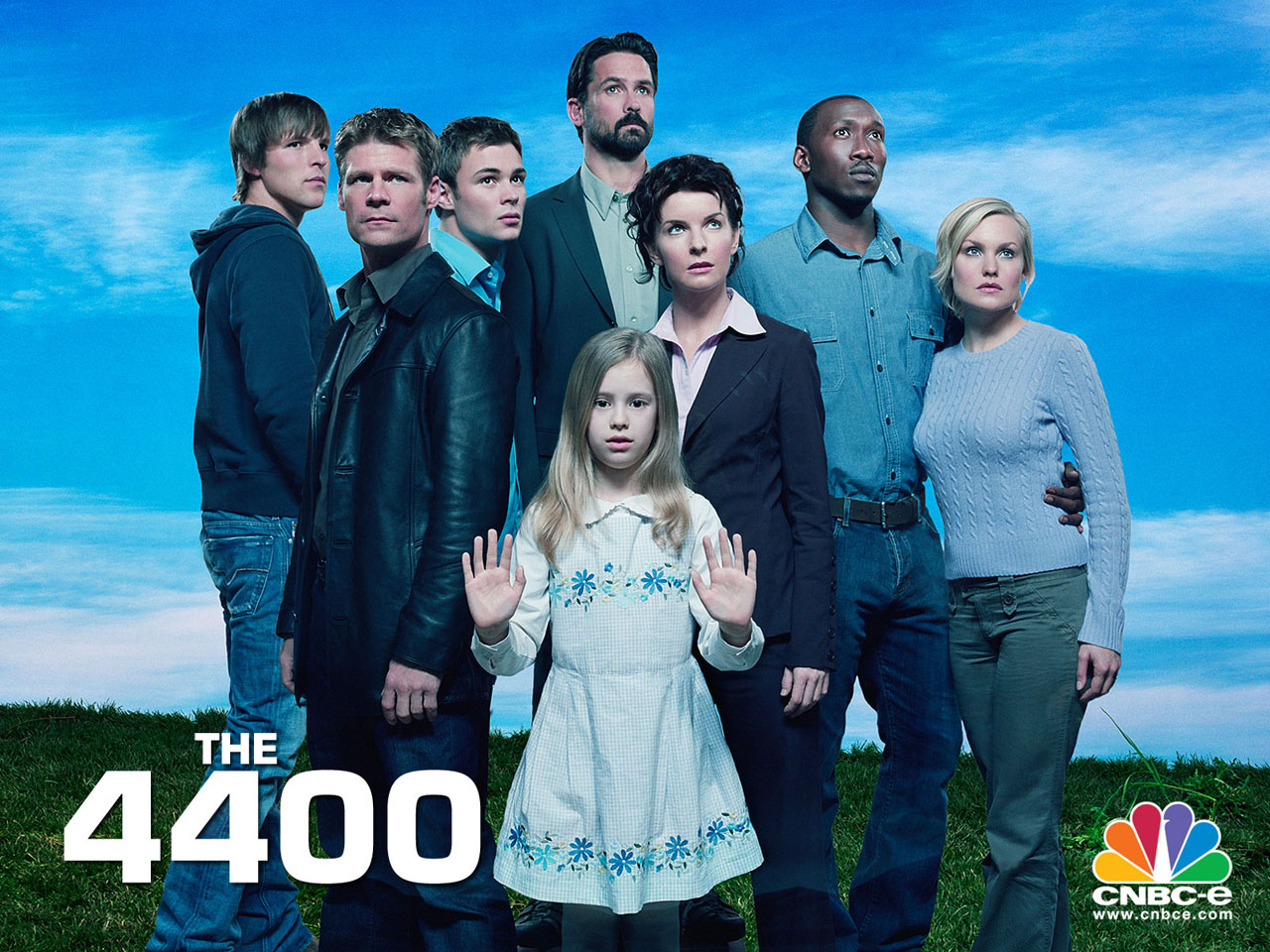
The battle lines are clearly drawn. There are a group of positives living in Promise City following the leadership of Jordan Collier, another group living in the 4400 center following the lead of Shawn Farrell, who is determined to take a moderate approach, the NTAC agents,and now we have the marked, people from the future who are determined to ensure that the 4400 fail in their mission. Season four is the last season of The 4400 and unfortunately, it ends on a cliffhanger. It left us with questions like does Tom take the shot and gain a power? Will Shawn and Collier reconcile and work together? Has the city of Seattle completely separated itself from the US and will the boundaries spread? Has the future truly been altered? How will the marked in positions of power react and will they be able to counter Collier's movement? It's terribly sad that this series ended on a cliffhanger. I have however learned that there have since been books published to give the fans some closure.
Despite it's problems, I really enjoyed The 4400 and was sad when I had reached the end. The acting, especially in this last season was truly amazing and despite all of the sci-fi elements, The 4400 remained primarily about relationships. For me, that is the mark of something engaging.
The 4400 continued to have a problem with gender. The largest problem by far was Isabelle Scary baby. Isabelle Scary Baby had her powers removed by her father Richard because of the threat she posed. While this makes sense for stories reasons, it also amounts to disempowering a female character. The 4400 then doubled down on this by having Richard force Isabelle Scary Baby to return to the 3 year old child she chronically was. This amounts to literally infantalizaation. Sure, authors can create a justification for these actions but that does not mean that there aren't serious gender implications that are concerning. And in a final act of the destruction, Isabelle Scary Baby, she sacrificed herself to save Tom and Collier. On one hand, this amounted to the first independent decision Isabelle Scary Baby had made in four seasons but it also meant the surviving regular cast member who was a woman of colour, sacrificed herself to save a two White men. The gender and racial dynamics at play with this are awful. In the end, despite her power, these two men were worth more than Isabelle Scary Baby's life. Isabelle Scary Baby wasn't the chosen one because that role was reserved for White men and in the end, she was nothing more than the bringer of destruction.
This season, Tom got a new boss. Meghan Doyle at first appears to be an active boss, keeping Tom under a tight reign not because she is his babysitter like Nina but because she is his boss. Unfortunately, Meghan Doyle becomes Tom's lover and no longer acts as his superior, though she is technically still his boss. This is yet another element of disempowering women that The 4400 seems to adore. This is further complicated by the disappearance of Alana. The 4400 spent a lot of time convincing the audience that the relationship between Tom and Alana was solid because in the fantasy world Alana created, Tom and Alana lived as a married couple for eight years. This should mean that her sudden disappearance would cause Tom to expend a great deal of time and energy looking for her. Unfortunately, this is not the case and Alana is quickly replaced by Meghan, thus making Alana disposable once again. When Tom and Meghan first sleep together she makes it clear that it is a one time occurrence but quickly ends back in his bed. It reads as though women aren't capable of one night stands or at least that "good girls" don't engage in that kind of behaviour.
Even one off episodes like Audrey Parker's Come and Gone (S4, Ep.3) presented a problem where gender is concerned. After taking a shot promicin, Audrey developed the ability of astral project from her body. Audrey placed a diary online detailing her experiences with her powers but it seemed so full of regret. She wrote about living a life of no compromise, yet it was filled with regret for not marrying and having babies and this leds to Audrey's lament of being alone. When we match this incident to the fact that Diana went from being a fiercely independent single by choice woman, to someone who leaped to adopt a child and that explained her singleness by consistently choosing the wrong man, it suggests that the single woman is destined for misery and isolation. Women on The 4400, must be coupled and at the very least striving to achieve motherhood to be happy.
This season, Tom got a new boss. Meghan Doyle at first appears to be an active boss, keeping Tom under a tight reign not because she is his babysitter like Nina but because she is his boss. Unfortunately, Meghan Doyle becomes Tom's lover and no longer acts as his superior, though she is technically still his boss. This is yet another element of disempowering women that The 4400 seems to adore. This is further complicated by the disappearance of Alana. The 4400 spent a lot of time convincing the audience that the relationship between Tom and Alana was solid because in the fantasy world Alana created, Tom and Alana lived as a married couple for eight years. This should mean that her sudden disappearance would cause Tom to expend a great deal of time and energy looking for her. Unfortunately, this is not the case and Alana is quickly replaced by Meghan, thus making Alana disposable once again. When Tom and Meghan first sleep together she makes it clear that it is a one time occurrence but quickly ends back in his bed. It reads as though women aren't capable of one night stands or at least that "good girls" don't engage in that kind of behaviour.
Even one off episodes like Audrey Parker's Come and Gone (S4, Ep.3) presented a problem where gender is concerned. After taking a shot promicin, Audrey developed the ability of astral project from her body. Audrey placed a diary online detailing her experiences with her powers but it seemed so full of regret. She wrote about living a life of no compromise, yet it was filled with regret for not marrying and having babies and this leds to Audrey's lament of being alone. When we match this incident to the fact that Diana went from being a fiercely independent single by choice woman, to someone who leaped to adopt a child and that explained her singleness by consistently choosing the wrong man, it suggests that the single woman is destined for misery and isolation. Women on The 4400, must be coupled and at the very least striving to achieve motherhood to be happy.