- Home
- About Us/Policies
- Book Reviews
- TV Series Reviews
- Other Reviews
- Discussions & Musings
- Interviews & Podcasts
- Fangs Lexicon
Friday, June 17, 2011
Wednesday, June 15, 2011
The Iron Druid Chronicles - Hexed by Kevin Hearne
Hexed is the second book in the Iron Druid Chronicles by Kevin Hearne. If you are interested, you can check out my thoughts on Hounded, the first book here. Let me start by saying that just like Hounded, you should probably buy two copies of Hexed, one for you and another to give to your friends. Hearne has proven that he is an excellent storyteller and someone to most definitely keep your eye on.
As with Hounded, Hexed is extremely heterosexist and able body centric. The erasure is absolutely complete; however, unlike other books in this genre, there is no homophobic or disableist language. The characters are again largely White, though the Native American trickster Coyote and an Indian witch do make a very interesting appearance. I must admit that I was worried when Coyote made his appearance, because he is known to be a trickster, and few writers have the talent to pull off a decent portrayal, but Hearne hits it out of the ballpark, as well as making great reference to the near genocide of First Nations people, thus making the book political as well. This was not simply inclusion for the sake of cookies, but inclusion meant specifically to challenge racial privilege. As we have discussed many times on the podcast, quite often characters of colour are included in the urban fantasy genre, they are devoid of cultural markers, or are written based in stereotypes, thus making them cardboard cutouts when juxtaposed to either the protagonists, or other characters in the story.
Labels:
5 Fangs,
book review,
Elemental Witches,
fae,
Hexed,
Kevin Hearne,
mythology,
occult,
urban fantasy,
vampires
Monday, June 13, 2011
Fangs for the Fantasy Podcast - Episode 19
This week we discuss Yamsmine Galenorn's "Witchling", first book of the Sisters of the Moon series as well as Anya Bast's Elemental Witches series, Sherrilyn Kenyon's Fantasy lover - first book in the Dark Hunter series, as well as touching on Kevin Hearne's Iron Druid chronicles and Christopher Moore
And where or not certain authors write like a drunken monkey as well as discussing the value of Urban Fantasy in people's views
Sunday, June 12, 2011
Anya Bast - Witch Fury
So I’ve finished Anya Bast book 4 and with it the entire series (it felt like an ending, I don’t think she could write a book in the same series though I know she’s written others)
And there was LESS sex. Still a lot of sex, but less. I was actually glad of this, I’ve always said that Anya Bast actually has a great world and a great story if she’d only cut down on all the excessive shagging. But without the endless shagging other annoyances became apparent - the tropes were annoying – big strong man must tell you what to do to protect you, oh delicate petal of womanhood. But there’s some other stuff that bugs me, worst of all – the plot doesn’t work.
I thought book 3 was bad, with them deciding that the best way to keep Claire safe was to take her on a road trip to avoid the teleporting demons who can travel anywhere in the world in a second rather than using the coven’s overwhelming numbers, magic and copper weapons. But book 4? Ugh.
For reasons unknown our fire witch Sarafina gets a “feeling” that something important is somewhere and goes wandering and *gasp* so there is! Can there be a weaker, more pathetic way to move the plot forward than to have the character do random crap because “they got a feeling”? NB in no way shape or form are fire witches psychic… so why? How?
And there was LESS sex. Still a lot of sex, but less. I was actually glad of this, I’ve always said that Anya Bast actually has a great world and a great story if she’d only cut down on all the excessive shagging. But without the endless shagging other annoyances became apparent - the tropes were annoying – big strong man must tell you what to do to protect you, oh delicate petal of womanhood. But there’s some other stuff that bugs me, worst of all – the plot doesn’t work.
I thought book 3 was bad, with them deciding that the best way to keep Claire safe was to take her on a road trip to avoid the teleporting demons who can travel anywhere in the world in a second rather than using the coven’s overwhelming numbers, magic and copper weapons. But book 4? Ugh.
For reasons unknown our fire witch Sarafina gets a “feeling” that something important is somewhere and goes wandering and *gasp* so there is! Can there be a weaker, more pathetic way to move the plot forward than to have the character do random crap because “they got a feeling”? NB in no way shape or form are fire witches psychic… so why? How?
Saturday, June 11, 2011
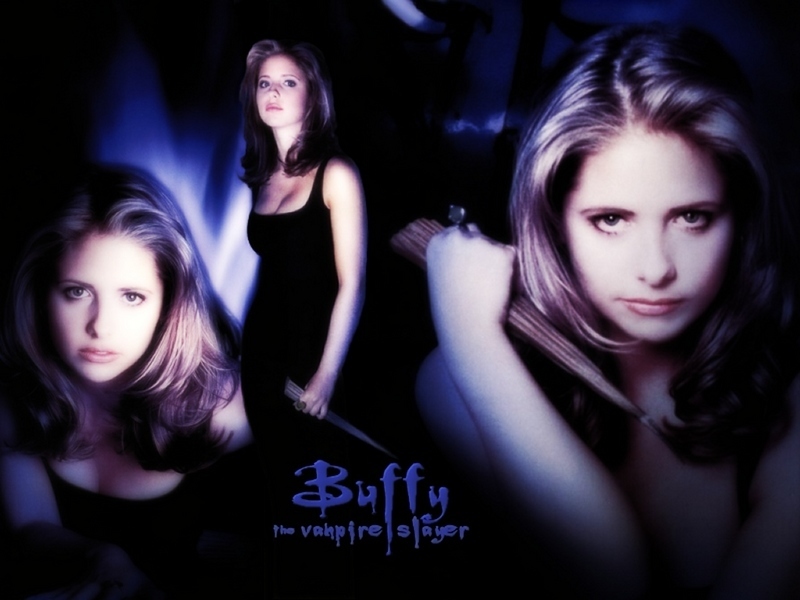
Thoughts On Season Three of Buffy The Vampire Slayer
As I mentioned earlier, for the purposes of a project that I am working on, I have been compelled to watch all seven seasons of Buffy the Vampire Slayer. I didn’t watch Buffy when it was on the air, so my impressions are completely fresh.
I had hoped by season three that Whedon would have given up on the teen angst however, he intensified it. I don’t understand how people could find the whole Buffy and Angel love each other, but can never be together theme in the least bit compelling. When Angel finally walked away at the end of the season, I was filled with a huge sense of relief. Even Spike the so-called bad calculating vampire returned to whine because Drusilla left him. For a show that seems highly dependent on relationships, there is little growth and a triple helping of angst.
The good girl/bad girl binary that was a theme for much of the season and it was highly anti-woman. Though both Buffy and Faith are both White women, Buffy the blonde (the typical manifestation of the girl next door) was cast as good to Faith’s darker bad. We also had two different Willows. The Willow from the second dimension was a power hungry, sadistic vampire, who was brimming with self confidence. It would seem that to be respected, liked or even loved, a woman dare not step out of the sickeningly sweet good girl paradigm. When Oz and Cassandra found Xander and Willow kissing, Willow’s solution was to offer Oz her virginity. This of course was to prove her true love for him for daring to sexually experiment.
I had hoped by season three that Whedon would have given up on the teen angst however, he intensified it. I don’t understand how people could find the whole Buffy and Angel love each other, but can never be together theme in the least bit compelling. When Angel finally walked away at the end of the season, I was filled with a huge sense of relief. Even Spike the so-called bad calculating vampire returned to whine because Drusilla left him. For a show that seems highly dependent on relationships, there is little growth and a triple helping of angst.
The good girl/bad girl binary that was a theme for much of the season and it was highly anti-woman. Though both Buffy and Faith are both White women, Buffy the blonde (the typical manifestation of the girl next door) was cast as good to Faith’s darker bad. We also had two different Willows. The Willow from the second dimension was a power hungry, sadistic vampire, who was brimming with self confidence. It would seem that to be respected, liked or even loved, a woman dare not step out of the sickeningly sweet good girl paradigm. When Oz and Cassandra found Xander and Willow kissing, Willow’s solution was to offer Oz her virginity. This of course was to prove her true love for him for daring to sexually experiment.
Labels:
Buffy the Vampire Slayer,
Joss Whedon,
occult,
television,
urban fantasy
Friday, June 10, 2011
An Important Message From True Blood’s Joe Manganiello
I suppose this is the point where I publicly declare my True Blood addiction.
Witchling (Otherworld Series #1) by Yasmine Galenorn
Our reading list is long and legendary, and one series that has been on our to read list for a long time is the “Sisters of the Moon “ series by Yasmine Galenorn. So I have finally got round to reading “Witchling”
Witchling introduces us to 3 sisters, Camille a faerie witch, Delilah, a werecat and Menolly, a vampire. Agents for the OIC (a kind of faerie combo police/diplomat/secret agent corps) they are on Earth (Seattle to be exact) doing their job to the best of their slightly clumsy, half-human abilities. They work closely with the local police to help solve supernatural crime and navigate the world as alien, magical beings.
There job becomes several times harder when the Demons of the Subterranean world are stirred up, a threat to both the Otherworld (from where the fae come from) and Earth. And worse, the forces of Otherworld seem to be descending into chaos, just when they need to be at their strongest – leaving the sisters very much alone to face the threat.
Let’s start with some good points. And yes, you know this review is going to end up trashing it by the fact I’m making myself start with good points, sorry guys it’s not going to be a lovey review.
Labels:
2 fangs,
book review,
occult,
Otherworld Series (YG),
urban fantasy,
witchling,
yasmine galenorn
Charlaine Harris Talks About the Difference Between True Blood and Sookie Stackhouse the Southern Vampire Series
<object id="wsj_fp" width="512" height="363"><param name="movie" value="http://s.wsj.net/media/swf/main.swf"></param><param name="allowFullScreen" value="true"></param><param name="allowscriptaccess" value="always"></param><param name="flashvars" value="videoGUID={F624CF99-4C6A-45E1-A898-A7C01415DE2B}&playerid=1000&plyMediaEnabled=1&configURL=http://wsj.vo.llnwd.net/o28/players/&autoStart=false" base="rtmpt://wsj.fcod.llnwd.net/a1318/o28/video"name="main"></param><embed src="http://s.wsj.net/media/swf/main.swf" bgcolor="#FFFFFF"flashVars="videoGUID={F624CF99-4C6A-45E1-A898-A7C01415DE2B}&playerid=1000&plyMediaEnabled=1&configURL=http://wsj.vo.llnwd.net/o28/players/&autoStart=false" base="rtmpt://wsj.fcod.llnwd.net/a1318/o28/video" name="main" width="512" height="363" seamlesstabbing="false" type="application/x-shockwave-flash" swLiveConnect="true" pluginspage="http://www.macromedia.com/shockwave/download/index.cgi?P1_Prod_Version=ShockwaveFlash"></embed></object>
Charlaine Harris the author of the Southern Vampire series sits down with an interviewer from the Wall Street Journal to talk about the differences between the books and the series.
Below you will find a transcript for those unable to view the video.
Interviewer: Over the past few years, pop culture has seen a resurgence in the super natural, Vampires, werewolves fairies, witches, audiences can’t get enough of anything that has a touch of the paranormal. I’m here with a definitive contributor to that revival, Charlaine Harris, author of the best selling Sookie Stackhouse novels which formed the basis of the HBO hit show True Blood. Ms. Harris just had her most recent book in the Sookie series come out this May. Charlaine, that you so much for being here.
Charlaine Harris: Oh well thank you for inviting me
Interviewer: So congratulations on the publication of the most recent book. Tell us a little bit about it. We see that Sookie is drawn further into vampire politics, werewolf politics, what can you tell us?
Charlaine Harris: Poor Sookie, I’m so mean to her. Well of course it’s really more of the same adventures she’s been on though in this books she reaches kind of a moral nadir when she has to decide whether or not to act on her practical conviction that is necessary to dispose of someone who is trying to kill her and her vampire lover Eric. Whether that is the right thing to do or not, she feels compelled to do it.
Interviewer: What number book is this?
Charlaine Harris: This is eleven.
Interviewer: This is eleven, so there are multiple characters who Alan Ball simply does not have time to put into his.
Charlaine Harris: Right
Interviewer: Are there any you wish had made it onto the tv series?
Charlaine Harris: Well, I uh yes. Well saying that, I don’t know what season four will bring for Allan. I had always hoped to see Sookie’s great grandfather Niall on the screen and we may yet. We may yet.
Interviewer: Yeah, the show has been flirting with the fairy world.
Charlaine Harris: Yeah
Interviewer: So will see if that comes to pass. Now especially in the book the relationship between … so back when I started reading the books, I immediately said that Sookie and Eric need to be together. I have no patience for Bill
Charlaine Harris: (laughs)
Interviewer: And then seeing it on screen, I think a lot of readers have transferred those hopes to the screen and we haven’t really seen a relationship bloom between them yet. Are you anxious for the series to catch up with the books in that regard?
Charlaine Harris: No I’m not, because I have no idea what Allan’s goal is. I’m sure he has one. He’s taking things at a different pace and he is introducing certain elements earlier than I did, so I’m gonna wait and see what he does. He’s a great storyteller. He may not be telling the same story I am, so we’re just going to wait and see.
Interviewer: Let’s talk a little bit about - I mean the natural disaster that just occurred in Joplin for example. I know the book makes very good use of incorporating Katrina and its after effects and I was fascinated because New Orleans has this wonderful magical lore and I wanted to know, the intersection of modernity and folklore for you and how are you going about doing that with Katrina and also with other elements like Bill or Eric using a cell phone for example? I mean the collision of modernity is just really fun.
Charlaine Harris: You know, I thought that was the most interesting part of writing these books, ancient creatures having to constantly adapt because heretofore they’ve had to remain invisible to the human world. So that means that they have to constantly adapt. They have to change their language, they have to change their clothes, they have to change their technological knowledge to keep up with the world so that they can blend in. Now that’s so necessary in some ways and yet it is more urgent in others. If they want to be citizens of the modern world they have to compete successfully with humans for business and other things. They have to adapt human tactics.
Interviewer: Right, especially in an instance of a natural disaster. That seems to effect queens
Charlaine Harris: that’s right
Interviewer: and vampire servants equally.
Charlaine Harris: Equally it causes disaster to the vampire structure of Louisiana as well. I didn’t really feel that I could write a book about Louisiana without mentioning Katrina. That would have been a terrible disservice to the people of Louisiana even though it pegged the series down in time.
Interviewer: Right
Charlaine Harris: Which I had been trying not to do.
Below you will find a transcript for those unable to view the video.
Interviewer: Over the past few years, pop culture has seen a resurgence in the super natural, Vampires, werewolves fairies, witches, audiences can’t get enough of anything that has a touch of the paranormal. I’m here with a definitive contributor to that revival, Charlaine Harris, author of the best selling Sookie Stackhouse novels which formed the basis of the HBO hit show True Blood. Ms. Harris just had her most recent book in the Sookie series come out this May. Charlaine, that you so much for being here.
Charlaine Harris: Oh well thank you for inviting me
Interviewer: So congratulations on the publication of the most recent book. Tell us a little bit about it. We see that Sookie is drawn further into vampire politics, werewolf politics, what can you tell us?
Charlaine Harris: Poor Sookie, I’m so mean to her. Well of course it’s really more of the same adventures she’s been on though in this books she reaches kind of a moral nadir when she has to decide whether or not to act on her practical conviction that is necessary to dispose of someone who is trying to kill her and her vampire lover Eric. Whether that is the right thing to do or not, she feels compelled to do it.
Interviewer: What number book is this?
Charlaine Harris: This is eleven.
Interviewer: This is eleven, so there are multiple characters who Alan Ball simply does not have time to put into his.
Charlaine Harris: Right
Interviewer: Are there any you wish had made it onto the tv series?
Charlaine Harris: Well, I uh yes. Well saying that, I don’t know what season four will bring for Allan. I had always hoped to see Sookie’s great grandfather Niall on the screen and we may yet. We may yet.
Interviewer: Yeah, the show has been flirting with the fairy world.
Charlaine Harris: Yeah
Interviewer: So will see if that comes to pass. Now especially in the book the relationship between … so back when I started reading the books, I immediately said that Sookie and Eric need to be together. I have no patience for Bill
Charlaine Harris: (laughs)
Interviewer: And then seeing it on screen, I think a lot of readers have transferred those hopes to the screen and we haven’t really seen a relationship bloom between them yet. Are you anxious for the series to catch up with the books in that regard?
Charlaine Harris: No I’m not, because I have no idea what Allan’s goal is. I’m sure he has one. He’s taking things at a different pace and he is introducing certain elements earlier than I did, so I’m gonna wait and see what he does. He’s a great storyteller. He may not be telling the same story I am, so we’re just going to wait and see.
Interviewer: Let’s talk a little bit about - I mean the natural disaster that just occurred in Joplin for example. I know the book makes very good use of incorporating Katrina and its after effects and I was fascinated because New Orleans has this wonderful magical lore and I wanted to know, the intersection of modernity and folklore for you and how are you going about doing that with Katrina and also with other elements like Bill or Eric using a cell phone for example? I mean the collision of modernity is just really fun.
Charlaine Harris: You know, I thought that was the most interesting part of writing these books, ancient creatures having to constantly adapt because heretofore they’ve had to remain invisible to the human world. So that means that they have to constantly adapt. They have to change their language, they have to change their clothes, they have to change their technological knowledge to keep up with the world so that they can blend in. Now that’s so necessary in some ways and yet it is more urgent in others. If they want to be citizens of the modern world they have to compete successfully with humans for business and other things. They have to adapt human tactics.
Interviewer: Right, especially in an instance of a natural disaster. That seems to effect queens
Charlaine Harris: that’s right
Interviewer: and vampire servants equally.
Charlaine Harris: Equally it causes disaster to the vampire structure of Louisiana as well. I didn’t really feel that I could write a book about Louisiana without mentioning Katrina. That would have been a terrible disservice to the people of Louisiana even though it pegged the series down in time.
Interviewer: Right
Charlaine Harris: Which I had been trying not to do.
Subscribe to:
Posts (Atom)