Showing posts with label margaret atwood. Show all posts

Tuesday, July 17, 2018

The Handmaid's Tale, Season Two, Episode Thirteen

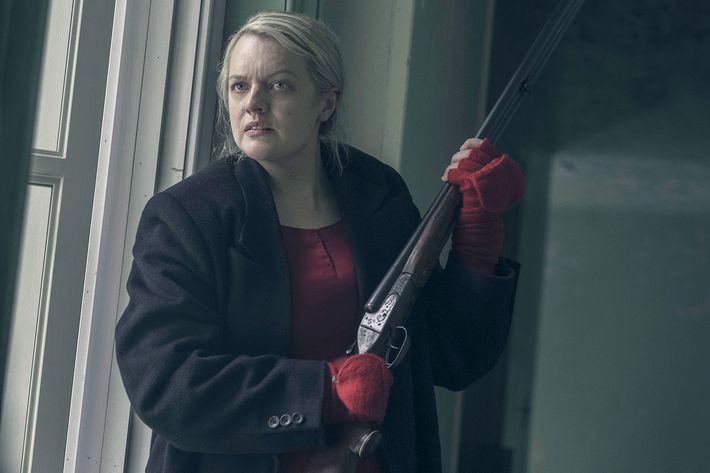
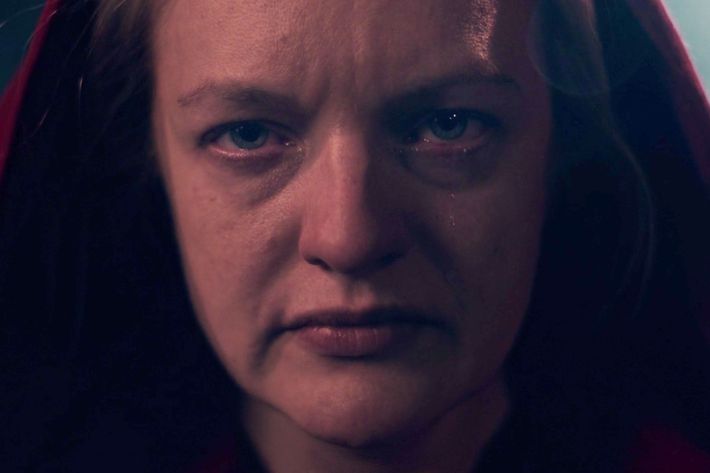
Image result for the handmaid's tale season 2

There are so many things to unpack in this season finale.  Eden's death is still resonating throughout the Gilead. The task of gathering up her few belongings falls to June and Rita. Because of her so-called sins, Eden won't even be given a proper burial and will instead be hung on the wall and then fed to animals in order to reduce waste. Don't you just love Gilead's idea of environmentalism? Rita in particular is troubled by Eden's death, feeling guilt that she never had a kind word to say to the young woman. The truth is, in her position as a Martha, there's little Rita really could have done to make things better for Eden anyway. 

When going through her things, June finds Eden's bible filled with notes, hidden between some clothing.  June decides to share this with Serena who is quick to dismiss this discovery as truly unimportant, claiming that her daughter (read kidnapped child) will be raised to follow the rules of God. It's left for June to point out the obvious, if her daughter is not allowed to read, how will she know what the rule of God truly is? It's a salient point which hits the mark expertly. It's a reminder that Gilead isn't really about Christianity at all because if that were the case, the bible wouldn't be forbidden to women. June shouldn't have had to make this point to Serena.  It should have been obvious to a woman who is so intelligent that the trap she helped create has ensnared her and her descendants.

This season, the writers have worked hard to make Serena more dimensional by showing her frustration with the system she has found herself in, as well as the labour Serena does to maintain Gilead. This is why Serena was shown mobilizing the mothers of girls to petition the council in order that their daughters would grow up and read the word of God. It quickly became apparent from the dismissive attitude that Fred displayed that they were only interested in patronising the women.  Serena upped the ante when she actually read from Genesis to prove the goodness of the word of God, causing some of the women who came in support of her to leave.  Instead of reinforcing Serena's point, reading actually was deemed threatening to the all male council and so they responded by removing her pinkie finger.  Fred actually stood by and watched as his wife was taken off to be maimed by two Guardians. 

I know that Serena's awakening is meant to evince sympathy but there is more here than being careful what one wishes for. Serena worked hard to bring Gilead into being and she has supported the system every step of the way, including playing the dutiful wife on Fred's trip to Canada.  There's also the fact that she's been actively cruel to June, and even went as far as to hold June down so that Fred could rape her and hopefully induce labour.  On every level that you can think of, Serena is a horrible person and yet the writers seem convinced on suggesting that a woman in June's situation would have empathy for her oppressor.  It makes sense to me that June would attempt to push Serena to thwart the rules for Holly's sake but to attempt to comfort Serena when she gets what is coming to her is just a leap I am unwilling to make. There is no difference between Serena and Fred in terms of their culpability and I am unwilling to go along for the ride and believe that by virtue of her gender that Serena is even remotely a sympathetic figure.  

It seems that every step of the way that the writers are determined to give us scenes with a redemption arc for Serena.  Having Serena stop June when she is about to escape with Holly and simply say a teary goodbye to the child without raising the alarm because she has finally decided to act in the best interest of the baby, is meant to once again cast Serena as moral and good. I don't believe that Serena would have let that baby go without a fight having done so much to ensure her conception and with the sure knowledge that having a baby elevates her family in Gilead society.  

The narrative clearly has to move beyond the Atwood novel, not only because the writer are out of source material but one can only show maimed and brutalised women for so long before it becomes pointlessly gratuitous. This means some real change needs to happen in Gilead. We've watched as the writers teased us with June's escape attempt only to be brought back to the Waterford home. Then we had June giving birth to Holly, being sent back to the red center and of course, ending up in the Waterford home.  This time, June has a chance to escape when she is told by Rita that through the Martha network they can both June and the baby out. Nick even brandishes a gun at Fred when Fred figures out what is going on to stop Fred from raising the alarm.

Thursday, July 12, 2018

The Handmaid's Tale, Season Two, Episode Twelve: Postpartum

Image result for the handmaid's tale

Postpartum marks the penultimate episode of season two.  When last we left June, she had just given birth alone after briefly reuniting with Hannah and watching Nick get dragged away by a pair of Guardians. Just as Serena promised, June has been seperated from her daughter and is once again in the Red Centre awaiting a new position. Any mom will tell you that labour and delivery is just the start of the journey and that the real work begins when you are handed this tiny human who wants attention all of the time. It's tiring, it's stressful but these moments are filled with the most selfless love. This is an experience June is being robbed of and instead, she's being treated like a dairy cow, forced to express milk for Holly every three hours. June's only reward is a bran muffin from eager couples looking to have her become their handmaid because she's delivered a healthy child.

In Gilead, parenthood, particularly motherhood, grants a certain kind of status. It's no surprise that once he had kidnapped June and Nick's child that Fred was promoted and moved into a bigger office. Fred being petty as fuck of course has to force Nick to hang a family portrait.  Even as he repeatedly tells Nick that he's going to go far, it's clear that it's Fred's objective to point out to Nick that though Nick is the biological father, Holly is his and will always be his. Even when Fred isn't being physically abusive, a strong streak of cruelty runs through him.  When Fred isn't busy pissing on a bush to mark his territory, he alternates between coming onto June, expecting to be rewarded for facilitating her brief reunion with Hannah, and dangling Holly in front of June to stimulate milk production. On every level that you can think of, Fred is a despicable human being. 

I know that there are those who have issues with the ways in which The Handmaid's Tale deals with motherhood, and I can imagine that this episode in particular would cause some consternation. The fact of the matter is that June didn't give up Holly for adoption, just as Janine didn't give up her daughter for adoption. These children have quite literally been kidnapped after being force breed. The idea that a baby needs its mother resonates strongly and I would argue rightfully so given the circumstances of the handmaids.  The wives who participate in child theft and raise them as their own are complicit in a horrible system, regardless of whether or not they love the child as in the case of Serena, or despise the child as in the case of Mrs. Putnam. It's torture to force rape and pregnancy on women and then deny them access to said child and even the title of mother. I think when examining the issue of motherhood re biological versus adoptive, it's important to remember the circumstances of reproduction in the Gilead. There are many aspects of The Handmaid's Tale which are analogous to the real world but not everything translates well. 

One of the most disturbing scenes in Postpartum is Serena's attempt to breast feed Holly. Breastfeeding is just such a deeply personal experience and it helps bond mother to child. No matter how much Serena may love Holly, she cannot give the baby what she needs and instead only ends up further frustrating the child to feed her own ego. That Serena withdraws and apologises to the baby shows that she understands that what she did was wrong.  It's absolutely abusive to breast feed another woman's baby without her explicit permission. It's easy to see this scene through the lens of biological mother vs adoptive mother because the emphasis is on the fact that of course Serena is not Holly's mother and this is when the system in which Holly's custody occurs is important to remember. Adoptive mothers can be just as loving as biological mothers which is why Serena loves Holly so much but in this case, Serena is also Holly's kidnapper. 

For quite some time now, Eden has been the looming threat in the Waterford household. Eden snooped through Nick's things and found the letters written by the handmaids. Eden also happened to witness the Handmaids in the store sharing their real names with each other. Eden was also suspicious of the feelings between Nick and June and even wondered if Nick was a gender traitor when he didn't rush to consummate their marriage. I knew that things would come to an end with Eden in a dramatic fashion however, I didn't expect her to run away with Issac after being told by June that she should hold onto love. Eden's death while unexpected was absolutely haunting. Eden was after all raised to be a good Gilead wife and wanted nothing more but to follow the rule of law because she deeply believed in God. If someone like Eden, who was so committed could not survive, what hope is there for any other woman?

Friday, July 6, 2018

The Handmaid's Tale, Season Two, Episode Eleven: Holly

Image result for the handmaid's tale


Though June is clearly the protagonist, this is the first time that Elisabeth Moss has been given nearly an entire episode to carry on her own. Holly is only a success because Moss is an absolutely brilliant actress and it would not surprise me to see just on the strength of this episode, a new Emmy awarded to Moss. Elisabeth Moss has away of infusing June's words with such power and a facial expression can tell hours worth of story.  I simply couldn't imagine this role being played by another actress and if I had any doubt, this episode proves this. 

When last we left June, she had been left alone after Nick had been taken into custody.  At first, June is stunned but she quickly gets into action. I found myself second guessing a lot of June's decisions in this episode until I realised that I was sitting comfortably on my couch and not in any kind of real danger. I really wanted June to take off running but really, how far would she have gotten in the middle of winter without supplies and heavily pregnant? Running would have put her life in even more danger. It's one thing to plan meticulously for months to escape and another to be thrust into a situation where freedom is potentially in your grasp but riddled with so much danger. 

When the Waterfords arrive to search for June, we are treated to one of the few unguarded and honest conversations between the two; like June, we are listening in. Even before Fred beat Serena to assert his power and control, it was clear that the Waterford marriage is absolutely devoid of any love. After everything Serena has been through, she feels betrayed by the very movement she helped build and now, the one thing that she wanted in return - a child, has potentially been ripped from her grasp.  Their search through the house for June is desperate and both worry that a handmaid missing a second time could lead to them both on the wall. Serena blames Fred for raping June and he is quick to point out that this was her idea. Even Serena's wails about a child hold no sway with Fred, who quickly points out that Serena wanted so much more than that and he even goes as far as to assert that June is missing because Serena didn't show her any kindness. The Waterfords play the blame game until it becomes physical, with Fred grabbing Serena by the neck. Realising that they might be well and truly screwed, they decide to return home and try to come up with a cover story.

I wanted June to kill them where they stood. For the first time, she had the chance to hurt them the way that they have hurt her. June struggled with her finger on the trigger but in the end decided not to shoot. I wonder if in that moment, June thought that by killing the Waterfords that she would be as bad as them? I'm fairly certain that this is what the writers wanted us to believe - that June didn't shoot because she didn't want to become a monster. I think that June's failure to act is perhaps the only unrealistic part of the episode. I simply cannot rationalise it given everything that she has been through. June clearly wasn't afraid of missing, so the quandary must have been moral and as a moral problem, her inaction doesn't work.

With the Waterfords gone, the viewer becomes the wolf as it takes in June's fear and frustration. We watch as she races through the house in a panic trying desperately to create an escape plan. First she can't get into the garage and she kicks it viciously. Then she races back to the house to find the keys and along the way stumbles on the little minutia of life. When she does finally find the keys, the garage has the most conspicuous get away cars. Surely, this is a hint as to how powerful the man who is kidnapped and is raising Hannah is. June however is in flight mode and doesn't pause to think about how the car will stand out on Gilead streets that only seem to be driven on by black SUVs. Now it's back to the house to get supplies but when she finally does return to the garage, the doors won't open. June however is not about to be defeated and she starts up the engine and tries to burst through but as powerful as the engine is, it's no match for a garage door that refuses to be open.  Finally, if she can't burst her way out, she tries to dig her way out and it's this that finally defeats June.  The wolf watches June curiously and even howls, signalling its location and June knows that it's time to give up, as the first labour pains hit her. 

Friday, June 15, 2018

The Handmaid's Tale, Season Two, Episode Nine: Smart Power


After being witness to the brutalizaton of Serena by Fred, June has once again lost hope for the future for herself and her child, despite just a few short episodes ago promising her unborn child not to stop fighting.  At this point, June once again believes it to be hopeless to dream about the things she wants. Her depression is interrupted by Rita, who's there to inform her that they've been summoned. Understandably, being called by the commander is something to fear. When they arrive in the office, they are informed that Fred and Serena will be leaving for a few days to go to Canada on a diplomatic mission. To ensure the safety of his household, Fred leaves a young guard named Issac in charge. 

Now that the help has been informed, Fred's next stop is the greenhouse to find Serena.  Having been chastised, Serena is back to doing what is expected by her from the Gilead.  When informed about the potential trip, Serena tries to take a step back explaining that June is in her third trimester and that the baby might need her, but Fred argues that they are making this trip to secure the baby's future.  Fred always refers to the unborn child as male because clearly, masculinity is all that matters in Fred's world. It's in contrast to June who always uses female pronouns for the unborn child. It's crucial to Fred to establish a different view of Gilead because the world rightly believes that women are oppressed and voiceless. Fred wants a good Gilead wife to tell a different story to the world.  It's another reminder of just how monstrous Fred really is and when he reaches for Serena, she visibly flinches and a look of revulsion passes her face. It's clear that Serena is traumatized by what happened but she doesn't have the voice or the safety to be able to say so which is ironic given that she's supposed to show the world that Gilead's women haven't been silenced. 

Rather than confront Fred directly, Serena does what she always does - she takes it on June.  Serena pays a visit to June's room and pretends that June isn't even there as she talks to June's now heavily pregnant stomach.  It's as though Serena believes that by submerging herself in the role she has been forced to play that she can be safe.  As Serena heads for the door, she drops the bomb about June leaving the house as soon as the baby is born. June tries to plead that handmaids are normally allowed to stay with their babies until they are weaned but as far as Serena is concerned, they've all had enough of each other.  June can only meekly responds, "Yes Mrs. Waterford."

Nick is coming along for the trip as security and of course, Eden is there to play the dutiful wife and wish him a safe journey.  Eden hands Nick some chocolate chip cookies she made, saying that this is the first time she's even seen a voucher for actual chocolate. Eden may as well be handing Nick a pile of dog shit for all he cares about her efforts. Nick doesn't even try to pretend that he will miss her while he is gone. June has already warned him about Eden, so Nick better start to take care because as we've already seen with Mrs. Putnam, an angry wife can come with a painful cost. 

It's time for June to head to the market and she is joined by Janine, her shopping partner. Janine is all smiles as she wonders about whether or not Mrs. Putnam will let her see Charlotte again soon.  June clearly doesn't have the heart to be real with Janine, as she talks about how her baby smells like her and that it would be a shame to keep people who smelled the same away from each other. All this talk about baby Charlotte has its effect on June and she tells Janine about her upcoming expulsion from the Waterford home.  This information immediately agitates Janine, causing her to raise her voice as she says that handmaids are supposed to be allowed to stay.  The guard tells the women to be quiet. Janine of course will not be silenced. When Janine is called an unwoman and told once again to be quiet, Janine responds by telling the guard to suck her dick.  The guard responds by hitting Janine cruelly with the butt of his gun, causing her to collapse unconscious on the ground.  June tries to check on Janine but is dragged away by Issac.

Once home, Issac reports that they were unable to get chicken and this concerns Rita because a growing baby needs protein.  As Rita goes through the cupboard to find some beans to replace the chicken, Eden and Issac get a little flirty. Yep, this looks like it's going to be trouble.  Issac turns and orders June to go and lie down but before leaving the kitchen, June asks Rita if she could bring her some warm milk when she gets a chance. 

When Rita delivers the milk, June starts to talk about her wishes for her unborn child and asks Rita about being a Godmother. Rita reminds June that babies don't get baptized in the Gilead, clearly trying to bring the conversation to an end. June talks about wanting kindness for her child and Rita reminds her that she doesn't have any power. Rita reminds June that Issac, who is a 20 year old kid could bash her head in and that no one would care.  June however does not give up and keeps pushing about how this is important for the baby, finally causing Rita to agree to do what she can as tears run down her face. A satisfied June tells her unborn child that she has secured one person for her.  

When Aunt Lydia shows up for a wellness check, June is forced to account for what happened on the shopping trip, taking full responsibility and blaming it on pregnancy hormones. Aunt Lydia agrees that some leeway is possible but that June must remember to follow the rules. June asks if Aunt Lydia has been a godmother and Aunt Lydia brings up her sister's child who didn't survive. Aunt Lydia however is quick to declare that she was not responsible for the death of the child in question.  Somehow, I don't believe her in the slightest. Speaking cautiously, June reveals her fear that in her experience, a man who could hurt a woman could easily hurt a child.  This touches a nerve with Aunt Lydia, who promises that she would never let anything bad happen to a baby. 

In Canada, Luke, Moira and Erin are watching the news and they learn that Fred is coming to Canada. Moira recognises him instantly and is immediately appalled. Luke and Moira head to the refugee center to see what can be done about blocking Waterford's visit, only to be informed that they are guests in Canada and as such don't have the power to interfere. When they try to argue that Waterford is a war criminal,  it's suggested that Moira and Luke lend their voice to the protesters instead.

Sunday, June 10, 2018

The Handmaid's Tale, Season Two, Episode Eight: Women's Work


We've spent a lot of time getting to know Serena through flashbacks this season.  We've learned that as an architect of the Gilead, Serena worked alongside Fred in the hope of bringing about the very same revolution that has trapped her inside the home with her knitting needles.  Not only is Serena trapped, she's been isolated, and unable to form any friendships with the other wives of high ranking officers because the women are actually in competition with each other. Because of the extreme misogyny of the Gilead, Serena has released all of her anger at her situation on the supposed fallen woman in her household - June. 

With Fred incapacitated because of the bombing and Cushing out of the way, that leaves Serena to run a significant part of the Gilead with June's help. The two work side by side in the office with a steady report building between them. They certainly aren't friends but they have become coworkers after a fashion.  Serena writes and June edits, both committing a crime in the eyes of the Gilead.  June even goes as far as to tell Serena that she's a good writer when she offers editing suggestions.  With a pen in hand, the women have started a quiet revolution. June cannot help but notice how happy Serena seems now that she has become a fallen woman like herself but Serena sees herself as just being the helpmate that God ordained women to be, certain that she will be forgiven for her transgressions.  For her part, Serena does admit that she hates knitting and actually, who can blame her? It sounds like torture to be forced to spend hours knitting to pass the time. The unspoken thought is that not only will Fred forgive her, he will thank her and perhaps even desire her again because she will have reminded him of just how capable she is. 

It all comes to an end when Serena announces that Fred will be returning home, eliciting the most dry, "praise be", I think that June has ever uttered. June is not pleased to be forced to line up alongside Eden and Rita to welcome the commander home.  The commander limps in, clearly still feeling the effects of his ordeal and is greeted with a handkerchief from Eden and promise by Rita that she has prepared his favourite foods for supper. Fred pauses to take note that June is looking healthy.  Serena escorts Fred to his study, smiling as she tells him about the work she has prepared for him, as well as a draft of a speech for his trip to Canada.  Fred thanks for Serena for the risks that she took for him and explains that the burden never should have fallen on her shoulders, before escorting Serena to the door and firmly closing it in her face. And just like that, Fred has reasserted his power and tyranny over the women of the household. 

When June returns to her room, she finds a music box and a white rose which are clearly a gift from Serena.  Though no one is in the room, June says, "it was nice working with you too."

Having been forced back into the wife role, Serena decides to visit with the Putnams because baby Angela is deathly ill.  Before leaving, Serena does confide in June, promising to update her when she has more information.  Rita sends June off to do the shopping to replace some items that Eden borrowed which she doesn't expect to be returned. From Rita's acerbic comments, it seems like Eden is working away on Rita's patience with her attempts to be a good wife to Nick. 

June makes her way to the store and runs into Janine who greets were with, "may the force be with you", as a response to June's "Blessed is the fruit". It highlights the absolutely ridiculousness of the Gilead's standard greetings. As they go through their shopping, an excited Janine reveals how happy she is to be here and that at this new assignment, she doesn't have to give blowjobs and only has to do the ceremony.  When Emily hears this, she's quick to comment that there's nothing good about being raped and makes it clear that the only good thing to happen in the Gilead is when the bomb went off. As a parting shot, Emily declares that anyone who helps the Gilead is evil and should burn in hell. June now believes that Emily knows what she has been up to with Serena and questions what she should have done.  June doesn't get to think long because an alarm goes off as an ambulance drives by. The handmaids get on their knees and begin to pray because the ambulance means that a child is in danger.   One of the handmaid's let slip that it's Angela who is sick causing instant panic in Janine. 

June walks a freaking out Janine down the street.  Janine is desperate to see her baby and June calls her stupid but does promise to tell her whatever information that she learns. A guard tries to intervene between the two women and June raises her hand saying that she's got this. I cannot imagine June making the decision to speak a man, in particular a guard in this fashion before her partnership with Serena.  As June tries to calm Janine, once again a guard tries to come between the women and June again asserts her ability to deal with Janine and demand time. June again promises to do what she can before Janine is dragged off by a guard and June is forced to continue her journey home.

An excited Eden has decided to spruce up the home she shares with Nick who naturally seems disinterested in her attempts to be a good stepford wife. Eden explains that her favourite colour is yellow and asks what Nick's is and he barely answers. Nick however does take the time to explain that with the commander back he will be even busier than he was, before walking out and leaving a dejected Eden behind. 

That night as June is listening to her music box, Serena enters the room and is pleased to see that she discovered the gift.  Showing just how much their relationship has changed, Serena reveals that she is there to get some advice from June. It turns out that there's nothing that can be done for Angela; however, the Gilead does have the top neonatal surgeon in the country. The problem is that the surgeon is a woman and June advises Serena that she would do whatever she had to, to protect her child. 

Serena considers June's response and decides to go and see Fred. It's a marker of how much has changed that she now has to knock on the door of the room she once controlled. Serena explains just how sick baby Angela is and brings up the doctor.  Fred first question is to ask who the doctor is, using a male pronoun, forcing Serena to reveal that the doctor is a woman and a Martha. Fred is adamant that nothing can be done then and says that Serena is to pray for baby Angela. Given that the Gilead was supposedly a reaction to the fertility crises, Fred's failure to act when told of a sick child affirms that the true mission was really about subjugating women. 

Serena however is not to be denied and she forges Fred's signature to get the Martha a temporary transfer to the hospital. With June in tow, the two women head off to the hospital. June takes her chance to pitch Serena on allowing Janine to be brought to the hospital in case it's her last chance to see the baby.  When they arrive at the hospital, despite being initially resistant, Serena asks the Putnams about Janine seeing Angela. Unsurprisingly, Mrs. Putnam is against it and she is quick to call Janine a slut, forcing Serena to point out that they would not even have a baby if it wasn't for her. It's Mr. Putnam who makes the decision to allow Janine to be brought to the hospital. 

The Martha is brought in and is completely confused as to why she is there.  She's ushered into a changing room as the Gilead doctor goes on about how excited he is to see her, that they've met once before and that she trained his mentor. Serena is quick to cut the conversation short and encourage the Doctor to relay to the Martha what is going on. In the change room the Martha removes her clothing and dons clothing that she must have worn in her previous life as Dr. Hodgson. Doctor Hodgson's hands shake as just for a moment she prepares to do what she trained years to do. When Dr.Hodgson leaves the change room, it's Serena who hands her a stethoscope. Dr. Hodgson may have been unsure when she first got there but she's back in her element the minute she walks into the room where Angela is being treated and she begins issuing orders for tests.

Wednesday, May 30, 2018

The Handmaid's Tale, Season Two, Episode Six: First Blood


Like many, I binge watch a lot of the shows I choose to follow, even waiting sometimes for the end of a season before watching it.  The Handmaid's Tale has always been the exception to this rule, and not just because I recap it each week for this blog. The Handmaid's Tale is unrelentingly dark and so painful to watch, I doubt I could watch two episodes back to back, let alone an entire season.  This time however, the ending of First Blood had me screaming at the television, instantly wanting more and cursing because I couldn't just move onto the next episode. Yes, I know I started at the end but not to worry, we will start at the beginning and work our way towards the awesome ending of First Blood. 

This episode largely focuses on Serena Joy and her relationship with June.  It begins right where we left off with Serena racing to get the doctor to report that June has finally awoken.  The first olive branch Serena Joy offers is to open the barrier which blocks June from seeing the ultrasound.  This is June's first glance at her baby and a rare moment of kindness from Serena Joy.  When they arrive home, Serena even takes June's jacket and hangs it up. June notices the kindness and the change but she is clearly and rightfully suspicious.  With June back home, Serena is anxious for her to eat a healthy meal and offers a shake which June quickly rejects, claiming that it upsets her stomach and Serena compromises and offers soup instead.  June not only gets an alternative meal, she gets to have it in the comfort and beauty of Serena's office.  It's a huge contrast to the dingy room which June has been occupying for months. 

Serena isn't the only one who is happy that June is back at the Waterfords. Nick takes the first opportunity he gets to talk to June, explaining that he thinks about her all of the time and he dreams about a life for the three of them. June admits that she thinks about it as well but reminds Nick that he is married now. When Rita walks in to deliver the soup, she catches them holding hands and tells June into enjoy her privileges for as long as she can. 

That night, June is firmly ensconced in the study because Serena Joy doesn't think she can handle the stairs and the two women share a moment.  Serena is desperate to know what pregnancy feels like and June obliges of her own free will and places Serena's hand on her stomach. The two women marvel at the mystery and beauty that is life.  It's the closest they've ever been, yet an ocean of difference lies between them. 

In a flashback, we watch a nervous Serena Joy getting ready to speak at a college campus. This is a very different Serena because she is passionate, and in control in a way that she no longer is.   Fred is right by her side, egging her on, sensing that it's important the world hear a woman advocate the elimination of women's rights and the curtailment of civil freedom.  Serena makes her way out on stage and it's clear that though a crowd has gathered, they are there to shut her down.  People in the crowd scream that Serena isn't welcome and she is called a Nazi.  It's only when the students start to throwing things that security rushes in and takes Serena from the stage.  Fred is appalled and starts going on about this is America, and they have a right to be heard. I suppose the irony escapes him.  

Serena gathers her courage as she is rushed through the crowd and with Fred's encouragement, she stops and demands to be heard.  Serena yells that the birthrate is down over 60% and that this is everyone's problem.  Serena tells the gathering that they are selfish, spoiled and entitled.  It's a moment of triumph for Serena as she heads outside saying that she wants to add more stops to her tour.  Moments later, a shot rings out and Serena lies wounded on the ground, next to her now dead secretary.  When Sererna awakes, she is in hospital with a much chastened Fred. Seeing Serena in pain attempting to be strong has worried him and so he suggests that she take a step back. Serena however demands that Fred "be a man" because there's too much work to be done.  Fred immediately sets to work taking Serena's statement and she shares her worries that they won't get justice because she doesn't trust the cops. 

June is making up her bed when she is joined by Eden. It seems that her marriage is yet to be consummated though she has done what a wife is supposed to do: cooking and cleaning for Nick. Eden worries that she is ugly and that this is why Nick doesn't want to have sex with her.  It puts June into an odd situation because now she has to comfort the child bride of the man she loves. June does her best assure Eden that she isn't ugly and that these things take time in marriage, promising that Nick will be a wonderful father to her children. Eden however still isn't comforted and begins to wonder if the reason Nick hasn't had sex with her is because he's a gender traitor (Gilead's term for gay) and June assures her this is not the case. By not consummating his marriage, Nick has actually placed himself in a dangerous situation.

Serena has another big surprise for June, it seems that she has invited some other handmaidens to come by for lunch.The handmaidens are quiet and clearly fearful, as Serena Joys serves each one a huge piece of quiche and encourages the women to chat the way they do on their walks together. June senses Serena's desperation and brings up a little cafe she used to attend and this breaks the ice.  It's only when Serena mentions that she often frequented that cafe and it's possible that unbeknownst to them, they all could have been in the cafe at the same time and in that  the difference between Serena and the handmaidens is made explicit.. Serena retreats and head back to her greenhouse, clearly lonelier than ever. It really is a case of be careful what you wish for. With Serena out of the room, the handmaidens gather around June and begin to talk and gossip.

In another flashback, the Gilead has risen to power and this time, Fred stand in front of a kneeling man and woman. It seems that the man fired the shot which made Serena infertile. Fred talks about his helplessness having to watch the woman he loved experience pain and try to hide it. Fred decides to kill the man's female partner rather than kill the man himself, so that he will know first hand what Fred suffered. Fred may not be in love with Serena now, but there was clearly a time when she meant everything to him.

Wednesday, May 23, 2018

The Handmaid's Tale, Season Two, Episode Five: Seeds


Seeds focuses on two storylines: June's despondency in the wake of her broken mental state which is juxtaposed to Janine's optimism and spirituality. Although all women have been abused and oppressed in the Gilead, we've never really been given reason to root for Janine, who more than anyone seems to have lost contact with reality.Janine has been made victim in The Handmaid's Tale more often than she has been presented as a fighter.    

When Janine arrives at the colonies, she leaps into Emily's arms.  Emily, being the caretaker, doling out whatever minimal comfort she's able to instructs Janine on how things work there but despite the desolation and the cruelty, Janine's spirit remains buoyant, as though none of the horror actually touches her. It's Janine who sees the beauty of Fiona and Kit's relationship, even though Kit is dying. It's Janine who sees a flower in the field and stops to marvel at its beauty, spreading the seeds so that more may bloom.  It's also Janine who keeps talking about God and parroting some of the nonsense taught to her by Aunt Lydia.  Janine's view of the Gilead and the colonies is not like any other character; she's irrepressible.

Emily is not initially comforted by Janine's hope, particularly her discussion of God and with good reason.  Emily is quick to ask where God was when the Gilead took Janine's eye or her clit. It's clear that not only is Emily angry, she feels abandoned by God. Things come to a head when Janine organises a wedding ceremony for Kit and Fiona. It's extremely touching even though Kit is dying and the ceremony is only possible because they are in the colonies.  The wedding however angers Emily because all she can see are the risks but Janine argues back that at least Kit and Fiona got to experience a brief moment of happiness before Kit died. The next day, Fiona kisses a dead Kit goodbye and Emily touches the flowers so lovingly placed on Kit's body.  It's in this moment she realises the beauty of the brief happiness of the women. Kit's body is taken out and it's Emily and Jannine who bury her in a field already marked with far too many crosses.

June has finally become a model handmaiden. Aunt Lydia does a check up as Serena Joy looks on, clearly irritated with Aunt Lydia's intrusion in her home.  Aunt Lydia makes it clear that it's important to keep on top of June's pregnancy and ensure the home environment is good, a comment which Serena sees as a dig. When Aunt Lydia picks up a pencil to note June's advancing pregnancy, a jealous Serena Joy about swallows her tongue, forcing Aunt Lydia to explain that it's a special dispensation for aunts.  Aunt Lydia instructs June to bathe twice a day now because she's begun to smell pungent. As Aunt Lydia leaves, she runs into a commander and they make small talk about the possibility of the child being a boy.  What Aunt Lydia doesn't realise is that this is a sore spot with the commander because no matter the gender of the child, Nick is the biological father.

Just because June is finally compliant doesn't mean her relationship with Serena Joy has improved. Serena may not have the daily brutalities of June but she is just as trapped by virtue of her gender in the Gilead.  Serena forces June to go for walks under the guise that the exercise is good for the baby. It's in these moments that Serena's loneliness comes through the strongest in this episode.  What Serena really wants is a friend - someone she can gossip with about other wives and handmaids but she and June can never be that for each other and Serena is frustrated by the truth of it. Serena's frustration comes to a head when Nick decides to discuss June with her. Nick has noticed that June seems broken and that her mental health is clearly an issue and so suggests that June be taken to see a psychiatrist.  Instead of having a moment of self reflection, Serena decides to up the ante on her cruelty and casually mention Nick at breakfast with the commander. If June won't play girlfriend, then Serena will see that she suffers. The commander is more than willing to play a part in the game in order to disrupt Nick's relationship with June and to reassert his power because Nick was the man who impregnated June.

What neither the commander or Serena don't know is that June has begun to bleed.  Rather than letting anyone know that is possibly miscarrying the baby, June simply continues to go through her daily activities. It's only Rita who notices that something just doesn't seem right about her but when June denies that she is ill, Rita is given no choice but to go about her duties.

Tuesday, May 15, 2018

The Handmaid's Tale, Season Two, Episode Four: Other Women


For the last season we've watched as June has been subjected to torture and degradation, yet in the face of it all, though she has had moments of sadness, June has always been a fighter. The Gilead may have renamed her Offred but she has refused to take on that monikor, identifying only as June in her mind.  This week, we see that a mind can only be pushed so far before it breaks.

June has been captured and locked in the very room that Aunt Lydia warned her was her destiny if she didn't capitulate to everything that the Gilead wanted from her. Because June is pregnant and the Gilead prizes babies June cannot be subjected to the physical punishments that Aunt Lydia seems to love so much and this forces Aunt Lydia to switch gears.  Alone in a room with nothing to amuse her and no one to interact with, it's clear, June is in danger of losing her mental faculties. When Aunt Lydia first appears a defiant June stares her down. June is informed that she she can remain chained to the bed and then executed after the baby is born or she can change into her red dress and move back in with the Waterfords.  It's not really a choice and so June returns to the Commander and Serena Joy, with Aunt Lydia whispering in her ear about being lucky to be there, entreating her to be a good girl. 

June may be back in the red dress and back in the Waterfords home but she is not yet defeated. In fact, June is amused that they managed to frame her escape as a kidnapping in order to save face. Even in moment of defeat the Gilead always looks for ways to stay on top. Serena is the only to physically harm June in the episode a rare moment on a show in which we have become accustomed to violence against women as a regular occurrence. The moment June and Serena are alone, Serena pounces and begins to choke June who keeps a slight smile on her face never for one moment showing any kind of panic. June knows like we all know that as long as she is pregnant, Serena is not going to harm her.  When Serena lets June go and marches out of the room, June calls out,  “As long as my baby is safe, so is yours.” That's June's way of reclaiming power by throwing Serena's own words back at her. 

Aunt Lydia however is determined to break June down and remind her that she is nothing more than a womb. June cannot even bathe without Aunt Lydia waltzing in and demand that she "wash down there", lest any nasty germs get at the baby.  Gilead so anti-woman that it's not surprising that a vagina, is deemed dirty even as the womb is elevated. June is ordered to dress and come downstairs to have something healthy for the baby. This is when June makes eye contact with Nick for the first time since returning home and it does not go unnoticed by Serena Joy. Since everything is about the baby, June is offered a green shake.  Pretending compliance, June takes a small sip with ordered to by Aunt Lydia and then several mouthful when ordered to consumer more.  June however isn't ready to play good girl yet and proceeds to throw the shake up all over the counter.  A smile crosses June's face at this tiny moment of rebellion but it is short lived because Aunt Lydia simply decides to make June another shake.

Throughout the episode there's a lot of tension between June and Serena.  Serena is filled with disdain for June, largely based in jealousy of her fertility and the trapped environment they are both.  This is after all what Serena wanted but she now she is all to aware that without motherhood she is irrelevant and only June can provide her that. Serena is without doubt a true believer but as the walls are closing in, I don't believe that her rage is solely based on non compliance. I am quite certain that at least a part of it has to do with feeling suffocated by the Gilead.

Continuing on with absurdity, it's time for the baby shower.  June is forced to sit and watch as Serena opens presents and the wives coo.  As the wives comment that it's a shame that Serena has missed so much of the pregnancy and that it's too bad that she hasn't felt the baby kick yet, June is quick to volunteer that she felt the baby move the night before.  Aunt Lydia tries to defuse the situation by asking if June needs a break, June is quick to declare that she's having a great time.

And just where is the commander while this huge estrogen fest is going on? He's busy hunting with the other commanders. It's clear at this point that he's only minimally invested in the baby who isn't even his to begin with and even less interested in the domestic war waging between Serena and June. In fact, the commander is busy trying to get himself assigned to negotiate with Canada, who it seems has put sanctions on the Gilead.

On a break, June attempts to reach out to her fellow handmaidens. Ofglen, who participated in the rebellion (read: the refusal to stone Janine) led by June, simply walks right past June without even acknowledging her. It's Ofrobert who explains that as punishment, Ofglen had her tongue cut out. June asks about Mayday, only to learn that they are no longer helping handmaids to escape. June is quick to take ownership, particularly after seeing the nasty scar on Ofrobert's hand, and is told she is blamed by some for certain things.

Tuesday, May 8, 2018

The Handmaid's Tale, Season Two, Episode Three: Baggage


I believe that Baggage, the title of this episode, relates to all of the weight we carry with us everyday. Not only do we have our own personal expectations and disappointments, we carry those of our parents and if we are parents our children.  It's a heavy burden that often goes unnoticed throughout our lives but we carry it nonetheless. 

I'm going to begin with Moira because she has the smallest section of the episode this week. Moira has tried very hard to establish some normality for herself since escaping to Canada. Moira exercises, has secured a job at the welcome center and even manages to engage in sexual activity in a woman's bathroom at a club.  What is clear however is that Moira is living with PTSD.  She's trying to run from her memories, even as she makes Luke eggs because she believes that he is getting too skinny.  Moira is lying to herself. Moira tries to tell a fellow survivor that it gets better but she still refused to allow the woman she had anonymous sex with to touch her.  Moira may not say it but she is still on the run and news that the Canadian and British military are doing exercises by the border makes her worry that her reprieve from Gilead is only temporary. 

June's mother was an avid feminist during the pre Gilead days.  Holly saw the world for what it was and was absolutely determined to raise a daughter who was a fighter.  Holly even took June to Take Back the Night rallys where women burned pieces of paper with the name of their rapist on it.  As June grew however, her politics didn't align as strongly with her mother, causing a clear rift in their relationship.  Holly for instance did not support June's promotion to assistant editor at an academic press and instead championed the success of a friend's daughter who had designed a website for lesbians. Holly wasn't even pleased with June's at the time impending marriage to Luke.  Holly didn't actually have a problem with Luke per say, just the idea of a woman devoting all of her time and energy to a man while the world was so messed up. June was clearly hurt but what she deemed to be her mother's disappointment in her. 

In a flashback we see June and Moira at the re-education centre receiving a lecture from the most hated auntie on the planet about the dismal state of the world which Lydia blames on human sin and sees as a punishment from God.  Holly appears in one of the images as a farm worker in what must clearly be part of the colonies.  Given Holly's political beliefs, it's certain that she is still fighting and that her life is very difficult.

In the present, June has become accustomed to living in the Globe building. She's started running to keep in shape and has spent her time looking through the remnants of the newspaper in the hopes of figuring out how the Gilead came into being so rapidly. June organises articles under headings like Militarization and Curtailment of Civil Rights. As June puts the pieces together, she begins to realise that the Gilead was always there and that no one noticed.  The truth is, Holly noticed and that is why she fought so long and was even wounded for the cause. 

June's routine is brought to an end when the delivery driver returns to let her know that it's time to move onto the next location.  June is driven to a broken down warehouse where she is met by Omar, and informed that the plan is to get her to safe house and then she will be escorted to an airfield to be flown out of the country. Before June can even get in Omar's car however, he gets a call saying that the safe house has been compromised.  Omar orders June back indoors, apologising to June about the state she now finds herself in. June quickly realises the stakes and jumps in front of Omar's vehicle, refusing to allow him to leave without her.  It takes Omar a few moments before he decides to take June with him.

Omar takes June to his home and in the process we get to see a part of the Gilead that has been ignored up until now.  Thus far, we have really only glimpsed the lives of the elite but Omar and his family are part of the working class. June thinks this is “where I’d live if I hadn’t been an adultress, if I’d gone to church. If I’d played my cards right. If I’d known I was supposed to be playing cards.” June is a handmaiden because she had an affair with Luke while he was still married and had viable ovaries.  

Sunday, May 6, 2018

The Handmaid's Tale, Season Two, Episode Two: Unwomen


It's certain now, whenever Emily appears in The Handmaid's Tale, the episode is going to be gut wrenching. From the moment I saw her blue eyes, I tried to prepare myself but how could anyone prepare themselves for this?

Let's begin with June, who while always important, was overshadowed this episode by Emily, the bringer of doom. This time June is dropped off at the former Boston Globe building.  It makes sense that an authoritarian government would shut down the free press because an informed public would be counter to their overall goals but that doesn't mean that it was any less shocking. June walks through the building noticing remnants of a former life: mugs, a single woman's high heel shoe, art work done by children.  The headline of what I assume to be the last printed paper reads “The Aftermath … America’s Bloodiest Day”. It is, I assume, the only printed record of the coup which resulted from seizing the capitol and the white house. 

What makes June truly lose it is not the remnants but evidence of a clear massacre in the Boston Globe building. June finds a wall littered with bullet holes and covered in blood.  Suddenly, it all becomes too much and for the first time since the rise of the Gilead, June breaks down completely; it's the break that we all knew was coming.  June can barely process what has happened to herself, let alone others.   

In flashbacks we see June ask her husband to sign a form so that she can get birth control.  It's familiar because it's not that long ago, that a husband's permission was required for women to take control, or listen to sexist lectures from Doctors before being given a diaphragm.  Even though this is clearly a violation of June's rights, its become the new normal and June is quick to move on. The light begins to dawn for June when she is informed that Hannah was taken to the hospital because of a fever.  June is questioned about Hannah's fever, called by her husbands name, despite correcting the social worker twice and basically shamed for daring to work and be a mother at the same time. The social worker even threatens to take Hannah away.  Now the rules aren't just an inconvenience to her life, they are threatening her life. 

In the present, when Nick finally arrives, June is not impressed to learn that they aren't going to get Hannnah and flee to Canada.  Junes demands the keys and gets in Nick's truck but when she turns the engine over, she realises the futility of simply attempting to drive away.  June and Nick engage in a marathon sex session and when Nick begs relief claiming exhaustion, June simply responds, "try".  At this point, the sex isn't about mutual pleasure and is about June taking control over her body and fighting back against Gilead. Sex provides the relief that June needs and when we see her next, she is creating an altar to those who were slaughtered at the Globe, even saying a prayer of her design, thereby reclaiming even God from those who have oppressed her.

Juxtaposed to June's story is that of Emily.  When we last saw Emily she was running people over with a stolen car after having had her clitoris removed against her will and watching as her lover was murdered.  Emily has been declared an 'unwoman' and has been sentenced to life in the colonies. It's a grueling existence that is only ended by death. Everything about the lives of the women sentenced there is contaminated - even the water they are given to wash with is filled with E Coli.  June does her best to minister to her fellow 'unwomen', trading supplies for bandages, and Tylenol. It's a desolate existence because these former handmaidens are just 'unwomen', they're clearly no longer deemed human. 

In a previous life, Emily taught biology at a university.  Gilead first becomes personal for Emily when she is informed that she won't be teaching next semester because of concerns after a student saw a picture of her family on her phone. Dan, the Dean, tries to assure Emily that they are just being cautious because of their new reality but Emily is determined not to be driven into the closet. Dan points out that he took all of the pictures of his husband out of his office, resulting in being labelled a collaborator by his partner. Dan explains that he thought that he was part of the last generation to have this kind of struggle and had always viewed LGBTQ people of Emily's generation as having an easy life.  Sadly, Dan welcomes Emily to the struggle. Emily and Dan commiserate over not knowing whether they should fight or flee.  Emily learns that she should flee when Dan is discovered strung up outside the university building with the word "f@ggot" spray painted on the ground at his feet.

Thursday, June 15, 2017

The Handmaid's Tale, Season One, Episode Ten: Night

Image result for the handmaid's tale television

In many ways this first season of The Handmaid's Tale has been unrelenting. Through flashbacks, we watched as the Gilead was formed and how by the time people realised that their rights were gone, in many cases, it was too late to flee. We watched as June became Offred and struggled to find a way to exist in this new reality.  Nolite Te Bastardes Carborundorum became the order of the day, as the handmaids attempted to find a form of resistance. 

The Handmaid's Tale has long been one of my favourite books even though Atwood left her readers dangling at the end.  Did Offred/June escape the Waterfords? The epilogue doesn't answer that and instead seeks to take a critical look at the Gilead from years in the future.  As much as the season finale left me wanting more, I am heartened by the fact that I will finally get to find out what happened to Offred/June. 

Night begins with Offred entering the Red Centre for the re-education (read: indoctrination) Aunt Lydia wastes not time in calling the women sluts and berating them on their dress and posture. The first thing that future handmaids are told is that their hands are to be clasped in front of them and that their eyes are to be downcast to show submission to God. June hasn't quite realised how her life has changed yet and she stares at a passing Handmaid, which causes Aunt Lydia to use the cattle prod on her.  Welcome to the world of the Gilead. June/Offred is made to apologise to Aunt Lydia.  This apology shows June's submission to the new world order but later, the same apology will be an act of rebellion. 

The Handmaids used to make eye contact and share a look of collective horror but those days are gone. As June walks back from the butcher with her illicit package, she likens them (read: handmaids) to a silent army. Since the beginning of the Gilead, the rulers have used violence and threats of violence to keep society in order but what happens when you are no longer afraid? What kind of freedom does the lack of fear bestow on a person? June rushes back to her room and quickly hides the package.

June was so fixated on doing a mission for Mayday that she forgot that the real danger lies a lot closer to home.  Serena Joy has learned of Offred/June and Fred's visits to the bawdy house and lashes out physically at June/Offred, in the process, slicing June's face open. At this point, Serena is so complicit that she doesn't recognise that June/Offred had no power to decide whether to stay or go and blames June/Offred for not saving anything for her. It's a return to the theme of women being complicit in their own oppression, a theme that will continually crop up this episode.  June/Offred is then forced to take a pregnancy test and much to her horror and Serena Joy's delight, the pregnancy test is positive.  June/Offred is absolutely incredulous when Serena Joy claims that their prayers have been answered. With her pregnancy, June/Offred has finally become what the Gilead wants her to be, a walking womb. June/Offred has fulfilled according to the Gilead, her biological destiny.

Serena then decides to press her advantage by confronting Fred next.  Serena waits in his office ready to play scrabble in the place of June/Offred.  Fred is quick to remind Serena Joy about the rules in order to avoid playing and Serena Joy is quick to remind him that she is the one who helped create them.  Yes, Serena Joy actually wrote the very laws that ended up restricting her life, how's that for being complicit. And now that the mask of civility is gone, the Waterfords confront Fred's raping of Offred/June outside of the ceremony.  Fred, like a typical man, blames Serena Joy and points out that it was she who brought temptation and lust back into their home. To assert his power, Fred actually attempts to send Serena Joy to her room.  This moment reveals just how little difference there is between Serena and Offred/June in Fred's mind.  Serena may be able to abuse June/Offred at will but at the end of the day, they are both always secondary to men. Serena Joy lays the ultimate trump card when she informs Fred that June/Offred is pregnant and that it isn't his because he wasn't man enough to make a baby.

Thursday, May 25, 2017

The Handmaid's Tale, Season One, Episode Seven: The Other Side

Image result for the handmaid's tale

We know that Luke, Hannah, and June, were desperately trying to cross the border into Canada when they were seperated.  June and Hannah were taken and from June's perspective, Luke was probably dead at the side of the road.  This is absolutely true in Atwood's brilliant book.  Because Hulu's The Handmaid's Tale, is going to be a series, rather than a miniseries, it's necessary to enlarge Atwood's world and perhaps fill in gaps Atwood originally allowed the reader to do for themselves.  The first such attempt at this is The Other Side, when we see what happens to Luke. 

In the book as well as the show, Luke, while concerned for the well being of his wife and daughter, doesn't seem to quite get how dangerous life is rapidly becoming for them.  In the book, Luke stops June from going to protest. On the show, he valiantly promises to protect June and Hannah though he clearly doesn't have the skill set to do so.  This is a man who doesn't know how to load or fire a gun but is too proud to admit it, even when the lives of his wife and daughter depend upon it. Luke may be a good man but he's short sighted.

Rather than dying on the roadside, Luke is shot and placed in an ambulance, so that he can receive enough medical care to be well enough to be questioned. Fortunately for Luke, the ambulance that he is traveling in ends up slipping on ice and crashing, leaving him the only survivor. Luke then makes his way back to where is car went off the road and walks into the woods. There he finds the torn family album, he and June tried to preserve, along with Hannah's stuffed animal. Luke continues to travel and makes his way through an abandoned town. The store fronts are graffitied  with "gender traitor" and "fag". Luke makes his way into an abandoned business and collapses.

Fortunately for Luke, he's found by a group of people who are also fleeing the Gilead.  He's resistant to even going with them though he is warned repeatedly about patrols and the fact that he won't make it far on his own and is injured. Even now, Luke cannot grasp the reality of his situation.  His fellow travellers are “an Army brat, two strays, a gay, and a nun”. One woman is so traumatized after being repeatedly raped that she doesn't even speak.  Even in the face of this, Luke is determined to get out of the van to somehow get back to Boston and find June.  It's only when a gun is pulled on him that Luke is forced to settle the hell down.  

When the van finally stops and Luke is free to go, the Nun says a little prayer for his safety.  Luke doesn't fully grasp his situation until Zoe, the woman who saved him, drags him into a church to see the bodies hanging from the ceiling. Apparently, people tried to hide the fertile women and the Gilead responded by hanging them all in retribution.  Luke is informed that there are places like this in every small town because this is how the Gilead deals with resistance.  It's the sight of the dead bodies hanging from the ceiling which finally wakes Luke up.

Thursday, May 18, 2017

The Handmaid's Tale, Season One, Episode Six: A Woman's Place


Serena Joy has featured in this story largely because of her abuse of Offred and her desire to have a child. Being the wife of a powerful commander, Serena Joy enjoys a lot of social standing but beyond being able to abuse a handmaiden, it doesn't translate to much actual power because Serena Joy cannot escape her gender. To be a woman in a patriarchal world is to be subject to gender based oppression. 

A Woman's Place is a reminder that people are prone complicity in their own oppression.  This complicity can be found in members of every single marginalised group.  Sometimes it's about the hope of living one more day, perhaps  it's about extra food or even more lenient treatment and for some, it's about not believing that you are the same as the rest of your social group because of internalised hatred. Serenea Joy initially begins her work based in a firm religious conviction to improve the lives of women.  What she fails to acknowledge is that women are all different and what might be an improvement to seem is certainly a decline to others.

In the beginning of the Gilead rebellion, Serena is front and center, even writing a book in support of the Gilead's ambitions.  Serena and Fred are deeply in love and he values her input.  In Serena, Fred believes that he's found a true partner and an equal, even as both of them are labouring to ensure that the very characteristics that he loves about Serena are stamped away. With the creation of a religious fundamentalist state, both Serenea Joy and Fred got exactly what they wanted, never realising that having their wish fulfilled would greatly damage their marriage. 

Oh the irony of Serena couching her complicity in Christian fundamentalism. It seems that she missed Proverbs 26:27

"Whoever digs a pit shall fall therein: and he that rolls a stone, it will return on him."

Serena and Fred worked because of their partnership and she even supports him when it comes to the terrorist actions that set the stage for the takeover of the U.S. It even comes complete with prayer and sex.  By the time Sernea realises that the noose she created for other women is also for her own neck it's too late. Serena throws out her high heels, and short skirt suits to settle in making a home for a commander. Irony of all ironies, her book ends up in the garbage. On Serena's behalf, Fred appeals to the council to allow Serena to speak but she's rejected because a woman's place is in the home.  At this point, Serena's only choice is to smile and persevere because that's what a woman does in the Gilead and it seems - she's no different. 

Monday, August 8, 2016

The Heart Goes Last (Positron 0.5) by Margaret Atwood


Things have gone absolutely to hell. Banks are collapsing, there's little food security, homes are being foreclosed on and unemployment has skyrocketed. Stan has always been steady, especially in comparison to his career criminal brother Conner. He has a job, a reliable wife and house which repairs and values.  It's the typical middle class existence.  When Stan is fired and his wife is laid off, Stan quickly discovers that security is only illusion.  Stan and Charmaine end up living in their car, living on the tips she makes working at a bar, and spending the rest of their time being wary to the criminal element who want to take their possessions.  Everything changes when Charmaine sees an advertisement on television for Positron Project located in the town of Consilence.  If accepted Charmain and Stan will alternate between spending one month in prison and one month occupying a home with a job.  It's absolute security from the struggles of the outside world and all they have to do is give up their freedom.

The Heart Goes Last starts off as dystopian and finishes as speculative fiction.  Given the mortgage crises and the last recession, Atwood clearly chose this setting because of its relevance and reliability. As in reality, the rich continue on consequence free in opulence and privilege while the poor and the middle class struggle to survive and understand the order of the world.  The middle class lie is that if we do everything right get an education, live within our means and do a good job at work that everything will be just fine.  This is the promise and though it's proven to be a lie, when meritocracy is all that stands between you and destitution it's what you hold onto. In that sense Stan is the every man who finds himself in an untenable situation due to forces well beyond his control.

It's Charmaine who first suggests applying for Consilence.  She wants the comfort of a bed with clean sheets and all the trappings of the middle class life.  She's tired of the insecurity and the fear that someone will harm them as they try to sleep in their car. Even before meeting and marrying Stan, Charmaine had a difficult life, filled with abuse neglect and domestic violence. She was then raised by grandmother to be sweet and to only see the bright side of life.  She's almost like a Stepford wife. Consilence is just too good to deny and she's even willing to sleep with Stan in the backseat of the car to make happen.

Interestingly, Consilence encourages people to be their true selves and for Charmaine, that doesn't necessarily mean being the perfect positive wife anymore who submits to sex out of a sense of duty. In the restriction laden life of Consilence she finds herself having an affair. For the first time Charmaine can be the bad girl. The one who wears the bright lipstick and gives voice to all of her slutty desires. In captivity she finds freedom but it comes at a cost. When you give up your agency, you have no control of what someone does with your image.  What if someone want to operate on you to turn you into a subservient sex slave?

The theme of what is stability worth is repeated through the novel.  Is it better to live in ignorance and safety than have knowledge and instability?  Is personal agency valuable if it puts you at risk and makes you responsible for your actions?  Is it easier to simply have the bad things that you've done erased so that you don't have to confront guilt or shame?  What compromises are we willing to make for love and what do we owe our romantic partners?

The Heart Goes Last offers us the POV of both Stan and Charmaine; however, when Stan's point of view moved beyond his economic circumstances to me he read like a misogynist and not once is this fully addressed. Right until the end of the book, he disrespectful  and dismissive of Charmaine, and entitled when it comes to their sex life. He only seems concerned with his own sexual gratification and doesn't think about whether or not Charmaine is sexually satisfied. He spends a good deal of the book worried that his brother Conner will steal Charmaine away from him.  Stan is anything but likable and though he didn't deserve to be repeatable raped, I found his character completely unlikable.

When Charmaine's infidelity is discovered Stan is forced to into a sexual relationship with Jocelyn. Jocelyn forces Stan to act out the sexual activities that Charmaine did with her lover Phil. Atwood writes a lot of about Stan's discomfort and he's feeling of desperation. There's also a clear power imbalance between Stan and Jocelyn yet for some reason, Atwood doesn't seem to feel the need to label this as rape.  At times, Stan's predicament is even played for laughs which is completely unacceptable.  If a person cannot actively consent then it's not a sexual act, it's a sexual assault.

Atwood also engages in homophobia in The Heart Goes Last.  The first time Atwood introduces a gay characters, they turn out to be a trope of Elvis impersonators.  When Stan first meets them, he believes all of the Elvises to be gay (p. 286) but after getting to know them learns, "not all the Elvises are gay. Some are, and there are a couple of bis and one asexual, though who the hell can tell anymore where to draw the line?" (p. 295-296). As part of Stan's role as a member of the Elvises group, Stand has a special skill he must learn.
“By the way, we do coaching in how to act gay,” said Ted. “For our new Elvises. Ten tips, that sort of thing. Stan, we might have to give you some help.” 
“A straight guy playing a gay guy playing a straight guy, but in a way so that everyone assumes he’s gay – that takes skill. Think about the complexity. Though some of the guys overact. It’s a fine line,” said Rob. 
And why exactly is it essential that Stan, a straight man, learn to "act gay"?
“Okay,” he said. “I get that about the acting, but why the gay thing? I may be dumb, but Elvis was definitely not gay, so…” 
“It’s the clients,” said Rob. “And the relatives, the ones who book us for a treat. They prefer the Elvises to be gay.” 
“I don’t get it.” 
“They don’t want any uninvited hanky-panky,” said Rob. “Especially not at the hospitals. With the female patients, the ones in the private rooms. Historically, there have been incidents.” (pg 297)
Pretending to be gay means that Stan doesn't have to "fuck a hundred-year-old woman with tubes all cover her and her insides leaking out".  It's allows a graceful exit.
“You’ll just give us a call on the cell, over at the UR-ELF Nightline, and we send one of the Elvis bots. Big markup on those! Like a superdildo, only with a body attached.
Vibrator built in, optional.”
“Wish I felt like that,” says Pete. 
“Then you chat with them, pour them a drink, tell them you wish you were straight. When the Elvis arrives, you switch him on and he hums a little tune while you run over the instructions with the client: he responds to simple voice commands like love me tonight, wooden heart, and jingle bell rock. (pg 299-300)
None of these gay Elvises ever rises to the level of a fully fleshed out character. They aren't even individualized and instead function like an Elvis GLBT group whose existence is to protect Stan from being caught and helping him to hide his heterosexuality for financial gain. It's sickening and so beneath Atwood's skill that I was truly astonished and disgusted.

People of colour receive no real representation either.  There's a casually mentioned dark skinned person but that's about as far as inclusion goes.  Did all the people of colour suddenly die off when the economy crashed?  The only concrete reference is sex dolls being created to look like Oprah and Rihianna.  It's never made clear whether either woman agrees to her image being used for the sexual gratification of others. It's both racist and misogynist particularly given that the real horror the reader is meant to experience occurs when a doll is made without permission of the ever so white Charmaine.

There are some great themes running though The Heart Goes Last.  Questions regarding the value of freedom and the cost of agency are constant refrain in The Heart Goes Last.  What exactly does one do once the rug has been ripped out from under you and there are no easy solutions.  Do we owe it to our partners to always keep a positive disposition? Are our lovers responsible for our sexual gratification?  Is it okay to create child sex dolls to reduce pedophilia?  Finally, does the supposed greater good outweigh an obvious moral wrong?  These are interesting questions and I feel at some point, with the exception of the child sex bots, questions we must all individually answer at some point.

I loved that the disaster in The Heart Goes Last is grounded in an actual possibility, after all billionaire Peter Thiel advocates the rich moving into international water to avoid the laws and taxation.  It's the very possibility that the decline in The Heart Goes Last is possible that makes the book instantly relatable. The characters aren't very likable but I don't think that they are meant to be. In the case of The Heart Goes Last I firmly believe the point is that we place ourselves in the position of the characters and imagine what we would do in this situation.  At the end of the day it's an interesting thought exercise that while filled with flaws, is interesting.


Monday, April 28, 2014

The Handmaid's Tale by Margaret Atwood


The protagonist doesn’t have a name any more, she is only known as Offred. Because she belongs to Fred. She’s a Handmaid, a woman who exists only to provide a child to the Commander, the man who controls her. Once she was free, once she had a family, jobs, property, a life – but all of that is gone in Gilead – now she is nothing more than a womb facing even greater ruin if she doesn’t produce that coveted child.

In her gilded cage, the only freedom she has is the memories of what was and a desperate fantasies of hope.


The writing has an interesting style, everything (except the very end) is in the woman’s POV (her real name is never revealed though she is forced to adopt the name Offred). This can make for a very confused viewpoint – but it’s an extremely good confused viewpoint. She spends so much of her time unable to do anything, expected to stare into space. She spends a lot of her time having to be silent and accepting of anything people force on her or as a silent witness to what is happening around her. She is a prisoner with no end in sight to her sentence – and she lives very much in her own head. The pasts she imagines for people, the memories she allows herself to be lost in, the possibly fictional futures she invents for Luke or Moira or anyone else around her all combines to really underscore the desperateness of her life. She needs these fictions, these fictions are the only things that bring her anything resembling hope and she needs that hope to keep going, to keep surviving, to hope to see another future.

Does it mean the narrative isn’t always easy to follow? No, because her life is very linear, it’s a life devoid of choices. It’s only when we follow the paths of her memories and dreams that we get the confusion that is inherent with freedom – because in her head is the only place she can be free. I think it’s a very deliberate writing choice and a very powerful one. 

The pacing and introduction to the dystopia was excellently done, each part of the world being slowly revealed, wonderfully contrasting with how things were without ever having to be an info-dump. Everything is conveyed through natural thoughts from the protagonist - nothing felt contrived, nothing felt dubious, nothing felt forced. We see her helplessness not just from the rules of what she can and cannot do, but her petty little rebellions, even her dreams of rebellion - things which are so utterly minor but to her seem like such a grand transgressing. Just think obscenities of one in charge, dreaming of being able to steal a small, insignificant item just to have that power, just to be able to do something.

It’s incredible how many different issues are packed into this narrative without the narrative ever feeling either preachy or text book like or like the lessons have been pushed in. The overwhelming misogyny of the world has been displayed with all its inter-connecting intricacy. The emphasis on purity and chastity for women, reducing women to nothing but breeding stock – putting the Handmaids into gilded cages for their precious wombs – but still reviling and loathing them for having sex; needing them to have sex for that previous fertility, but still hating them for having sex all.

There’s a huge element of how the misogynist culture works because there are women willing to collude with it – whether through their own status being elevated because of it, or because they thought of themselves as the exception or even through genuine programming through “moral” values. One of the constant messages is that this “transitional” generation will be the only problem because future women will be raised knowing know difference. This power of youthful indoctrination is emphasised by things like the banning