- Home
- About Us/Policies
- Book Reviews
- TV Series Reviews
- Other Reviews
- Discussions & Musings
- Interviews & Podcasts
- Fangs Lexicon
Wednesday, February 26, 2014
Being Human, Season Four Episode Seven: Gallows Humor
Aidan is siting outside when he is joined by Kenny. Aidan expects Kenny to judge him because he just finished slaughtering a human but Kenny calls it a slip up and adds that one slip up does not invalidate Aidan's way of life. Kenny tells Aidan that he should become back to the office because he believes that all of the fresh blood is reeking havoc on Aidan's system. Aidan leaves asking Kenny to take care of the body
Back at the house, Sally, Josh and ghost Robbie stand over his body when Nora enters wondering what is going on. Robbie asks why he can be seen by Josh and Nora and Nora reveals that they are werewolves. Josh offers his condolences and then says that they need to figure out what to do with Robbie's body. Robbie wonders if this is really happening and asks Sally what happened to her. Sally explains that Danny killed her. Sally beings to wonder if there is a way to bring Robbie back from the dead. Upstairs, Josh pleads with them to wait until Aidan returns home because of the drawbacks of raising a corpse. Sally makes it clear that she would never do to Robbie what was done to her. Sally demands that no one touch Robbie's body. Aidan enters and realises that Robbie is now a ghost and he offers his condolences to Sally.
Aidan heads downstairs to supposedly grab blood and leans over Robbie's body. When Sally appears, she finds Aidan kneeling over Robbie's body with all black eyes. Aidan immediately apologises and Sally blows it off then brings up using magic to save Robbie. Aidan tells Sally that her power is part of who she is now and that this is a good use of her power. Sally reveals that she needs to summon Donna because there is no spell to save Robbie in the book.
Upstairs, Josh tells Robbie that him returning to life is between him and his sister. Sally comes upstairs and says that she needs to go and find Donna and rejects Robbie's offer to help. Josh and Nora volunteer to watch over Robbie and Sally leaves instructing Nora and Josh to stop Robbie from going through his door if it arrives. Robbie begs Sally not to walk out on him again and she promises that she will come back.
At a department store, Sally exists the body of a woman who she used to move a riser. As she climes the stairs, the pilgrims appear again. Donna begs to be left alone and Sally drags her through her death spot.
Aidan pays a visit to Suzanna and he says that he needs something to control his hunger. Suzanna says that it took her years to wean herself and hands Aidan a small bottle of blood to comsume. The blood makes Aidan sick and he collapses across the bed.
Nora and Josh head into the kitchen and Josh assures Nora that Robbie is just terrified and not himself. Nora says that she is feeling out of her league with the whole ghost counselling. It seems that Nora is concerned about sending the message that the paranormal world is grand. Josh admits that he has not been the same person since he was brought back and he wonders if Donna can fix him. Josh argues that it was the magic that did this to him but Nora is not convinced and argues back that the magic didn't make him like it. Nora adds that the magic didn't make him lie to her. Robbie suddenly appears in the kitchen interrupting the conversation.
Back at the department store, Donna tells Sally that she didn't save her from anything and that as long as her death spot is intact, it's a two way door. Sally asks why Donna asked her to summon her the last time and Donna reveals that coming back through her death door forces her to relive it. Donna says that she has a story just like Sally. Sally says that Robbie is dead and asks for help bringing him back. Donna replies that her magic has limits and that bringing somebody back from the other side goes against nature. Sally asks if there is another way. The two end up in the woods and bicker about Sally's plans and the consequences of her actions. They are transported back to Donna's death scene, where Donna is hung for being a witch.
Aidan is now passed out on Suzanna's floor and she reveals that she could smell the live blood on him and asks who it was. Suzanna has a stake in her hands and says that she is now going to force Aidan to dry out. Again with the comparison to substance abuse.
Sally and Donna are in the past and Donna reveals that they are in the year 1692, as they watch a group of women prepare for some sort of ceremony. Donna says that if this happens each time Sally time travels each time she does magic that means that the tether holding her in place will eventually snap, leaving her lost in time for good. The women now uncover past Donna's body and she explains that this is how she died twice.
Suanna pours water over Aidan to wake up and says that the pain of withdrawal is a reminder of what he has done. Aidan cowers as Suzanna asks for the name of the girl he killed. When Aidan replies that he doesn't remember, Suzanna says that remembering her name would be to honour her death. Suzanna orders Aidan to picture the girl's face and tell her the victim's name. Aidan says that the girl had pretty eyes and talks about how the life drained out of them. Suzanna tells Aidan that she is not going away, so Aidan reveals the victim's name was Amy. Suzanna demands that Aidan talk about Amy and he talks about how her blood tasted and how the life ran into his mouth. Suzanna tells Aidan that remembering what he did and the person he did it to is what is going to stop him from killing ever again. Aidan says that he does not understand because this is what they are and that punishing him isn't going to work because the only thing that makes him feel good is blood.
Labels:
addiction,
Being Human U.S.,
ghosts,
Syfy,
vampires,
Werewolves
Almost Human, Season 1, Episode 12: Beholder
We start with the crime – a man with an awesome computer
game system who then uses said system to play GOLF. Karma quickly catches up
with him and he’s attacked by a scarred man with heavy bandages who tases him
and then extracts some kind of blue glowing liquid from him. People shouldn’t
have blue glowing liquid in them, I’m pretty sure that’s not healthy.
At work John’s phone rings and Dorian helpfully answers it
and informs a Samantha that John doesn’t want to talk to her and he’s
desperately waving at him not to pass the phone over.
Dorian is gloriously evil. Apparently John when on a date with her the night before and she “holoblocked him”, basically accepting every call she received, and ending up with them having dinner with holograms of her room mate and mother. He complains about being unable to just have dinner with another person but also dismisses Dorian’s attempts to be sympathetic since he can’t experience them so Dorian suggests that maybe John is just boring… ooooooooh
Further sniping is interrupting Valerie who wants their help on a murder – despite no indication of violence of foul play and the EMTs calling the death a heart attack. But Valerie doesn’t buy it, the victim’s a chrome like her (genetically enchanced), chromes don’t die young from natural causes.
To the scene of the crime with the deceased Brian who had
a perfect life and perfect health – though John throws in some doubt, Dorian
sees the teeny tiny puncture wound; he checks it for DNA (which involves
injecting himself with it – ew) and finds 7 different people’s strands.
At the police station the check the 7 – all of them are
dead, all by apparent natural causes, but none of them are chromes. There are
no patterns between them but Maldondo notes they’re all attractive people.
The heavily bandaged man goes to see a very seedy looking
doctor who doesn’t look thrilled to see him to give him the phial he took to “do
it again”. The doc isn’t thrilled but blackmail over his revoked medical
license makes him co-operate. The bandaged man is plugged into a machine and
injected with the liquid which is apparently not a very pleasant experience.
At the police station, Maldonado isn’t amuse because the
case has been leaked to the press; Valerie isn’t shocked – chromes are rich and
connected and look after their own. The dead man, Brian, had recently come from
a club before his death so it needs checking out – by Valerie, since it’s a
chrome club. Maldonado asks Valerie about going to the club and Valerie notes
that while they may hate her job, they do like what she can do for chromes; and
that chromes will be hoping it’s a murder because murder is easier for them to
face than the idea that their perfect genes won’t give them the long life they
promised.
Valerie goes to the club which gets all kinds of shock
and disgust that a chrome is a cop (and her own contempt for the elitism of the
chromes). The manager still wants to kick Valerie out because her special
members don’t want the privacy violated by piffling cops so they play game of
threat on threat until another chrome, Jake, arrives to play nice.
Lots of flirting and he pulls out his brother how is a
sculptor which is, apparently, also not an acceptable life for chrome so he’s
super tolerant of her unusual job
It apparently worked because when she returns to
Maldonado she’s all melty and happy and has had the realisation that she
resents clones so much she tends to forget they’re people (oh Jake is most
definitely evil now - this just confirms it). And they join the Dorian school
of making nifty jokes at John’s expense.
Labels:
3 Fangs,
almost human,
fox,
sci-fi
Teen Wolf, Season 3, Episode 20: Echo House
Starting with a trigger warning for mature scenes and
suicide… this is going to be a rough one.
Stiles and the sheriff drive in very very moody silence,
to a building surrounded by large gates and faces – the emotion, without a
single word, is palpable. Scott arrives hurriedly on his bike trying to find
out why they didn’t tell him. Stiles is going into the mental institution for
72 hours while the sheriff goes to LA to see a specialist about Stiles brain
condition. Staying in the institution – the same place
Burrows was imprisoned – is Stiles’s idea. He’s afraid he’ll hurt Scott and
the others and he asks Scott to make sure, if they can’t find a way to fix him,
that he never gets out.
The place is very grim, very dark and very ominous
(really not very conductive to mental health – personally I’ve found such
institutions to be more bright, white, light and eyeball searingly sterile or
trying waaaaay too hard to be cutsey with a terrifying amount of chintz and
pastels. Grim and dark may be an improvement). As Stiles checks in, the Sheriff
is more and more panicky and clings to any reason to try and stop him – but Stiles
settles him down and they hug in a cloud of powerful emotion.
As Stiles climbs the stairs to his room, a man above them ties a sheet knotted into a noose around a bannister, chanting as he does (“I can swim in the ocean yet still remain dry”). Stiles sees him and runs to try stop him but he’s too late – the man jumps and kills himself. Stiles see the nogitsune in a group of fellow patients.
Time for a meeting – Deaton, Chris (in prison by phone),
Allison, Scott: confirming that the lichen is only temporary (and that Chris
helped Deaton get it); for a shujinda scroll, an ancient scroll from Japan with
knowledge of how to exorcise a nogitsune. They don’t have one but they do know
who last bought it: Kincaid, Katashi
Silverfinger’s assistant (that
would be the silverfinger who is dead and who Chris and Derek were framed for
murdering). Allison has an idea where it may be
But first we check back in on Stiles who is already
trying to break the no phone calls rule and protesting her referring to the
suicide as an “accident.” She threatens him with restraints (which his room
mate, Oliver doesn’t recommend) if he doesn’t go to bed and to sleep. Uh-huh, so
we’ll put this place down as an unethical hell-hole and have done with it. Oliver
is quite casual about the new suicide and talks about them being more common on
a Monday – yet more reasons to leave this place. For additional creepiness, the
place is known as “echo house” because the acoustics mean absolutely everything
echoes
Which is totally an awesome design feature in a mental institution, uh-huh. A restless night follows after which Oliver gives Stiles a tour of the place introducing several fellow patients and their com; apparently the place turns off the phones for 24 hours after a suicide – why to help cover it up? Which is when he runs into Malia – who is apparently a fellow patient. How promptly punches him, this seems to be a habit of hers. He’s pinned by some orderlies who rush in – over a window into the basement which he remembers from when he went wandering (and where the kanji self symbol is still present). This distraction is noticed by Ms. Morrell (Deaton’s sister, fellow druid, school guidance councillor etc etc) , who apparently works there – and apparently isn’t dead.
She’s also leading the group session, now with a less
violent Malia – and Stiles keeps seeing the nogitsune which makes it really
hard to focus on Ms. Morrell. As he rubs his neck in ever growing stress,
markings appear – and Ms. Morrell calls a break. Alone with Stiles she calls
the marks Lichtenburg figures apparently from the poison (though it’s unusual)
and when they disappear the nogitsune will be back in charge. Sleeping will
also accelerate the process so noooo sleep; have some wakey wakey pills. And if
Stiles’s friends don’t find a way to cure him, she will kill him; this is Ms.
Morrell after all, she exists to maintain the balance (though she has very odd
ideas about what that means – stopping nogitsune good for balance! Helping
Deucalion, also good for balance. For some reason.).
Labels:
4 Fangs,
japanese mythology,
kitsune,
MTV,
shapeshifters,
Teen wolf,
Werewolves
Tuesday, February 25, 2014
Iron Night (American Vampire #2) by M.L. Brennan
Having accepted the reality that he is part of the vampire world, Fortitude Scott has made some significant changes to his life. He is now working out seriously several times a week with his older brother, feeding more frequently from his mother, has even found himself a new job and shocker of shockers, a roommate who actually pays his half of the rent on time. Finally, Fortitude has achieved the stability he has longed for but unfortunately for Fort, it's short lived. When he awakes one morning to find his roommate Gage drained of blood, missing body parts and dead, Fort is determined to get justice for him and not allow his powerful mother to sweep Gage's death under the carpet. Fort's investigation brings him closer to crafty kitsune Suzume Hollis, as together they race against time to discover why bodies are starting to pile up. If that were not enough, Matt, the one human Fort has loved since childhood is starting to get suspicious. Can Fort get justice for Gage, while keeping Matt in the dark, in order to save his life?
In Iron Night, Brennan enlarges the world and we learn about the necessity of vampires as apex predators to police their territory. We get a very strong sense of the hierarchy amongst the supernaturals and how delicate the balance of power is with humanity. As Fort's vampire nature continues to mature, he begins to change. Now Fort makes the necessary decisions to accomplish his ends no matter how difficult. He doesn't want to be like his sociopath sister Prudence but at the same time, he is highly aware that he cannot allow people to fun roughshod over him anymore.
American Vampire is one of the few series with a male protagonist but the women in Iron Night play exceptionally strong roles. Suzume continues to delight me with her trickster nature and I love that Fort is continually left off balance by her antics. Though Fort is supposedly in charge of the mission, Suzume is not a side kick who follows blindly; she is an equal partner. Suzume is not only highly intelligent, physically she is clearly more capable than Fortitude. This naturally subverts gender roles and Brennan manages this while allowing Suzume to remain feminine. Madeline, Fort's mother though clearly on the decline, rules with an iron fist. Prudence plays the role of Fort's enforcer and while there is no doubt she is a sociopath, her relationship with Fort is extremely complex.
Labels:
4.5 Fangs,
American Vampire,
elves,
ghouls,
kitsune,
M.L. Brennan,
magic,
skinwalkers,
vampires
Hereafter (Afterlife #1) by Terri Bruce
Even though she has to work the next day, Irene goes out drinking with the girls. Her friends sensibly tell Irene to take a cab with them but Irene, realizing that she needs her car to get to work the next day hops behind the wheel of her car. Irene then suddenly finds herself standing on the side of the road next to her car. It takes a while for her to realise that not only is she dead, no one can see her or hear her. Luckily for Irene she meets, Jonah whose interest in death rituals has allowed him to find a spell which allows him to speak to and interact with the dead. Irene, with Johah's help, embarks on a mission to learn what comes next or more specifically, what to make of her undead life.
Fans of urban fantasy won't find much to draw them into this story. Irene is indeed a ghost but this is far from a typical ghost story and is actually more of an examination of life - specifically what matters and what doesn't. There is little action to speak of and the one major question which is asked throughout the novel really doesn't get answered. Despite that fact, Hereafter doesn't have an incomplete feeling and this is probably because I personally could not take another minute of reading about Irene the protagonist.
Irene is an extremely unlikable character and it is worth noting that I don't believe Bruce means the reader to identify with, let alone like Irene. She is very much in denial that she died as a result of drinking and driving and might even have a drinking problem. Though Irene is a supposedly 36 year old woman with an M.B.A (a fact we are reminded far to often), Jonah, her 14 year old sidekick, is far more mature than her. Irene vacillates constantly between fits of rage and remorse. She lashes out cruelly at Jonah though he does nothing but help her, risking the trust of his parents and his good school record. At times, I honestly could not understand why Jonah kept coming back because Irene was certainly not worthy of his attention, let alone his concern. Irene is beyond self absorbed and only seems to show momentary concern for Jonah when he is in physical danger.
The plot of Hereafter is quite slow moving. Though Jonah encourages Irene to plan and act with agency, the only time Irene acts with any agency is when she is being petulant. As a result, events just seem strung together with Irene simply reacting and Jonah playing the role of the clean up man. Hereafter is set up as an existential crises which is a boring read at the best of times. I kept waiting for Hereafter to go somewhere and the ending was simply anti-climactic after all of those pages of angst.
Labels:
1.5 fangs,
Afterlife,
death,
ghosts,
Terrir Bruce
Last God Standing by Michael Boatman
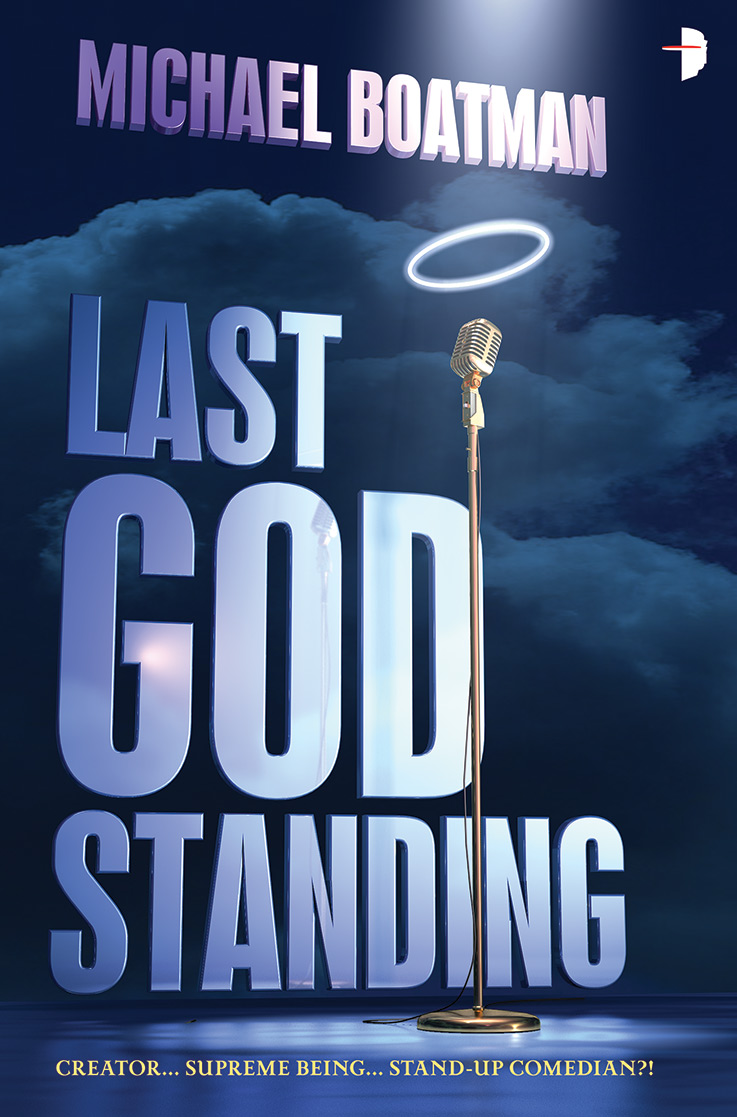
After presiding over humanity for over 2000 years, God has decided to abdicate and live as a human. No, this isn't like when Jesus was born of a virgin; this time his only motive is to simply let humanity get on with it. With Yahweh out of the way, humanity's now lesser deities like Zeus want to step into his shoes and become powerful again. The battle lines are drawn and now God, stuck in the body of Lando Calrissian (yes, that Lando Calrissian from Star Wars) Darnell Cooper has a war on his hands that he might no longer have the ability to fight.
Last God Standing has a very interesting concept. With all of the horrors in recent history it is hard for some to believe that there is an all knowing being up in the sky directing the hot mess we currently live in. From the concentration camps, to natural disasters, global warming, environmental decay and income inequality, even the most optimistic amongst us has to believe that humanity is in trouble. As far as a premise goes, Michael Boatman picked a winner. Unfortunately, that is the last good thing I can say about Last God Standing.
At times, Last God Standing made absolutely no sense whatsoever. The entire plot was incredibly rushed and even with that, I found myself struggling to get to the end. At about the 1/3 I sincerely considered DNFing this book for it's sheer incomprehensibility. The characters had absolutely no development and felt like cartoons rather than representatives of real people. Last God Standing is little more than a long winded joke, which when finally coming to end, has no damn punch line. My deepest regret is that I will never retrieve the hours I invested reading this story hoping that it would at some point live up to its premise.
Not only is Last God Standing poorly written, it is offensive on almost every level you can think of. It quickly became a written guide to homophobia with f@g appearing constantly without any indication that such hate speech is problematic. When the word gay was not being used as a pejorative, it was operationalized as the punchline of many jokes. Last God Standing heavily implied that real men most certainly were not gay or effeminate. In one passage, Herb refers to gay as a "lifestyle", something that irresponsible men of colour are free to engage in like the "White Man's children," now that African-Americans have made some civil rights gains. For almost the entirety of this novel, there were no GLBT characters, that is until "Barbara declared herself a "Happy Lesbian," sold her taverns and moved to the Pacific Northwest with her therapist to open a rehabilitation facility." Boatman filled his novel with homophobia and no GLBT characters until page 300, as though this could somehow redeem the problematic language he engaged in throughout the book. Just no. No. No. With passages like the following, there can be no doubt that Boatman means his homophobia to pass as comedy.
This Week in Book Covers
It has been too long since we did our cover snark series - but while it’s fun to look at covers that are united by their flaws, it’s also fun to look at the covers we see every week (especially since, as a big e-reader, I barely even see the cover half of the time) and seeing how those flaws continue and also compare what’s on the cover with what is inside: so here’s our first of our new cover-posts, looking at the books we’ve read through the week and the face they present on our bookshelves (virtual or otherwise).
Faefever by Karen Marie Moning
This cover is further proof of one of my long running theories - awesome cover = awful book. I don’t know why, do cover artists take pity on awful books or something? Is it a kind of charity work? Look at this - wonderfully moody, evocative an excellent cover for the setting and scene. I look at this, I love it and I can’t help but think what a disappointment it sets you up for.
Grim Anthology
This cover is, to me, like Regency Stripe wallpaper. Kind of classy, really stylish and can’t help but look awesome - but it’s also a little impersonal. I think that’s part of the issue with abstract covers; they have to be carefully made to give you a sense of what’s in them. Still, it does a good job, the fake leather cover gives the sense of an old book, evocative of the fairy tales within. The tree with the pictures suggests several different stories - even if it does also look a little like a family tree and you look at it and think “wait, your cousin was a bird?”
It’s definitely beautiful and it’s kind of intriguing but it doesn’t really tell me anything.
Blake 187: A Zombie Revolution Aiden James & Michelle Wright
I didn’t see this cover before I read the book - but if I had it would have made me buy it. It’s unique, it speaks of a unique story and a very original character and it’s damn pretty as well. Of course, the breastplate would also
In terms of relating to the book - it’s perfect. This is kind of exactly how I picture Blake (and manages to make it clear he’s a zombie AND not make him look so hideous he could be hard to relate to). The looking up towards the light is a sense of hope, the dark, ruined setting a perfect.
This is one quality bespoke cover. Even if he is kind of staring up at the author’s names in a kind of resignation. It’s like “oh, they’re writing my book? *sigh*” And now I can’t unsee it.
Labels:
cover review
Monday, February 24, 2014
Fangs for the Fantasy Podcast: 2014, Episode 7
It's Monday! Time for another episode of Fangs for the Fantasy, the podcast where we examine many of the shows we've been following this week, along with our book of the week and dissect them all from a social justice lens (though, alas, still no mermaids.).
You can join us here and you can listen live on our youtube channel, here, or in our sidebar. All will also carry a recording after the show is finished. As ever all our previous podcasts can be found in the archive
The podcast begins at 7:00pm EST (technology willing)
This week we talk The Walking Dead the horror of the mullet, Michonne's development with the unfortunate mammy implications. Being Human and us liking the new focus on Sally but hating their addiction comparisons. Bitten and the lack of explaining the books better - which is a wonderful turn around for us. Helix and it's continued development
We also discuss how a bad reputation with treatment of marginalised people can't be forgotten with one or two good scenes.
Our next few books of the week:
17th February - 24th February: The Chopping Block (Grimm)
24th February - 3rd March: Undead Pool by Kim Harrison
3rd March - 10th March: Night Broken by Patricia Briggs
10th March - 17th March: Murder of Crows by Anne Bishop
17th March - 24th March: The Walking Dead: The Fall of the Governor Part 2 by Robert Kirkman & Jay Bonansinga
Labels:
book of the week,
podcast
Subscribe to:
Posts (Atom)