Friday, June 6, 2014

Disarming (Reign of Blood #2) by Alexia Purdy


April has her hands full in the dystopian ruin the world was left in by the plague and the rising vampires – especially with her family traumatised and falling in tatters after being kidnapped in the last book. She certainly doesn’t have time for romance

But when she hears of a potential city of survivors managing to hide and thrive away from the vampires, she has to check it out. Alone if she has to.


I finished this book feeling dissatisfied – and I don’t think it was down to the world building (which is a fairly decent dystopian zombie apocalypse with vampires holding the zombie spots with a few unique little additions) or the characters (though I can’t say any of them thrilled me). It was primarily down to structure. I feel like there were a number of story-ettes that were started, kind of wibbled around a bit, and then shuffled away sort of embarrassed. Kind of like a chorus of singers who suddenly realise they can’t remember the words. I think a lot of that comes from the author having an idea of how they wanted the book to end, but not entirely sure how to get from the end of the last book to that point. Which, in turn, may have been because the last book felt like a stand alone (I was actually surprised to find this book existed) which has now been stretched into a series.

Take, for example, the romance at the end of the last book – April and Rye have fought together, done the standard “I cannot be with you but I love you so much” and sealed the deal with the magical-bond-of-insta-love-because-who-has-time-to-develop-relationships. Done, closed storyline (ok, they could actually develop a relationship but that really goes against the All-To-Common-Template that says getting your love interests together is HAPPILY EVER AFTER). This book starts with the two separated (though still drowning in endlessly descriptive sexual tension and moping and lots of “so hawt I wish we could be together”). The reason presented – that April feels the need to focus more on her family after they have been through the traumatic experiences in the last book – is certainly very reasonable but isn’t carried by the story because April doesn’t do that. She has some torn inner monologues about her mother but quickly abandons them in favour of exploring her newest curiosity

So it feels convoluted – like this couple needs to split up for the plot (or not be a done deal), so they’re split up. Here’s an excuse – but it’s a half-assed one that isn’t followed up.

The Problem With The Societal Default

'Blank canvas at firstsite' photo (c) 2012, Howard Lake - license: https://creativecommons.org/licenses/by-sa/2.0/

One thing we often talk about when criticising books and TV shows from a social justice perspective is the “Societal Default”. Basically, what counts as your “standard” or “normal” person. What do we think of when we think “person” without any qualifiers? Inevitably, the image conjured is the most privileged members of society - able bodied, White, straight, cis men. This is our default human, our standard for “normality”, the base template of person from which everyone else is a derivative.


And there are consequences of that, especially when it comes to fiction.


Firstly, it does a lot of damage to marginalised character design. See, when we’re building a character we begin with a default then add the unique elements that fleshes them out and make them a full person. We add the “template” of personality and traits to the Default template. So we take the cis, white, able bodied, straight man and we add likes, dislikes, profession, hobbies, motivation, opinions, characterisation, relationship, history - we take the blank sheet and make a character from this unmarred beginning.

When we make marginalised characters we, all too often, take that Default blank template and add “woman” or “gay” or “Black”. This is the characterisation, this is the development and this is one of the ways Tokens are created. This is why you can get large casts full of able-bodied, straight, cis white men who have a other defining labels (even very narrow, stereotypical portrayals like “geek” or “jock”) while women of POC or LGBT people don’t even get that - because being a woman or Black or Gay IS their label - like being “Geek” is a quick characterisation for the able-bodied, straight, cis, white male character.  Another example of this is you get female characters who are literally just female versions of male characters (what Anita Sarkeesian calls the Ms. Male Character).


To put it another way, marginalised characters are already considered defined and characterised simply because they ARE marginalised characters. The “blank slate” of the societal Default has already been filled in by the marginalised status. This leaves these lazy Tokens whose entire characterisation is defined by their marginalisation. On The Walking Dead, T-Dog is a Black man. That’s not just a description, that’s the sum totality of his characterisation and purpose - much the same as Dai and Anthony from Falling Skies, Aaron on Switch and any number of tokens we’ve noted before.


The Societal Default character (the able-bodied, straight, cis, White man) needs more development to be even a minor character - because otherwise they’re a blank sheet, a non-character. But that’s exactly what happens with marginalised tokens but it is accepted because we see their marginalisation as inherently filling in the blanks.


Which brings us to another problem of not challenging this Default narrative - by allowing a marginalised identity to fill in the blanks of characterisation, that leaves us with a very narrow set of stereotyped behaviours and appearances to stand in place of actual development - so we get Felix on Orphan Black and Aaron on Switch whose characterisation, personality, behaviour, dress - entire existence is basically “gay man”; or T-Dog, Oscar or Jacqui on The Walking Dead (and POC tokens may literally be just walking dark skin). This is something the Societal Default avoids simply by being the Societal Default - a status which inherently requires more development. Sure they may be stereotyped when a tiny amount of characterisation is added - a stereotypical geek, a stereotypical frat boy, a stereotypical business man - but that tiny amount of characterisation has to be added first. The Default itself, able bodied, cis, straight, White men, has the infinite potential to be anything and is not limited by automatic assumptions and predefined roles to anything like the same extent as marginalised people.


The Societal Default requires something extra to create an actual character - too often merely being a marginalised person IS that something extra.


The Societal Default also causes problems by being the Default, by being the baseline. If you want a character, you start with an able-bodied, cis, straight, White male character. if you want them to be anything but that, too often there’s an expectation of a reason. Deviating from the Societal Default requires justification. This is something we’ve examined in more detail in our post Marginalised Characters Do Not Define the Story. Too often, if you critique erasure in a series or TV show, someone will ask “why does there have to be a {insert marginalisation} character”? When surely the question should be the opposite - why ISN’T there a marginalised character? Why is the actual existence of these people overlooked?


It’s notable that we do not question why a character has to be an able bodied, cis, straight, white man nor do we expect there to be a special story reason, justification or necessity to have one in any role in a story. If we do not use a Societal Default character, then there is an assumption of an agenda on the writer’s part.

Thursday, June 5, 2014

The Elements by Zhu Hsia


Kayleigh, spoiled teenager to extremely rich parents, seeks to get away from it all, to start afresh. She finds Draker, an isolated private school and perfect for a fresh start – but the school harbours many secrets she never expected


Well, that was… pretty damn dreadful, I’m afraid. So much so that I just couldn’t finish it, I got to half way and I put it down, refusing to go further. The whole book made so little sense to me – no, the people made so little sense to me. Especially the protagonist

Our protagonist is Kayleigh and we’re introduced to her by her getting out of her ever loving mind drunk and vomiting on people in a swanky party her so-very-important-parents forced her to attend. Her parents are evil, by the way. Except we don’t actually see them do anything evil (though they do object to public vomiting on expensive suits from their school-aged daughter which is just so unfair) and, coupled with Kayleigh’s POV make this seem a lot like an extremely spoiled rich child having temper tantrums. This is not endearing.

Because she is flouncing with her parents she decides to go to a private school. No, really. She looks up a school online based on the fact it’s secluded and doesn’t allow mobile phones. That is her criteria for which school she will attend. No, really.

Having found said school she manages to enrol, pay the fees and attend not only without her parents’ knowledge or consent – but also managing to get out of the house and to the school before her parents even come home from work. This secluded private school has… astonishingly lax admission standards.

It’s also in a castle. Her parents dream of her going to Harvard, so, along with general word use, I’m assuming she’s American. I have no idea why the school is a castle (with four poster beds as well). It has very few rules though, the chief among them being “don’t go in the forest”. Kayleigh resolves to follow these rules since she’s in a new place.

Which means trying to explore said forbidden forest she is repeatedly told is dangerous twice in her first week. Especially when she hears mysterious and creepy howling coming from it. One of these attempts is in the middle of the night, by moonlight with no torch or other source of artificial lighting. Had she run into a werewolf and it had eaten her, the werewolf would have then howled “DARWIN AWARD!” to the moon.

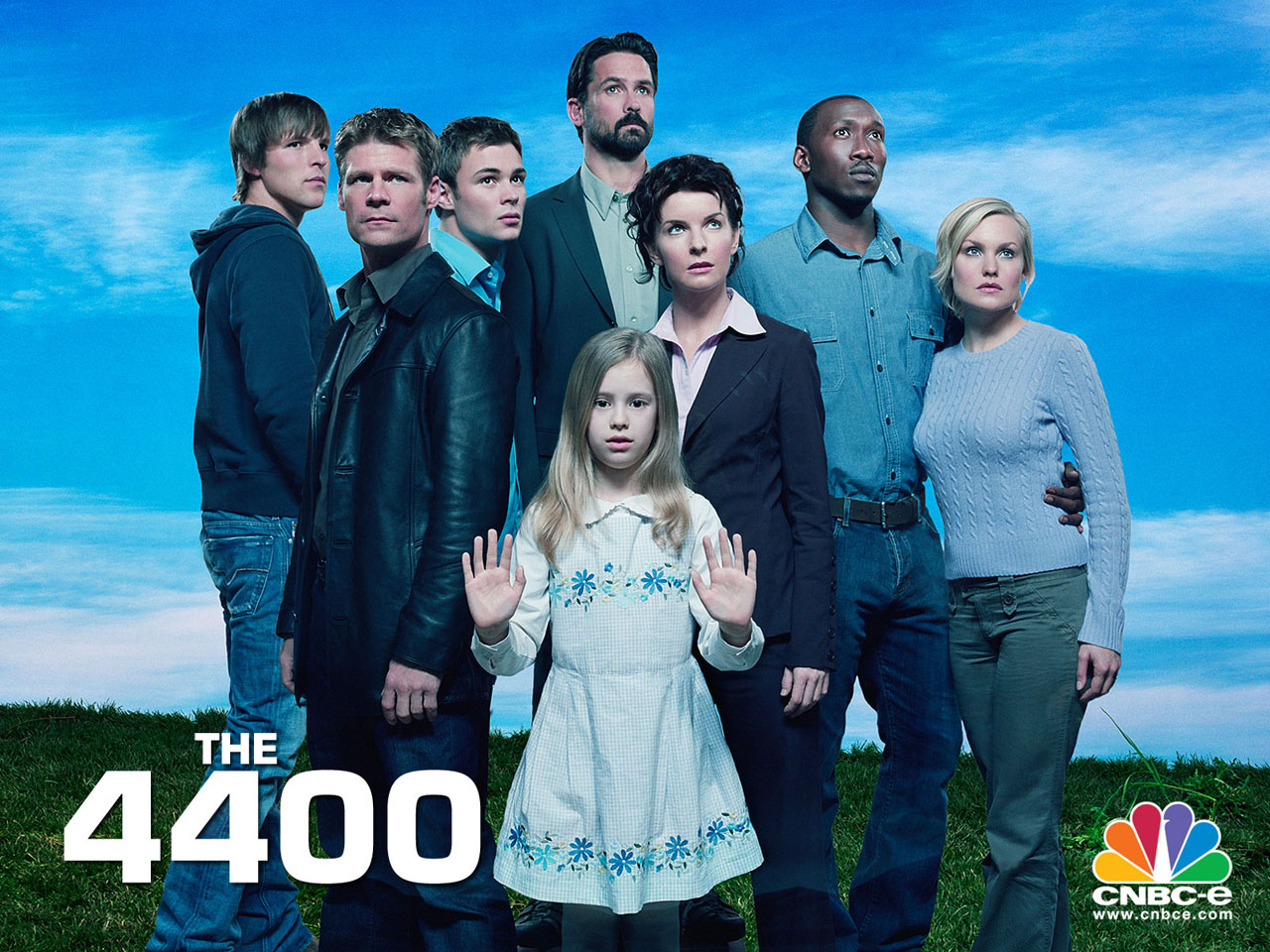
Recap and Review: The 4400 Season Two


In the first season,we learned that the 4400 were returned to effect change in the current timeline to forestall a future disaster.  Now that the public is over the shock of the arrival 4400, they now have to deal with the fallout.  Not all the 4400 who have powers want or desire to use their powers for good because like any group of humans, they are flawed.

We see a lot of Diane's private life this season.  It begins with her legal adoption of Maia.  In many ways she is unrecognizable as the woman we first met in season one.  We also meet Diane's estranged sister April who is as different from Diane as night from day.  The three settle into a sort of domestic bliss until April decides to use Maia's ability to tell the future to make money gambling. The moment Diane finds this out, she asks April to leave.  While this shows that Diane has truly settled into her role as mother, it indicates how out of touch she is with Maia's life.  April represents Maia's only real access to the outside word and chance for normalcy. Maia is home schooled and left with a baby sitter whenever Diane has to leave and whenever Maia tries to interact with children her own age, it always turns out terrible.  I like that Diane continues to  work and is a strong single mother but it is telling that she doesn't think about how Maia's powers or isolation from others is impacting her growth.  In some ways the message screams that working mothers cannot have it all because something always falls through the cracks.

This season, Lilly finally gives birth to baby Isabelle. Isabelle is a truly terrifying baby because she has the ability to kill when she feels threatened. What I do find interesting is that Isabelle is initially set up as the chosen one.  This is very rare, as normally whenever there is a chosen one, the role is usually filled by someone White and male. Unfortunately, Isabelle doesn't remain the good mystical chosen one for long. This is made clear when she participates in the death of Collier by lying about him surviving an attack.  This is somewhat redeemed when her blood is used to save the 4400 who become ill after the government injects them with an inhibitor.  Isabelle is very much a mystery at this point and it's due largely to her age but she bares watching.

Despite Diane, it's fair to say that The 4400 had a problem with its representation of women in the first season. To counteract that, we were introduced to Nina Jarvis, the new director of NTAC.  Nina largely asserts her authority to act as a check to Tom and his flagrant disregard of the rules.  Nina initially gives the appearance of a strong female character but we learn essentially nothing about her and her mission to control Tom turns her into a defacto babysitter. We are also introduced to Alana Mareva who was given the power to create alternate fantasy worlds in order to have a soothing effect on Tom.  Alana is a human pacifier for Tom and has no role outside of her relationship with him.

This Week in Book Covers 26th May - 30th May

It’s time to look through the covers for last week - and here we have the very honest covers, some highly dubiously misleading covers and covers that completely missed the potential of their books. But they make a strong case for truth in advertising!


Ooooh pretty - and congrats for avoiding all the so easy tropes. She’s in a natural pose, all her clothing appears to be there, there’s no special focus on breasts or buttocks - a great start for a female character on the front cover! The shadow of the caduceus is intriguing and mysterious and would certainly have me check it out - but I feel it has little to do with the book. In past books, maybe, but in this book does anyone even remember Arcadia using one? Still, definitely a good cover even if it does slightly imply a medical link.


Stone Song (Cold Iron #3) by D.L. McDermot

A romance cover with a twist - turning its back on the standard Mantitteh. This emphasises the extremely pretty sword and the leather tooling; there is a story and history and fantasy elements to this book, with a strong celtic slant!

While still having the muscular nekked back to remind us that, no matter the pretty accoutrements, it’s still a book where two people of the opposite sex are going to be mushed together regardless of what plot, world setting or characterisation demands.


Wednesday, June 4, 2014

Souls of the Damned (Kat Richardson Series #5) by E.S. Moore


Still reeling from the destruction of the Luna Cult, and beleaguered on all sides with demands for her attention, Kat didn’t expect Sienna to appear on her doorstep

The imprisoned child of the angel Levi in his life-sucking prison town of Delai. Kat has been meaning to take down Delai for a long time – and even promised Sienna she would rescue her. Sienna provides not only someone to protect, but finally a key to get Kat back into Delai

But she cannot go back as a vampire – the only way to get back into Levi’s world is as a human.


I think that the author is recognising that there are too many ongoing threads in Kat’s life. There are two master vampires both with an interest in Kat, one of which is using her as a personal assassin. There’s Adrian and his odd pack of wolves. There’s the Luna Cult. And there’s the ongoing issue of the angel Levi in Delai who Kat still has to deal with. It’s a lot and it’s starting to pull the books apart – so threads are being snipped. Last book we saw the Luna Cult be reduced a lot and this book built on it turning it more into a personal relationship between Kat and      than making it another major plot thread; which I quite liked (not least of which because the tension between them has long since needed resolving).

This book Kat deals with Delai, setting another plot thread firmly to bed, as well as making it clear the other major plots are going to be stepping to the fore in the next book. I like it – there’s a sense of everything being handled rather than perpetuating the constant feeling of being overwhelmed

The story in Delai isn’t as action packed as the past books – and that’s ok. It lets us see another side of Kat (through her transformation) and see a different way of resolving problems beyond Kat being so super dangerous that it doesn’t matter. Again, this is something that was touched on in the last book and has been expanded upon so much here; yes Kat is dangerous – very very dangerous indeed – but being dangerous isn’t a surefire way to solve every problem. The pacing was decent, perhaps a little world building absorbed in places, but it moved pretty well. And yes, there was a much quicker way to resolve things but I like the development that came with the long way round.

In the Flesh, Season 2, Episode 5


In a hotel, Simon meets Julian – a fellow ULA member (a superior but apparently not the prophet) – to tell him about Kieren, the First Risen. Julian has a message from the Prophet (and Simon is almost childishly eager for it) instructing Simon to sacrifice the First Risen at 12:00 on the 12th of December to cause the second Rising. Julian leaves Simon a package, presumably to help with that, and leaves (Simon doesn’t look very thrilled by this plan). Julian leaves the hotel, staring down the man complaining about PDS like him walking around without their faces covered. Julian does not back down it seems. He’s watched – and apparently supported – by Gary which is rather odd

Simon has a little freak out – and we have a flashback to him in the conversion centre, when he was first made lucid with medication. The implication is he was the first one.

In Roarton, things are getting worse, with an unpleasant woman posting homes with leaflets looking for the signs of “going rabid” in PDS. Even Steve, Kieren’s dad, who initially challenges her, seems to back down. At breakfast Steve is still disturbed, remembering Kieren’s story of the rising and his admission that he killed people (unlike Sue and Jem, Steve maintained the personal fiction that Kieren hadn’t killed anyone when he was rabid). Steve is further shocked to see Kieren come down not wearing his cover up. This could probably have caused family drama when the inept Dean arrives – Kieren is under arrest for the release of the rabid PDS in the doctor’s surgery at the instruction of Maxine. They drag him off and Sue turns her disgusted look on Steve for just standing there.

Maxine goes to a phone box to call someone, to plead with them to let her talk – but they hang up on her. She returns home visibly upset and Sandra, the landlady of the B&B makes her a cup of tea; apparently Maxine tried to call her dad. Sandra tries to sympathise in that incredibly inept “let me compare my completely irrelevant situation to yours” fashion. Maxine also talks about a younger brother who means a lot to her

Phillip wakes up alone – Amy having left. She’s back at her place, taking her medication. She’s also received a leaflet about the problems of missed meds “zombification” and is clearly worried that they fit her symptoms. She continues to have problems while dismissing it with the others – and crying in private

Kieren goes to his “trial” which basically is the council heckling him to confess without any concept that he might be innocent. They threaten to send him back to Norfolk because they have the power to just declare Kieren (and Simon) a threat. Kieren refuses to confess and his anger is enough for the council to deem him a monster.

Back to Simon who is still having his collapse in the hotel and flashing back to a sympathetic doctor – and unsympathetic military forces – trying to help Simon through his medication and stop the war. Simon asks if it’s a cure – and the doctor hopes it will be since Simon is the very first the medication worked on. Simon agrees to help with the experiments but while sympathetic doctor is pretty kind and consoling throughout, his fellows are far from it. And during one such experiment he hears an odd voice in the speaker talking almost biblically about Simon being what was meant to be, alive forever more and that he is being lied to.

Tuesday, June 3, 2014

Skin Game (Dresden Files #15) by Jim Butcher


Mab, Harry’s boss as the Queen of Winter, has a job for Harry, one he is not allowed to refuse. He must work for the Order of the Black Denarius; perhaps the most evil people Harry has ever encountered. He has to help them steal something

Of course… once it’s stolen Mab considers the deal finished.

Working for the enemy who hates him almost as much as he hates them, Harry has to be ready for the double cross – and to get his double cross in as soon as he can; and try to reduce the casualties along the way

Which would be difficult under any circumstances – let alone trying to raid the vault of a Greek God.


There were so many awesome things in this book.

Harry delves through so many personal issues in this book in an excellently written way. It can be hard to have your character have personal growth moments without a whole lot of clumsy info-dumping or monologues that don’t work. Harry’s growth fit within the story without being a distraction or out of place, it meshed ideally. Which is great because there was a lot to unpack

Most of which is just what side is Harry on now. He’s the Winter Knight (though, thankfully, the whole rape element of that mantle has been pushed out in this book), he’s working for the Unseelie Queen, an association that has now got him working with the Denarians. Fallen Angels and the very personification of evil in the series. These are not the associates of a good guy and he’s painfully aware of it. There’s a constant thread of him trying to cling to his morality while forced to go along with these people, trying to draw lines, having to accept a level of evil and wondering how far he will go. But it’s not just Harry, but also his friends. Murphy has faith in Harry – but that’s only after she learned that in the last book; Butters asks reasonable questions and they are reasonable, not remotely unfair. Harry is now associating with evil people, he is apparently signed in on an evil scheme. Not only that, but Harry has been absent from all his friends and supporters for a year – Butters has reason to doubt and reason to be afraid, especially since Harry is so powerful and dangerous. Butters reasonable doubts stop Harry’s own questions from being rather standard protagonist moping; they add context and reason

Butters brings a lot of excellence here – someone stepping up incredibly heroicly to try and fill the void Harry has left takes incredible courage especially since Butters isn’t special or powerful. But there’s more parallels with Harry and his growth. Butters is taking some terrible risks, not just for himself, but by using some resources he is risking giving his enemies a vastly powerful tool. He is risking them all, he could doom them all; but what choice does he have? This is an excellent counterpoint to Harry’s own powerful regrets, especially around the destruction of the Red Court. As much as Michael’s deep wisdom, Butter’s own example throws a context on Harry’s acts and doing the best you can in hard situations.

Which also brings us to the Swords. The might, incredible, powerful holy swords of the Cross and their strict moral requirements for their useage – the goodness they require, the moral standards they uphold are pure and wonderful and… not always practical. No-one can argue the powerful goodness of swords and their knights, but Nicodemus and Murphy showed just how such impossibly high standards don’t always work; they’re a powerful tool but if you rely on them to the exclusion of all else, you will lose. Their inflexibility makes them impractical. Which further feeds into Harry’s morality debate – because to actually achieve good and protect the innocent he cannot hold himself to unworkable standards

I think there’s another character who, without giving any spoilers, is a pretty awesome side point to this as well – it’s really well done

Bringing it all together we manage to approach Harry’s growth and morality from several different angles that comes together in an awesome whole.