Showing posts with label privilege. Show all posts

Friday, June 6, 2014

The Problem With The Societal Default

'Blank canvas at firstsite' photo (c) 2012, Howard Lake - license: https://creativecommons.org/licenses/by-sa/2.0/

One thing we often talk about when criticising books and TV shows from a social justice perspective is the “Societal Default”. Basically, what counts as your “standard” or “normal” person. What do we think of when we think “person” without any qualifiers? Inevitably, the image conjured is the most privileged members of society - able bodied, White, straight, cis men. This is our default human, our standard for “normality”, the base template of person from which everyone else is a derivative.


And there are consequences of that, especially when it comes to fiction.


Firstly, it does a lot of damage to marginalised character design. See, when we’re building a character we begin with a default then add the unique elements that fleshes them out and make them a full person. We add the “template” of personality and traits to the Default template. So we take the cis, white, able bodied, straight man and we add likes, dislikes, profession, hobbies, motivation, opinions, characterisation, relationship, history - we take the blank sheet and make a character from this unmarred beginning.

When we make marginalised characters we, all too often, take that Default blank template and add “woman” or “gay” or “Black”. This is the characterisation, this is the development and this is one of the ways Tokens are created. This is why you can get large casts full of able-bodied, straight, cis white men who have a other defining labels (even very narrow, stereotypical portrayals like “geek” or “jock”) while women of POC or LGBT people don’t even get that - because being a woman or Black or Gay IS their label - like being “Geek” is a quick characterisation for the able-bodied, straight, cis, white male character.  Another example of this is you get female characters who are literally just female versions of male characters (what Anita Sarkeesian calls the Ms. Male Character).


To put it another way, marginalised characters are already considered defined and characterised simply because they ARE marginalised characters. The “blank slate” of the societal Default has already been filled in by the marginalised status. This leaves these lazy Tokens whose entire characterisation is defined by their marginalisation. On The Walking Dead, T-Dog is a Black man. That’s not just a description, that’s the sum totality of his characterisation and purpose - much the same as Dai and Anthony from Falling Skies, Aaron on Switch and any number of tokens we’ve noted before.


The Societal Default character (the able-bodied, straight, cis, White man) needs more development to be even a minor character - because otherwise they’re a blank sheet, a non-character. But that’s exactly what happens with marginalised tokens but it is accepted because we see their marginalisation as inherently filling in the blanks.


Which brings us to another problem of not challenging this Default narrative - by allowing a marginalised identity to fill in the blanks of characterisation, that leaves us with a very narrow set of stereotyped behaviours and appearances to stand in place of actual development - so we get Felix on Orphan Black and Aaron on Switch whose characterisation, personality, behaviour, dress - entire existence is basically “gay man”; or T-Dog, Oscar or Jacqui on The Walking Dead (and POC tokens may literally be just walking dark skin). This is something the Societal Default avoids simply by being the Societal Default - a status which inherently requires more development. Sure they may be stereotyped when a tiny amount of characterisation is added - a stereotypical geek, a stereotypical frat boy, a stereotypical business man - but that tiny amount of characterisation has to be added first. The Default itself, able bodied, cis, straight, White men, has the infinite potential to be anything and is not limited by automatic assumptions and predefined roles to anything like the same extent as marginalised people.


The Societal Default requires something extra to create an actual character - too often merely being a marginalised person IS that something extra.


The Societal Default also causes problems by being the Default, by being the baseline. If you want a character, you start with an able-bodied, cis, straight, White male character. if you want them to be anything but that, too often there’s an expectation of a reason. Deviating from the Societal Default requires justification. This is something we’ve examined in more detail in our post Marginalised Characters Do Not Define the Story. Too often, if you critique erasure in a series or TV show, someone will ask “why does there have to be a {insert marginalisation} character”? When surely the question should be the opposite - why ISN’T there a marginalised character? Why is the actual existence of these people overlooked?


It’s notable that we do not question why a character has to be an able bodied, cis, straight, white man nor do we expect there to be a special story reason, justification or necessity to have one in any role in a story. If we do not use a Societal Default character, then there is an assumption of an agenda on the writer’s part.

Saturday, September 21, 2013

Goodreads, Badly Behaving Authors and Silencing Criticism


Goodreads has made the decision to delete reviews and shelving that it feels “attack” authors. This includes such shelving as “due-to-author” (this is now an attack apparently). They claim this is because they want reviews to focus on the book, not the author for whatever reason (though, for some reason that doesn’t apply to shelves like “author-is-awesome”).

Of course, this has nothing to do with Goodreads's recent acquisition by Amazon, I’m sure.

At Fangs we only occasionally (often because we don’t know about an author’s various bad behaviours until after we’ve reviewed them) refer to the author when we deem it relevant (often because of actual flaunted bigotry on the author’s part) nor do we generally shelve books on goodreads (at all, because we’re far too lazy to do so) but we oppose this terrible and privileged policy change

This whole idea that the author doesn’t matter is something we have discussed before. Author identity matters, author experience matters, author authenticity matters. Each of these things add context to the books produced, adds a level of depth and a level of knowledge; the context of a book can add considerably to that book.

It also matters when it comes to bigotry. There are a lot of people who were and are unaware of Orson Scott Card’s bigotry. It is grossly ridiculous to claim the author’s giving money to hate groups and actively campaigning to have gay people imprisoned is somehow irrelevant to buying his books. That is ridiculous. It is not just ridiculous, it’s grossly offensive and obscenely privileged to discard these concerns as unimportant and speaks volumes about the priorities of those who try to do so.

And that is hardly an isolated issue. While Save the Pearls is horrendously racist without knowing anything about the author, the scandal around it is added to by Victoria Foyt’s own added excuses, explanations, anecdotes and attacks that add considerably more meat to her bigotry.

Similarly, Out is virulently homophobic – but far more so when you realise how much Laure Preble is schilling her book as pro-gay and trying to use PFLAG advocacy as a marketing tool.

The author’s behaviour matters. It adds context to the content of the book. It underscores the bigotry of not just the writing but the real world consequences of empowering bigotry – of giving bigots not just more money but a greater voice with which to spread their bigotry. Readers have a vested interest in knowing that they're dropping money on, say, John Ringo “Scalzi’s only popular because he panders to women and gay people, not REAL fans” and decide whether they want to support that.

Friday, January 20, 2012

The Friday Discussion: The Mary Sue

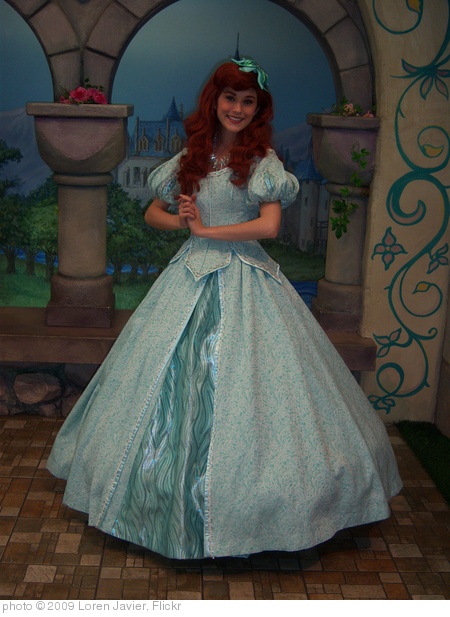
'Ariel at Disney Princess Fantasy Faire' photo (c) 2009, Loren Javier - license: http://creativecommons.org/licenses/by-nd/2.0/

The term Mary Sue is quite common in discussions of urban fantasy. It has become so ubiquitous that  I often wonder if everyone is truly aware of not only what the term means, but how it effects historically marginalised women.  A Mary Sue is a character who is perfect, flawless or only having very cutesy flaws (cute non flaws), and who is instantly adored by all of the cast.  If someone is not instantly enthralled with a Mary Sue, it is because they are jealous and or evil, and sometimes even both. 


Sookie Stackhouse from True Blood,  Elena Gilbert from the Vampire Diaries, Clary Fray from The Mortal Instruments Series, Tessa Grey from the Infernal Devices series, Elena from Kelly Armstrong's Otherword Series, Clare from the Morganville Vampires, Abby Corrigan from Sanctuary, Bella Swan from Twilight, are just a few examples of the Mary Sue phenomenon from books, movies and television.  Each one of these characters is beloved for absolutely no reason. The people around them follow them without question and without cause quite frankly (especially considering that these women have the sense of a concussed penguin), even in cases when doing so places themselves in jeopardy. This is exacerbated by the Mary Sue usually representing the most privileged form of femininity in that she is normally straight, cis gendered and White. 


It is rare to see a protagonist of colour in this genre and they never ever fulfill the role of Mary Sue. (In fact, when “Mary Sue” or “self insert” as a criticism is levelled at authors of colour and other marginalised authors, it is usually because the mere presence of a POC character that is capable and not a side-kick is considered “overly perfect” in a genre that frequently prevents POC from being main characters) Mary Sue then on some level relates to the perfection of White womanhood and marking it as superior to women of colour.  In many ways, it reminds me of the faux pedestal that White women have historically been placed upon.  This pedestal exists solely to give them race privilege and certainly does not apply to equality with White men.  


Even as it works to oppress in terms of race, it is also extremely sexist as it leaves no room to appreciate strengths based in intelligence, loyalty, speed, humor or strength.  It tells women that they must perform womanhood in a very specific manner to be considered truly feminine. Mary Sue is not complimentary to women, and in fact acts as a sort of literary corset, restricting individuality even as it promotes a false form of agency.  Real women are not made of sugar and spice and all that’s nice.  

Monday, January 2, 2012

Review of Kiss of Life by Daniel Waters Book 2 of the Generation Dead series

The Generation Dead series is about what happens to teenagers who die and come back to life as zombies. At the end of Generation Dead, Adam had been shot and killed saving Phoebe's life from his former friend Pete the night of the prom.  In the aftermath Phoebe must deal with her feelings for both Tommy and Adam as she and her differently biotic friends negotiate a world that is increasingly more hostile towards them.

Waters work continues to over written and angst riddled.  There are certain allowances that one often makes for a YA novel simply because working with teenagers as characters means that maturity of thought and or behaviour at times is extremely immature; however Waters quickly pushes through that tolerance with an angst level that is enough to drive adults to throw themselves on a bed and cry about not being understood.

As with Generation Dead Waters seeks to tackle oppression of zombies by using the oppression faced by historically marginalized bodies as a framework.  This of course amounts to appropriation and belittling of what marginalized people face on an everyday basis.  In Generation Dead Waters dealt with the word zombie as a slur and specifically discussed reclaiming this word.  In Kiss of Life Waters ups the anti by having a traditionally biotic person complaining about the inability to say the word zombie without facing retribution. 
"I got a detention yesterday for saying the word zombie.  Everyone in the room, even Tommy who Phoebe hadn't seen crack a smile since homecoming, seemed to think that was pretty funny.  Alish laughed out loud, unmindful of his daughter's warning glare." (pg 28)
Of course they laughed.  It's not like slurs hurt or stem from a historical method of dehumanizing minorities or anything right?  This is specifically why the word zombie regardless of Waters intent should never be considered a slur even in a fictional sense. Then Waters decided to double down on his error by having the character complain about losing his girlfriend because of his relationships with differently biotic people (pg28), and in response the zombies only laughed.  This is not a realistic response to this sort of appropriation and anyone who had any experience dealing with a slur would know that. 

For the first time, we have the introduction of a gay character.  Popeye is artistic and the mastermind behind the zombies social protest, though he does at time play second to Tak.  We first learn that Popeye is gay when he makes a comment about how short Karen's skirt is and Tak wonders, "if Popeye got away with his innuendos because he was gay." (page 147)  We quickly learn that not only is Popeye gay but he is in love with Tak who has hinted that he has no hope. "Popeye, he knew, wasn't really deterred.  That was one curse that didn't leave when you died. The curse of hope". (149)  I don't know about you but I am pretty sick of the trope that involves a gay character mooning over a straight character.  There is no reason why Popeye could not have been given his own love interest.