Showing posts with label reviews. Show all posts

Friday, April 4, 2014

Responding to Author Comments on our Review of Masks by Karen Chance


We have received an email from the author about our review of Masks by Karen Chance.


We don’t usually publish emails we receive but this email indicated that she tried to comment but could not, presumably due to Intense Debate (we’re not sure why the comments tool isn’t working for all our readers - if anyone else has any problems can you let us know). In addition, we will not edit our review to add the email as suggested, because we don’t agree with the points raised but also because, even if we did, amending our reviews after the fact because an author emailed us is really not something we, or (we think) any review blog should actually be doing. In both cases, however, we feel there’s a clear wish to make these views known publicly on Fangs.


We also feel that the comments made are more generally applicable to comments we have received about a number of reviews and would benefit from being addressed in general


The email in question:


Hey guys, I appreciate the review for Masks. But I had a few comments I wanted to make on it. Unfortunately, the website isn't allowing me to do so. I am therefore sending them in , in the hopes that you will amend them to the review. They're below. Thank you I appreciate you reading the book and doing the review, but I would like to briefly point out a few things.


1) The book is not "erased". There are four major players who are non-white: the consul (Egyptian), the senator (mixed race), Hassani (Iranian) and Marte (Egyptian). On the subject of Marte, Mircea describes her early on as having dark, curly hair and eyes, but doesn't mention her skin tone. But then, why would he have? They are in Venice. Olive skin is normal there. He took her for an Italian at first, because that was how she was presenting herself. There are also many other people from all over the world mentioned in the book: a gondolier is African, the consul and senator are Egyptian (or partly so, in her case), Hassani is Iranian, a hat seller is Spanish, Bezio is Sicilian, Martina is Greek, etc. It was a multifaceted, multicultural bunch that, I think, fairly represented the Venice of its day.

2) LGBT issues weren't mentioned because there was a rash of homophobic hysteria sweeping Italy at the time. I wrote about this on my blog (http://www.karenchance.com/news/category/maskslife-in-renaissance-venice/), specifically in the entry Inspirations VI if you want to read more. But basically, being an out person in Venice of the day was illegal and homosexual people were subject to death--by burning--if caught. I have LGBT characters (including Mircea's brother Radu) in my Dorina Basarab series, but it would not have made sense here. Any LGBT people in Venice at the time would have been keeping very, very quiet about it.

3) Class issues: Can I point out that a person being born poor doesn't make them a good person, any more than it makes them a bad one? There were characters born into poverty who ended up on the "good" side, and other who did not. Just as in life. The book was about the hand we are dealt in life being important, but not all important. We still have to play that hand, and we still make some crucial decisions for ourselves. The characters made their decisions, some good, some not so good. And their fates depended on that every bit as much, if not more, than on the class they started out in.


1) On the Racial Erasure


We have spoken before on the problem of Invisible Inclusion. Unless a character is depicted as otherwise in fiction, they will be read as the most privileged body. Even when they are described otherwise this is often a problem, as we can see from many corners of fandom being shocked when Rue was depicted as Black in the Hunger Games film and when an Asian actor was cast to play Magnus Bane in The Mortal Instruments.


Relying on the readers’ assumptions that a character would be a People Of Colour (POC) is, therefore, highly fraught. We are trying to avoid spoilers here so we will talk around one of the characters in question: the Consul is a person from history - and they do have a POC ancestor. But holding that to be sufficient to make them a POC raises a very dubious and highly prejudicial “one drop rule” argument.

And even if they were - this would require the readers to be aware of the fact to read her as a POC. And ignore that fact that she has been depicted in fiction on numerous occasions - as white. Fictional portrayals of this character - and, indeed, numerous historical POC - are repeatedly depicted as white. Fictional whitewashing was prevalent and even the norm; history is no guarantee of a POC portrayal in fiction.


It is always dubious to assume that an audience will read a character as POC when it has not been expressly stated (especially if descriptors are, at best, ambiguous - like dark, curly hair and brown eyes); time and again we have seen that to expect that from a western audience is simply unrealistic and highly disconnected from societal attitudes. If you describe a character as having brown hair and brown eyes with no further description they will be read as white.


To further stretch this and assume that readers should read a character as a POC because of (a very questionable reading of) history, despite how that character has repeatedly been depicted in fiction without any other markers is to stretch this to breaking.


In my review I used the words “largely erased” to describe Masks. This doesn’t mean that there were no POC in the novel but that they didn’t play any significant roles in the story. A minor character of colour, even when they fit into a privileged role in the story does not mean good inclusion. It simply means they have been promoted to obscurity. These characters don’t drive the plot because the book could clearly exist without them; such is the case with Hassani. To the suggests a group of Europeans constitutes diversity is to completely ignore that diversity means more that multiple Eurocentric ethnicities occupying the same geography.


Good inclusion involves fully fleshed out characters of colour with important storylines. They don’t act as sidekicks and they most certainly are not passing characters like a gondolier. Running afterwards and counting POC without considering them within the context of the story itself is problematic.

Friday, September 6, 2013

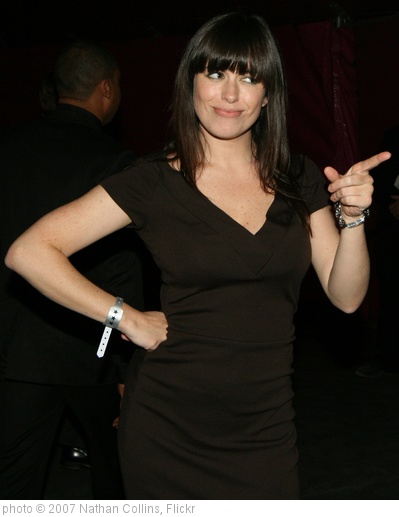
Nathan Branford, Stop the Goodread Bullies and the "Abuse" of Negative Reviews

'You naughty boy' photo (c) 2007, Nathan Collins - license: http://creativecommons.org/licenses/by-sa/2.0/

So we have to visit this drama yet again, as someone else has leaped up to defend the poor, persecuted authors from the deadly peril of not being universally loved by all reviewers. The horror, oh the horror these authors have to face.
Nathan Bransford is the new author, champion of the “bullied” and “dehumanised” authors who suffered the dreaded pain of a negative review. This is a link to his post, but it is being repeatedly edited, updated and twisted to try and remove the hot mess in a series of backtracks that don’t include any admissions for being wrong so I have no idea what it will say by the time you click that link.
There’s a lot wrong with this post – but in particular, what I found disturbing about Nathan Bransford’s post was that the reviews he singled out as “bullying” were anything but. They were critical, certainly – but none of them crossed the line into attacking the author.


I’m also going to take a moment here to say that I don’t even think that’s a hard and fast line, especially when it comes to awful minority depictions and how authors react to criticism. I have, for example, zero compunctions about calling Victoria Foyt, author of Save the Pearls, a racist, for example not just for the awful racist book but also for the racist way she reacted to criticism of that book. By their words you will know them and all that.
But these reviews didn’t go that far. In fact, they refused to cross a line that Mr. Bransford was quite willing to cross – he was the one who resorted to personal attacks, calling them “bullies” and even accusing them of “dehumanising the author” – this author they never once mentioned or addressed. This morning I stubbed my toe on my bedside book shelf (damn moved bed) and I cursed that shelf in the most extreme and vituperative of terms – I guess I just dehumanised a carpenter? Is that the standard we’re reaching here – where criticising someone’s product means removing their humanity?
I object, I object most strongly. I object to this insulting terminology when we are seeing repeated news reports of kids driven to suicide and self-harm by bullying. I object to this revolting interpretation when we are seeing hate crimes and murders soaring in places as far as Russia and Jamaica and still very much on our doorsteps because of dehumanising laws and rhetoric against marginalised people. I object to him calling these reviews “abuse” when so many suffer so much agony and lives are destroyed by actual abusive situations. I am physically revolted that Mr. Bransford is invoking these situations with his word choice to try and silence critical reviewers – it is offensive, it is repellent and it shows a shocking lack of even the slightest perspective.
But back to the reviews themselves - they were critical of the book – quite scathing about it, in fact – and vehement in their dislike and all the things they found wrong with the book. They were sharp, honest reviews that did exactly what I expected them to do – they gave me a solid impression of what the reviewers thought about the book and why. This is everything I think a review should be – in fact they were excellent negative reviews which we’ve said before is a good thing; everything about their rating and opinion was explained, they gave their opinion and enough information through which I could decide whether I agreed with it or not. In fact, because they were well written negative reviews including analysis and reasoning behind it, they have already prompted one person to buy the book, intrigued by what they described.
As for the “harshness” – I applaud it. If anything there is far too much sugar coating of some real problems out there. There have been innumerable times I’ve picked up a book that has a series of scrappy, or emptily praising, five star reviews and ended up with a story that feels like some kind of masochistic endurance trial to actually finish. I have seen reviewers out there who have never given a book less than three stars – and I pass right over them, what is the point? If a reviewer thinks everything is good then I cannot trust them to tell me if anything is actually good.

Monday, September 3, 2012

The Problem With Paid Reviews and Self Pubs

'Money' photo (c) 2010, 401(K) 2012 - license: http://creativecommons.org/licenses/by-sa/2.0/

We’ve spoken before about reviewers charging for book reviews - as well as guaranteeing positive reviews - and the many reasons why we consider this to be both unacceptable and damaging to online reviewing.

And I don’t think we can discount just how very important reviewing has become, especially as e-books become more and more dominant in the market. Increasingly, we’re no longer going into a book shop and buying books, speaking to book clerks about what would be the best choice (assuming we ever did) or being able to physically pick up the book and skim through it to see if it suits us.

There are many things that have tried to replace this - but a synopsis, blurb and even an excerpt are often carefully chosen to show the book in the best possible light - quite possibly a rather inflated light. With the huge and wonderful proliferation of authors out there - with mainstream presses, indie presses, small presses and self-pubs, I don’t think we’ve ever seen this many choices when picking a book to read. So how do we make that choice?

Well, other than the word of mouth of people we trust, a lot of that choice is based on reviewers (which is, in effect, more of the word of mouth from people we trust). I cannot count how many books I’ve started reading now - especially new authors or e-books - based on an online review from a person I trust. But trust is the key here - and reviewers selling positive reviews undermine that trust not just for themselves, but for all reviewers.

From our point of view, being a Social Justice blog as much as a review blogs, we also believe it is vital to review the genre we love to ensure the problematic portrayals and erasures are called out - and the gems we see where they author gets it right are duly praised. Again, we feel this requires trust and it requires honesty - we already have a culture that habitually excuses even the most extreme forms of prejudice and the most awful portrayals - to be dishonest about the problematic or prejudiced portrayals in a book is to contribute to that dismissal.

Tuesday, July 17, 2012

Reviewers Behaving Badly: Selling Reviews, Guaranteeing Praise

'Dollar Signs' photo (c) 2012, AKZOphoto - license: http://creativecommons.org/licenses/by/2.0/


Another day, another drama llama - and this one is on the review side of the coin. It seems the review site, chicklitgirls, received a request from author Michele Gorman for a review and they responded with... well, you have to read it to truly take it in.

There is so much wrong with this response that we boggle, and we’re going to have to try and take these issues one at a time.

First, let’s go with the biggie - paying for a review. We’ve said it before and we’ll say it again, book reviews are for the reader not for the author. We’re here to tell readers our opinion on books, we’re not an author’s marketing department. We cannot imagine how a review can be unbiased if the reviewer is being paid. And even if you are so honest that even when being paid you would definitely give your true opinion, you still look biased - as my law school hammered into me, to be ethical you need to avoid the appearance of bias. Why should anyone trust your reviews when you have such an incentive to lie? And you know that your readers wouldn’t trust your reviews or you wouldn’t go to such elaborate lengths (and, frankly, comical legal threats) to hide your policy. To accept money from reviews and try to hide that from your readers is to lie, deceive and, yes, con your readers. They could be buying these books based on your supposedly honest review - you are conning them.

In our case, on Fangs For the Fantasy, we will never accept money for a review (if you want an advert, buy an advert, but we’re not selling reviews, nor will we do promotion posts) and the only thing we will accept for a review is the book itself (and, even then, we will disclose to our readers that we received a book from the author). This is to ensure that our policy remains unbiased and to establish and maintain trust with our valued readership.

Secondly, if there were any proof of these writer’s bias, it would be their ability to promise a positive review before even reading the book - from just reading a synopsis. We’ve read a lot of books at Fangs, and let us tell you, there is no greater work of marketing spin in the world than a book’s synopsis! Even the most dreary, boring, poorly written drek that you wouldn’t line the cat’s litter tray with tends to have a positively glowing and exciting synopsis.

Yes, by looking at an author’s previous work, you can have an idea that you will probably like the author, but you cannot guarantee a positive review. Different series can be very different in quality - and, especially with long series, there can be a drastic difference in quality from the beginning of the series towards the end. If you can guarantee a positive review before you’ve sat down and read the book, then you do not review - you advertise. You are not a reviewer, you are in the business of marketing.