Thursday, August 29, 2013

The Walking Dead, Vol. 14: No Way Out


This volume was an action packed comic with the near destruction of Alexandria at the hands of a zombie herd and Rick & co rallying Alexandria to its defence and ultimately saving the settlement.


We saw three themes develop this week, each leading into the other. Firstly, we had the overt acknowledgement of what had become clear in the last volume - Alexandria’s safety is an illusion. They are not safe. Douglas mourned this, but Carl is actually happy that their safety was compromised, so that the people of Alexandria can wake up to the reality around them.


Which arises in the next theme - the herd hits, Alexandria isn’t safe and people die. But not only do people die, it becomes clear that the safety of Alexandria has left the Alexandrians ignorant, weak and even liabilities. Andrea ducks among Roamers while Spencer flinches from them. Douglas nearly kills Carl - and all of them - by firing a gun randomly into a pack of Roamers. Holly balks at killing the bitten Bruce and Ron and Jessie freeze in a pack of Roamers. The safety of Alexandria left them grossly unprepared for the reality they were living in.


The third theme was one of hope - and the first real hope we’ve seen in the series. Rick is convinced, in the aftermath, that they can stand and hold Alexandria - that the dead are not a major threat and they can hold them off; he has a lot of ideas on how to make it happen. But, more subtly, this arises out of that last battle - where Rick and Michonne’s heroic, awesome fight, joined by Abraham, inspires many others to fight - including usually non-combatants like Eugene and Gabriel.


Rick speaks of this as a new way of thinking - standing and fighting rather than running and hiding from the zombies, but it is a new way of thinking that has only arisen because they’re in a larger group AND because the “civilians” stepped up. Throughout the series, the group has had a number of non-combatants, many of which could have fought (including most of the women but also including people like Hershel and, to a lesser extent, Dale) who stood behind the fighters. This becomes especially meaningful next to the “rookie mistakes” made by the ignorant Alexandrians - the message was clear, the non-combatants are a burden and they need combat experience for the group to prosper. It will be interesting to see how this develops - if Rick’s revelation is seen as a change of thinking, using numbers effectively or recognising that non-combatants cannot be liabilities seeking shelter without good reason.


In terms of problematic issues we have a few:

Wednesday, August 28, 2013

The Host


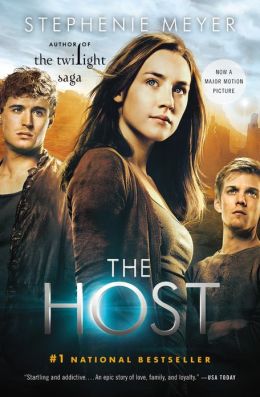
The movie The Host, is based on the novel of the same name by Stephine Meyer. An alien race has invaded the earth.  The aliens do not seek to live peaceably with humans and instead take up residence inside of human bodies.  They then go on to completely clean up the earth, which was dying because of human neglect and greed. The aliens view humans as volatile and justify their enslavement of humanity based on their supposedly more moral way of living and interacting with others.

Movies and books are two very different kinds of arts.  A writer has a far greater ability to make many in depth points in a book whereas; movies quite often are forced into a position of making a point quickly without much nuance.  The Host essentially told the story as written by Stephanie Meyer without any analysis or nuance, thus making if fall flat. What we are left with is a doe eyed protagonist who is all about peace, love and getting along. It's boring and uninspiring.

In the book,  everyone on earth has a job and are allowed to pursue the calling that best suits them.  Everyone takes their turn cleaning the streets and doing menial tasks, that allow the environment to be clean.  If one is hungry, it is a simple matter of going into a grocery store and taking the food items that are needed off of the shelves.  If one is sick, it is a simple matter of traveling to a healing center to be cured and no cost is ever incurred for treatment. Both men and women work, though women or at least human women, remain subservient to males.  Sports are played without violence and at the Olympics, everyone is given an award.  There is no war and there is no violence. In the movie, we do see Wanda enter a store and take what she needs, as well as borrow a car by simply asking but these scenes alone are not enough to portray the message that Meyer tried to convey in the novel. By removing the class analysis, the movie removed the most compelling aspect of The Host.

When Wanda first arrives at the human compound, she was hit repeatedly.  Though the first time she is slapped, it's by her aunt, much of the violence she suffers is at the hands of men.  It is justified because they see her as the alien, the other. Wanda only stops being beaten when she shows them that she is gentle and even demur.  It reads as her conforming to patriarchal understandings of femininity and thus being rewarded.  In one scene, the human rebels begin to fight and instead of being proactive and trying to escape, Wanda turns herself over and allows herself to be strangled with no attempt to defend herself. Even more problematic, when Wanda is removed from the human body she was inhabiting, she is placed into the body of a woman who is even smaller, thus placing her passive personality into an even more vulnerable body.

In the novel, there were no characters of colour and no GLBT characters. The movie did however include characters of colour.  They were seekers, healers and of course human rebels.  The largest change was Doc being turned into a Black man.  Largely it felt like these were additions to forestall complaints of having an erased movie because none of the characters of colour were strictly important to the story.  They played the role of fillers and this turned into an opportunity that was lost to correct one of the problems with the book.  The movie also continued the novels erasure of GLBT people. Apparently all aliens are hetcis and so were the surviving humans.  This kind of erasure is of course common to this genre as the various reviews on this novel show but it doesn't make it any less irritating each time it happens.  Something about aliens mean quick death or erasure to marginalized people.

The Host was billed as Stephanie Meyer's first adult story but the movie turned it into nothing but the usual teen angst because it removed the class analysis. The advertisements for The Host tried desperately to connect it to Twilight and while The Host was more palatable in a lot of ways, there was nothing to really propel the story forward. Emily Browning is an attractive woman but having her make doe eyes and simper for almost two hours is not exciting. In the end, it's time that is most certainly wasted.  The Host is not entertainment but it is a cure for insomnia.


Death and the Crimson Night (Night Series #1) by Marie Hall


Pandora  is a 5,000 year old Nephilim, a person whose daddy was an angel who did things he shouldn’t with a mortal woman. Along with some powers and a long life span, this also comes with a demon resting inside of her – Lust. And Lust must be placated and fed. It’s quite annoying.

But she gets by, she and her small group of Nephilim, trying to the best people that demons can be. Not a little encouraged by mortals who monitor and police the supernatural

But things are getting odd, vampires (nasty, demon created things) are swarming in surprising numbers for creatures near extinct; a Nephilim hunter bothers Pandora but seems disinclined to hunt, and powers unlike anything she’s seen in 5,000 years are involved.


This book was a perfect first book right until the very end. The characters were excellently introduced along with a little information about each of them to give an idea of them without having to derail the main introduction, while at the same time giving a little bit of world building with each one. So we know things like Luc and Pandora’s past that colours their relationship without having to spend a long time on the backstory – while at the same time telling us about Nephilim losing control and going feral. We have a little information about Bubba while at the same time telling us about some of the awful things Nephilim are forced to do for their demons, how they, as a group, try to remain good. We have a little background on Vyxyn and how she doesn’t get on with Pandora – telling us that the group is somewhat forced together and leading nicely in to the Order of Light, the war and the policing of supernaturals.

It’s a really elegant way of including a lot of backstory, interspaced with Pandora’s internal musings and recaps that are very lightly info-dumped, to get a maximum amount of world building, character development and backstory in place with minimal info-dumping and making the whole plot run smoothly.

The plot itself is excellently paced – enough mystery and revelation, enough character development sprinkled with bits of action; shadows of a love triangle but it never developed into one and Pandora firmly in control of what she will and will not tolerate even with various forces pushing against her. It was a fun read with a lot of unknowns – unknowns that continue to be unknown at the end of the book as well – to leave me hooked in for the next book coupled with a whole lot of ominous foreshadowing and some excellently balanced description keeping everything vivid, but moving. We have a really nicely new world – the Nephilim are children of angels (who fell for being naughty and lusting) with their own vice demons possessing them. I like how it links vampires, zombies and other miscellaneous supernaturals back to this original Nephilim presence – creating a very potentially diverse world but still keeping the backstory focused and relevant.

Tuesday, August 27, 2013

Walking Dead Season 4: sneak peak

Walking Dead season 4 Sneak peak - just a little longer to wait


Godhead by Ken Mooney


Back in the mists of history, the gods of Olympus fought against the demonic forces of Kaos. And they lost because one of their number, Aphrodite, turned against them.

With gods dead and facing utter destruction, Hera launched a last, desperate plan; sealing off Olympus and the tree, the source of their powers and with it sealing the demons away from the world and humanity.

Aphrodite is still active in the world, her schemes stopped only by the human descendants of the Olympians. Which is where Megan, newly grieving for her dead grandfather, and Karl come in – learning a lot about their ancestry, their abilities – and a sudden, high risk duty.


Greek gods! Demigods! Epic battles between the Olympians and the forces of Kaos! Demons, a rogue Aphrodite! Lots and lots of Greek mythology sprinkled around!

This book was almost designed for me. Throw in some human descendants developing super powers and discovering what they are and a big epic battle to save the world all coupled with a well realised and developed antagonist? Excellent idea, you’ve hooked me in; this concept will have me begging for more.

Unfortunately, the writing is very very slow – this is a long book that could have been a lot shorter. It was a shame because it opened extremely strong. The scenes of the ancient world, the history of Aphrodite and the Greek gods, what happened and what the consequences were were awesomely done. I actually want to read that book – just the war between the gods and the demons would be excellent. Not only do we have the prologue but the book is intercut with more snippets of the past from Aphrodite’s point of view. All the scenes are excellent and really do a lot to flesh out and develop Aphrodite as a villain – giving some motives behind her destruction.

Really, the whole ancient world would have been an excellent series of books in their own right.

But having them cut in randomly from half way in the book felt more confusing to me than anything. Because the actual present being depicted was moving so slowly, these sudden flashbacks – to the ancient world, to Hannah and Unity when they were younger, to Meghan’s grandfather’s journal, while all considerably better than the main plot line, served to bog it down a lot, make the book longer than it had to be and make it all a little jarring. Sometimes I just didn’t have any idea what was going on or why.

Utopia, Season 1, Episode 3


At Corvadt office, the boss man, Conran Letts,  has to make a difficult decisions – prompted by the nameless-yet-sinister Assistant who is played by James Fox so has an instant aura of authority. He makes a call…

And Arby picks up his phone, eventually, still maintaining the creepy. He pulls on gloves then takes out his gun from his yellow bag. He goes to the school where Grant was attending and runs into the headmaster who tells him, completely unasked, that Grant is missing (not unexpected given his home life). Arby asks how many people are in the school, since it’s after hours. The headmaster sums up the few remaining and Arby shoots him in the head. A woman sticks her head out of a room, gasping in shock – and Arby shoots her too. He follows her falling body into the room where we can hear screaming; the 4 members of the geology club are also shot. A boy comes in and sees the headmaster’s body and wisely runs. Arby follows him and we hear more gunshots.

He reaches the last boy who cowers when he points the gun. Arby pauses in silence, only his breathing and convulsive swallow making any noise. He rubs his eye – is he genuinely bothered? Then we hear another gun shot.

Well… damn. That scene was incredibly powerful. Hardly a word spoken, and so much power and emotion conveyed.

Back to the main group and they arrive at an isolated cottage where they’re staying – and Becky thinks they have to wait for Jessica to help them break in. Wilson and Grant protest they know how to break into houses to which Becky, rather shocked, asks if she’s the only one who doesn’t know how to housebreak. Wilson offers to teach her *snerk*

Inside Becky gets Garth a sandwich and examines his leg – she speaks to him as a child and he responds rather more adultly than she expects. She asks him about the manuscript (which he left with Alice) and he gives some hints – more information about Caville and the man known as the White Rabbit. Wilson and Ian seize on the fact Garth can get them the manuscript but Becky emphasises they have an 11 year old boy who saw someone murdered and has been on the run, all alone, for several days. She wants to go softly softly – and doesn’t trust Jessica at all.

Which is when Jessica arrives and wants to search Grant and get her hands on the manuscript no matter what. Becky stands between them, Ian tries to get her to sit down which leads to another argument – and the news comes on with the school shooting. Grant has been framed as the main suspect behind it.

Monday, August 26, 2013

Dance of the Red Death (Masque of the Red Death #2) by Bethany Griffin


Araby has managed to escape the city with her friends, giving her chance to absorb some terrible truths:

Her father is a murderer, her father created the plagues.

She can barely accept it, even reading his own journal and needs to hear it from his own mouth. Which means returning to the city – to hear from him and to find a cure for April as well, rapidly succumbing to the Weeping Sickness.

And while they’re there it may be their last chance to save the city – a city ravaged by plagues, swamps and the duelling forces of Prospero and Malcontent.


Elliot launches on a really excellent campaign this book. It’s his chance to take back the city and save it from the dual abuses of Malcontent and Prospero – his father and his uncle. He has his army, but will it be enough against Prospero’s and Malcontent’s own forces? Or the city itself? Ravaged by 2 horrendous plagues, the water unsafe to drink, the air unsafe to breathe. Slowly sinking into the swamp, ravaged by divisive factions, falling apart through anger and fear. Services have stopped, getting food into the city is becoming harder and roads are blocked by the piles of bodies.

It’s an epic task he has – but he has a plan, reclaiming a neighbourhood and expanding, creating a safe space, disposing of the bodies. He is the man to save the city and he is perfectly placed to do so.

And he’s not the protagonist.

We’re following Araby. Awwww… do I have to? But but Elliot is the hero!

In the face of these epic happenings Araby is… spending pages on pages worrying if she really loves Elliot. Or wondering if she loves Will after his betrayal – and his continuing activities for that matter. Or she is worried/hurt about her father and the terrible revelations that show that he is far from the hero she suspected. Or she is worried about April or the children or some of her other companions.

And it’s not like any of these issues are wrong. She has been betrayed by Will, her whole relationship with Elliot is a complicated one. And April is her often unappreciated best friend who is now plague ridden – of course she is worried about her and the children in such dangerous places and circumstances. All of her emotions are legitimate. But they’re also repetitive, really really, repetitive and handled at great length. I could, possibly, get past that if we didn’t have Elliot running around actually doing something – and not just doing something, but doing something for the whole city that makes Araby look very… small in comparison.

Star Trek II: The Wrath of Khan

Alright, I fully admit that by doing a marathon on all of the Star Trek movies, I am stepping completely outside of our stated genre, but as a life long Trekkie, this simply had to happen. Given the success of this franchise, I'm betting that at least a few of our readers are also Star Trek fans. Of course, I will stick to the usual social justice perspective, as we work our way through the series.

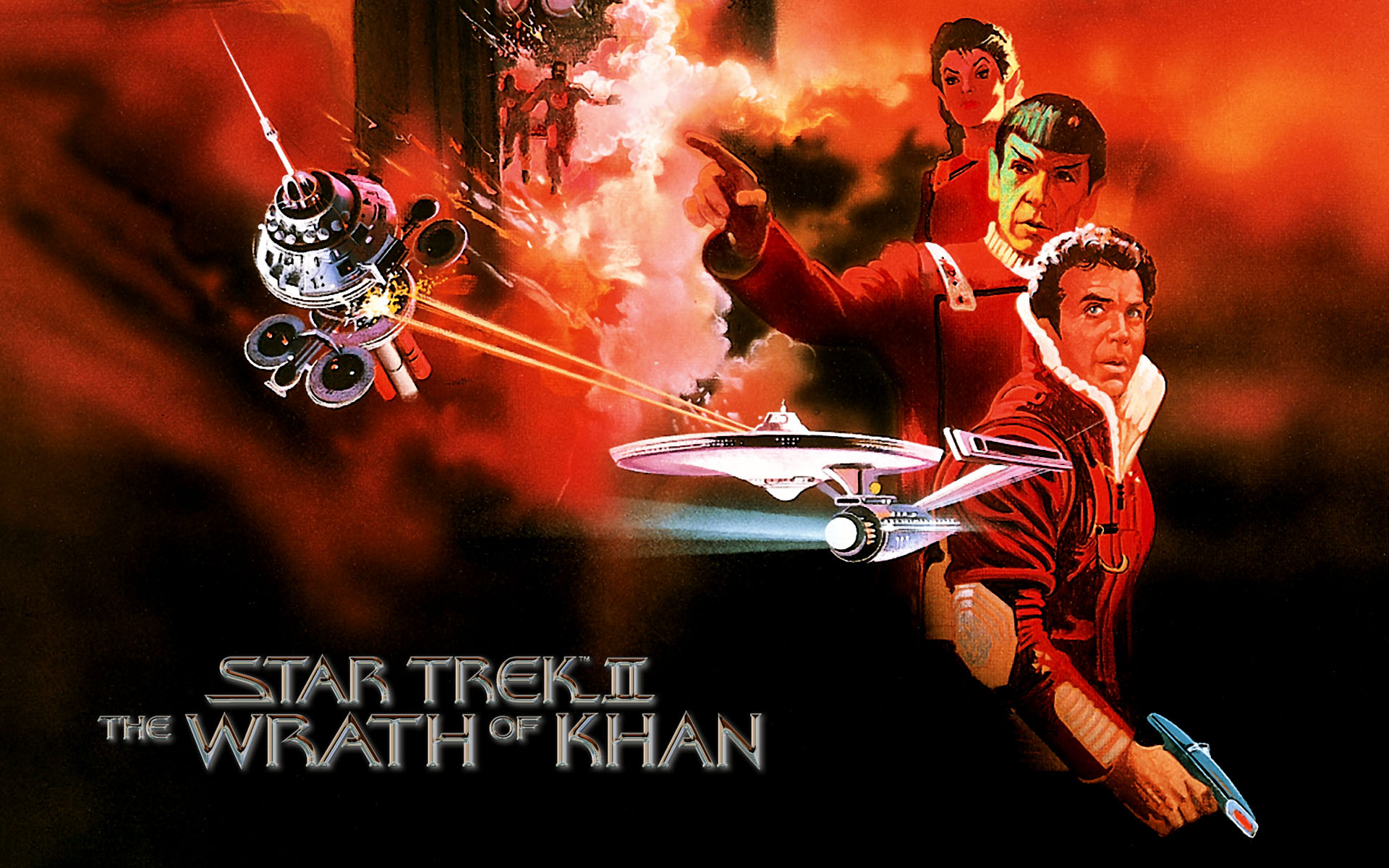
Star Trek II The Wrath of Khan has Ricardo Montalban reprising his role as Khan Noonien Singh. The character first appeared in "Space Seed". Khan is a genetically engineered human from India.  When he is awoken from suspended animation, instead of being thankful, Khan attempts to take over the Enterprise and as a result, Kirk maroons him on Ceti Alpha V.  Stark Trek II the Wrath of Khan begins with Chekov on a scouting mission, for a planet which meets the parameters of  the Genesis project.  He mistakenly beams onto Ceti Alpha V and is captured by Khan, who implants an alien in his ear, along with that of his captain and thus begins his plan to get revenge upon Kirk.

I have to pause to say that the entire start of this saga is absolutely faulty.  How could Chekov not remember or realize where he landed in the first place?  The set up was absolutely thin at best and was a weak excuse to introduce Khan into the story. Is this the reason Chekov didn't make captain like Sulu?

Kirk is beginning to feel his age and though the promotion to Admiral is something Kirk viewed as a positive, the end result is that it keeps him landed. At the very first opportunity, Kirk quickly takes over command of the Enterprise, though he no longer possess intimate knowledge of the ship's capabilities. In many ways, this reads as a man desperately trying to prove that he is still vital and capable.

 Star Trek II: The Wrath of Khan, is a test of wills - a contest of masculinity.  For Khan, Kirk represents Moby Dick,  so much so that Khan's last line is, "from hell's heart I stab at thee; for hate's sake I spit my last breath at thee" —Moby-Dick, Chapter 135.  Though Khan has a ship and Genesis - everything he needs to start fresh, he simply cannot let go of his desire for revenge and it is in the end his undoing. 

Star Trek II: The Wrath of Khan is very much about hyper masculinity.  What constitutes manhood and how does one prove it?  Kirk as the White male of course represents the best of what masculinity has to offer and Khan, the man of colour cannot help but to be secondary.  In many ways, Khan's race makes him just as much "other" as Spock, with the difference being that Khan refuses to be submissive to Kirk.  Khan would rather die on the Reliant than surrender. Only those who follow the headship of Kirk can possibly be considered good and this justified through the approved hierarchy of the Federation and thus once again, we have White male leadership affirmed.