Showing posts with label Anne Rice. Show all posts

Monday, November 3, 2014

Prince Lestat (Vampire Chronicles #11) by Anne Rice


A Voice has started invading the minds of vampires across the world – wheedling, threatening and begging, it is pushing them to do one thing – destroy their fellows

As the death toll mounts, Benji, vampire fledgling and podcaster, appeals to the elders of the vampire tribe to do something. Anything.


So do I. But then I’ve been begging for several books and they still haven’t done anything.

This book actually greatly exceeded my expectations. Of course, if you’ve read my previous reviews of the Vampire Chronicles you won’t be surprised by the news I didn’t have very high expectations when I started this book. So, when I say “exceeded my expectations” what I mean is the book actually had a plot.

Yes, there was an actual storyline that the characters (more or less… sort of…) stuck to with an actual antagonist and actual events. I would normally consider this to be something of a basic requirement for a book but given the last 5 books in the series had nothing resembling a plot, just long winded expositions of back story (and this is very generously suggesting the tortured quasi philosophical screed of Memnoch the Devil had a plot) of random characters suffering from an obsessive need to recount their memoirs to anyone who will sit still long enough to hear them.

So there was plot. There was an actual threat to vampire kind and Benji shouts out to the airwaves to ask all the super elder powers of the vampire world to pause in their eternal moping, put down their latest diary entry, refrain from falling in love with random passers by and please use their super powers to actually do something.

And they hear the call and proceed to… navel gaze. And mope. And lament. And be ludicrously melodramatic. Seriously, the threat is introduced moderately early in the book and in response we get to see the view points of 80 gajillion vampires all of whom are not actually doing anything but being upset and agitated and dramatic and falling in love with any human/vampire/ghost/passing seagull that catches their eye. In between this is Lestat who is aiming for Gold in the moping Olympics and he is positively lapping the competition.

The pacing is truly abysmal, so much of the book is spent moving from character to character and them not actually doing anything except monologue in an appallingly excessive fashion, each trying to surpass the melodrama of the last. There are also a free story-line-ish things introduced which are just there – random nuggets of irrelevancy that may be interesting but aren’t even close to developed. They’re just there, taking up pages

Like the founding of the Talamasca. At last, some explanation for the Talastalkers and why they do what they do. We hear all about the founders in rather excessively boring detail and learn that they founded the Talamasca for… for… for… well… ok they founded the Talamasca for reasons which I sure were very important. But… the Talamasca isn’t in this book. They have no presence in this book. They do nothing in this book. And, not matter how much this is technically solving a great mystery of this world, it still grossly out of place in this book and achieves absolutely nothing except throwing in a random intermission. Maybe the Talamasca could hand out popcorn? Or fervent assurances that they will get on with the plot, honest. It’s like reading a World War 2 drama and suddenly having a chapter devoted to Charlemagne – potentially interesting, yes, but not really relevant.

Another potentially interesting yet out of place storyline was Fareed and Seth – science vampires. I was actually intrigued by this, it would be interesting to see one vampire in this world who isn’t a talentless romantic poet who thinks history books would be vastly improved with lots of purple prose. It promised a new direction. It promised a new focus. It promised a great deal – but didn’t deliver a thing. I have no idea what they’re supposed to achieve. They appear, they say grand things about science, the other vampires profess how impressed they are but also how little they understand and then we move on. They only thing they add to the plot is Viktor…

Which brings me to Viktor – why is he here? He and Rose, humans connected to Lestat through means I won’t spoil – but they don’t do anything, they add nothing to the plot line, they’re just there. Again, conceptually, they have potential as mortals thrust into the vampire world in such an unconventional way. That potential is completely wasted as they neatly fit in exactly the same mould as every other human-destined-to-become-vampire does. Oh there’s a kidnapping scene, but the characters are so interchangeable that they could have replaced them with Daniel or David or Gabrielle or Louis or Sybelle or Antoine or Jesse or Everard… well any of the innumerable pointless vampires who kind of lurk around the background of every scene doing absolutely nothing.

Monday, October 6, 2014

Blood Canticle (Vampire Chronicles #10) by Anne Rice


Now Mona is a vampire and not facing her inevitable death, she is able to ask hard questions – like where her daughter is and what has become of the Taltos

The big dark secret of the Mayfair family is finally open and ready to be resolved.


I have a problem.

When I reviewed Blackwood Farm I gave it 0.5 fangs. I do not regret that rating, it most definitely deserved that rating. But now I have a problem, because Blood Canticle is even worse but, out of some odd twisted sense of needing to finish this series, I finished it so I can’t DNF it.

Normally I like to sum up all the positive things with the book first. This will not take long. I like that the book addresses Mona becoming a vampire and how, as a woman, the sheer safety from attack that comes with vampiric power means a lot more than it would to, say, Quinn. It’s a nice mention – it’s one line

There’s the good. I can think if not one more positive thing to add. Now to the much much much longer lists of negative.

Firstly, this book opens with a rather awful screed from Lestat chastising readers for not appreciating the brilliance of Memnoch The Devil (a book that was much criticised and, no, I didn’t like it either). I’ve seen authors respond to negative reviews before and it’s never good, but to actually have your title character scold readers for not UNDERSTANDING the insight of your oh-so-perfect book in a later book in the series is rather shockingly childish and ridiculous. It did not make me positively inclined towards this book

Then we have Lestat running through this strangely bizarre joyous ode to Catholicism, including shovelling over a lot of problematic issues (in a series that likes to make every character bisexual – well so long as their loves are under-aged – praising the church in glowing terms then throwing aside the homophobia as a 3 word bracketed reference is insulting) which then develops into a confused, incoherent ramble of Lestat wanting to be a saint and the Pope and the spiritual joys of an obscure saint that will keep popping up throughout the whole book without any real need or relevance (and it’s not like the books need more reasons to deviate).

Monday, September 22, 2014

Blackwood Farm (Vampire Chronicles #9) by Anne Rice


Quinn can see ghosts and has been haunted his whole life by a particular tenacious spirit. Now he has become a vampire, that spirit has turned violent and he turns to Lestat for guidance, after telling Lestat his life history. At length and in great great detail.


This book is labelled as a Vampire Chronicles novel. It has also been faintly labelled as a Mayfair Witches novel. I’ve heard it discussed as something of a cross over novel. Personally I’d call it a Mayfair Witches novel into which Lestat and Merrick have been crowbarred in with extreme force and zero elegance. If I were being less kind (yes, that was kind) I’d say it was a vast waffle of not very much with little hints of both series randomly thrown in but really not much about anything

Because like every single book in both series this book is rammed with a truly ridiculous amount of minutiae that is grossly unnecessary for anything resembling a plot. New vampire Quinn seeks to tell his story to Lestat. In that telling he covers his genealogy back 5 generations. No, really. He covers the genealogy of his servants back the same length of time as well. He even tells the genealogy of the vampires who made him who, almost immediately, decided to tell Quinn the same thing in ridiculous detail. He tells every last tiny detail about his life, so much of which is utterly irrelevant – Pops (his grandfather) having an illegitimate son? Meaningless. The bed and breakfast and the soprano he cries over that we were told about three separate times (ye gods why?) irrelevant. The fact he constantly shares a bed with elderly Black servants (ye gods why?) irrelevant. Every sexual encounter he’s ever had (why would you tell a stranger this? Why?) His first teacher and how very good she was? Really really really irrelevant. Why is this all here? 

Why is this story which should have been about the ghosts that were plaguing Quinn and, perhaps, the vampires that made him and maybe the people who can see Goblin (and Rebecca – though, again, Rebecca ghost was another storyline that did nothing, went absolutely nowhere and was resolved in pointless seconds) so clogged with this much completely and utterly random backstory? Why would Quinn tell Lestat so many utterly personal secrets about himself?

And can everyone stop falling in love! I’m not even talking about Quinn seeing Mona across a restaurant and moseying over to declare that he intends to marry her (but, really? He sees a 15 year old girl across the room and wanders over to make marriage plans? What the hell? Why? Who? Where’s the damn restraining order?!) But Lestat, after hearing Quinn’s horrendous monologue declares how much he is in love with Quinn. Of course. After meeting Merrick for 5 seconds Quinn decides he loves her. Merrick probably loves him, I forget because everyone loves everyone else. Quinn loves Arion, random Greek vampire who is just kind of there because why not. They use the word “love” so often it no longer has any real meaning. I know it’s a running joke with this series but it’s actually a problem – because all of this overwrought, appallingly purple, melodramatic declarations of emotion are meaningless. All his excessive adoration of Aunt Queen and Mona means nothing because he’d use exactly the same language to describe someone he happened to be passing in the street. All of the emotional connections in this book – in this series – fall apart because they mean nothing, there is nothing special about them. True love is described in the same terms as casual acquaintance.

Monday, September 8, 2014

Blood and Gold (Vampire Chronicles #8) by Anne Rice


Thorne, his long sleep interrupted by the waking and rampaging of the Vampire Queen Akasha, is now driven to find the one who made him, the one he saw in his visions – Maharet, one of the two oldest vampires in the world

He emerges from his icy tomb to seek his own kind – and finds Marius, the Roman, Child of the Millennium, Former Keeper of Those Who Must be Kept. And avid biogorapher – who recounts his history to the Norse vampire


Thorne emerges from his centuries of sleep, trying to find answers, trying to find his creator, trying to find some explanation for what happened in the vampire world. At first it seems lucky that he runs into Marius, ancient roman vampire who knows all the answers, but as he’s taken to Marius’s home he realises the dreadful truth… he had fallen into the hands of The Biographer Vampires and their Endless Exposition.

Despite having known Marius for less than a few hours, this poor vampire is then subjected to Marius’s entire 2,000 year old life story (as an added bonus, he also tucks in the story of Eudoxia, a vampire he met along the way). I honestly think these books aren’t even trying to come up with a plausible explanation for why these vampires feel a need to info-dump their entire histories with the most purple of prose – just randomly dropping it on a stranger will do now. Thorne wanted to know about the events of Queen of the Damned, it would have taken exactly 10 minutes to sum up the (limited) plot of that book! No-one asked you your life story, Marius!

To be fair, though, this is one of the better interminably long, over-detailed biographies in the series because a) Marius is a relatively relevant character and b) we get a good sense of him in this book which we haven’t seen elsewhere (unlike, say, The Vampire Armand which was repetitive and added nothing new).

We get a good insight into Marius’s character as time and again he repeats the same patterns – Marius needs company. Not just vampire company (though for much of his existence he seems to need or crave a vampire companion), but human company as well especially when he was younger (relatively speaking), often throwing open his home for people to join him in parties and salons – far more so. In some ways he’s very much a product of his time and place: he’s a Roman. He’s very civilised, very social and, tellingly, pretty arrogant. Which is a wonderful repeated sense I get of Marius which is well done because I get this sense while seeing through Marius’s eyes AND without Marius himself conceding the point. But Marius is Roman, the civilised man in the world of barbarians who need to be educated. From a young age he was entrusted with the duty of keeping Akasha and Enkil safe and repeatedly drank Akasha’s blood making him much much stronger than pretty much every vampire he met. There’s a lot of fuel to that arrogance but once you see it, it puts everything else into a whole new context with Marius.

Monday, August 25, 2014

Merrick (Vampire Chronicles #7) by Anne Rice


At Louis’ request David gets back in touch with Merrick Mayfair, a powerful witch and member of the Talamasca. He has known her since she joined the order as a child and knows her long, powerful and often frightening history.

But that history may be why she can do what Louis needs and call on Claudia’s ghost to confirm for him whether the child vampire has reached a peaceful afterlife or suffers as a ghost. And David’s connection to Merrick may be why she’d want to do it.

Though Merrick may be playing her own game


So, Louis wants to get in touch with Claudia’s ghost because the angst monster needs fuel for his eternal mope. To do this he contacts David who in turn calls on a contact he has in the Talamasca, Merrick.

And then tells us her life story in excruciating detail

I think it’s a good thing vampires don’t eat, because every time they ordered a pizza they’d have to pause to have an epic monologue on the delivery boy’s history. I’d actually be wary of working with these vampires simply because if you do anything for them they demand a full biography – which they then apparently put into print and share with the world. It’s one of the unknown vampire afflictions – can’t go out in the sunlight, blood diet and compulsive biography writing. Honestly, I do not even remotely understand the need to tell extremely long, irrelevant back stories to characters that we know nothing about and have little, or no, reason to care about.

I need an aside on the Talamasca – since I’ve previously called them the Talastalkers. Their motto is “We watch and we’re always there.” I presume this is because “We Know Where you Live and Where Your Children Go to School” and “We’re In The House!” were both already taken.

When I first saw that David was the narrator of this I celebrated. For a brief, deeply frightening moment, I thought Louis was going to be the POV and we would have lots of whining. At least David doesn’t whine… oh how wrong I was. No, because now David has thrown his hat in the ring – he too will compete for the title of whiniest one of all!

Between the moping, excessive descriptions and unnecessary art references (honestly, I do not understand authors who try to shoe-horn in these references to show us how knowledgeable they are) there was a surprising lack of philosophising to a degree.  But it does seem that everything Lestat learned and we endured during Memnoch the Devil has been forgotten. There was even one interesting philosophical point of Louis refusing to upgrade his power level, even if he would then not have to kill so often, because that way he is capable of suicide, capable of dying which inherently makes him more human than, say, Lestat or David who wouldn’t know how to kill themselves even if they tried.

Monday, August 4, 2014

The Vampire Armand (The Vampire Chronicles #6) by Anne Rice


It is Armand’s turn to recount his history to David to be recorded for posterity

If Lestat and Louis’s books are digitised, he could always just copy and paste the relevant sections.


I am not a fan of this book, there’s very little about if I find even remotely enjoyable and the few steps forwards it takes are so overwhelmed with problems as to make whatever progress it made completely irrelevant. This book was not a fun read, it was a boring read and, more than anything else, it was an unnecessary read

Which underpins the main problem with this book – it’s unnecessary in many ways. Firstly, The Vampire Chronicles is already a grossly over written series with a truly unnecessary amount of back story for the tiny crumbs of actual plot and present day happenings we have been given. I know more about Louis than I needed to, but at least Interview with a Vampire existed to introduce the world. I know every last teeny tiny detail about Lestat, but at least he is a central figure in the plot. I know Marius’s background in painful length but at least he is, somewhat, a foundation for the other characters in a rather convoluted manner. Even Meheret dropped in for a dreadfully long story time of her history

This is a lot of unnecessary back story already for a very limited plot. It doesn’t need yet another book full of back story with no actual present day storyline; enough with this endless, long winded recitation of their pasts! Recounting of history is not a substitute for plot

But this unnecessariness is compounded by the fact that this is Armand! I know some people are big fans of Armand – but honestly I have no idea why. Armand hasn’t been relevant to the plot line since Louis left him after burning down his theatre. Armand has had no significant presence in any of the dramatic events of Akasha waking up, or Lestat playing body switching or Lestat’s appalling navel gazing theology  – nor did he really start a storyline of his own in this book. Armand is completely irrelevant to current events and this book did nothing to make him relevant. Nor has he ever actually been relevant!

This is shown by this book, he was a brief stopping point in Marius’s, Louis’s and Lestat’s history – a permanent side character in all their lives. The book even lampshades it:

“How can I tell you about something that doesn’t interest me? Is it supposed to interest you? The problem is that too much has been written about my past already.”

I don't know Armand, is it supposed to interest me? Because it didn’t. And yes, every remotely interesting moment in Armand’s life had already been covered in previous books; Armand had nothing useful to add and did nothing useful or interesting outside of those moments. It is repetition with another repetitive story of being a young vampire and Armand and Marius tacked on (the basics of which we already knew). This character is irrelevant! His story is already told! His history is already known! Why are we repeating this?

Monday, July 14, 2014

Memnoch the Devil (Vampire Chronicles #5) by Anne rice


Memnoch the Devil takes Lestat on an extremely long tour of the past, creation, angels, evolution, the passion of Christ and more – because he has a job proposition for the Brat Prince


Memnoch the Devil, also known as “the Bible according to Anne Rice” or “Anne Rice’s theological musings”. Perhaps even “Memnoch lectures you endlessly while Lestat practices his melodrama”.

What it isn’t, is much of a story or a plot. For a story or a plot to happen, well, things have to happen. Things do not happen. Oh there’s something tucked at the beginning. There’s something tucked at the end (a teeny tiny something). But that’s it

The rest of lecture. Info-dump. ONE LONG INFODUMP! One horrendously long, unbelievably unnecessary info-dump. An info-dump that I cannot even imagine having even the slightest relevance to the series. It really is just one long exposition on what the Bible could mean or a spin on it or on the nature of god. It’s a vast amount of world building that is utterly irrelevant to anything the vampires do in their daily lives

If Lestat weren’t being dragged around to occasionally declare himself impressed/awed/horrified it wouldn’t be relevant at all. The vampires are utterly superfluous to this story. All of the characters are utterly superfluous to this story. It may as well have been one long the logical lecture – inly told in the most long winded, dullest way possible.

I’d like to write more on this since it is the vast majority of the book, but there really is nothing more to say. It’s just a big splurge of theological theory pretending to be a novel. It’s completely irrelevant, not very interesting and probably better suited to analysis in a seminary than actually read as a novel in the ongoing vampire series.

But looking at the bits that actually involve the vampires rather than some of the dreariest and long winded exposition I have ever had the displeasure to ready, and it’s not much better or more sensible. Perhaps because these little add ons have just been forced to try and drag this info dump into her world

Lestat fell in love with his victim – I can buy that’s imply because within 10 seconds of meeting just about anyone, Lestat falls in love with them. It’s what he does, it allows even more pointless melodrama. So we get a really long and pointless backstory on this man and some books he read (which seem to be more part of the endless theological debate that basically comes down to “sex and pleasure and love are not bad things. Suffering is not valuable.” Seriously, that’s this entire damn theological diatribe that took an entire book to relate summed up in one sentence) which is never gain relevant. This goes on for countless pointless pages where we learn the pointless minutiae of someone who DOES NOT MATTER

Monday, June 30, 2014

The Tale of the Body Thief (The Vampire Chronicles #4) by Anne Rice


Lestat has become thoroughly disillusioned with his life as a vampire. Isolated, bored and generally dissatisfied he tries to end it all – which doesn’t work out as planned given his incredible power level

When someone makes him an offer he can’t refuse, though he really really really should as multiple people tell him. But since when has the Brat Prince listened to the advice of others?

He agrees to the Body Thief’s proposal – he will swap his incredible vampiric body for that of the Body Thief’s human one – letting Lestat experience humanity while the Body Thief, Raglan, a deeply unsavoury character, plays around with Lestat’s amazing powers

It does not go well.


I love that Lestat becomes human and hates it! Especially since this follows both Louis and Lestat playing the “woe, I wanna be human!” game – and since Louis is probably responsible for an entire genre worth of vampires moodily staring into the night and cursing their immortal super powers. I love how perfectly Lestat sums up just how much better it is to be a vampire, how awesome being a vampire is, how incredible his powers are – and no, getting to see the pretty sunshine does not make up for having to do all the nasty organic things that he hasn’t had to deal with for the best part of two centuries. I love how gross he finds the daily life of being a human. I love how hard he finds it, how painful, how difficult.

Yes, he looks hellaciously whiny when he complains to Louis about it, but it is a powerful moment – Lestat (and Louis) have reached such a power level that being human is beyond their conception. The struggles of humanity are insurmountable tortures to Lestat because he is so separated from them.

The real world parallels for this are many and deep (for example, the number of extremely privileged, wealthy people putting marginalised cultures, experiences et al on shiny pedestals without even beginning to understand what it actually means to be those people) and it’s an extremely well maintained theme throughout.

Are there things about being human Lestat likes? Yes. Is being a vampire an inherently lonely experience? That’s extremely clear as the human Lestat makes his connections (which fall apart when he becomes a vampire) but it has become clear over and over (and is overtly stated in this book) that the few remaining vampires in the world simply cannot get along for any great length of time. Of course there are attractions, but those can only be realised by ignoring a huge wealth of pain and hardship and difficulty that being a human brings compared to the vast abilities of vampiredome.

Monday, May 12, 2014

The Queen of the Damned (The Vampire Chronicles #3) by Anne Rice


Lestat has rocked the vampire world with his music and his book revelations. But his voice has reached far more than he imagined – it has come to the ears of Akasha, the first vampire, the Queen of the Damned. For the first time in millennia, she has woken up

And she has plans – plans for Lestat, plans for the world of vampires and plans for all humanity.

It falls for a few ancient vampires to try and stop her as she unleashes carnage to realise her vision of what the world should be.


This book is 460 pages long. And like every Anne Rice books I’ve read to date it could easily be half that or less. I cannot even begin to describe the amount of redundancy and repetition there is in this book.

Usually when we get a character, the author will describe a bit about them, give some insight into their background and let the rest develop as the story progresses. Not Anne Rice. In these books we get a character and before they do anything even slightly relevant we have to have their life history. Not just their life history, but if we’re really lucky, we get their ancestry back 3 generations (at least) as well. It’s boring, it’s dull, it’s utterly irrelevant to anything resembling the plot.

I can’t even say there’s much in the way of coherent plot here anyway. A large part of the book involves recapping the last book. We have the dreams of the twins that just serve to be ominous foreshadowing – but are repeated and repeated and repeated and repeated over and over. I really can’t stress how repetitive this book is – this same dream is recounted not just from multiple sources but then multiple times from each source. And this is a theme throughout the books, we have multiple sources all thinking about Lestat and his music – but all thinking exactly the same thing about Lestat and his music. So we get the same thing over and over

And when people finally gather together their grand plan is EPIC EXPOSITION. Seriously, people being slaughtered, Askasha raging away and the gang gathers to have 2 solid nights of storytelling. The most long winded, repetitive story telling imaginable. Face the enemy with long winded folktales!

Then there’s the characters – all of who’s point of view we are treated to in ridiculous length – most of which are utterly irrelevant. At least Louis and Gabrielle and Armand have some history in the story and we don’t see too much from their POV, they’re recognised as being spectators. But the rest? What exactly was the point of Khayman? He just kind of sat in a corner and was ineffably sad. But we got pages and pages from his POV. Jesse? What did Jesse actually do? What was the point of her? What was the relevance of her Great Family? But she was there, her POV, her chapters worth of backstory was dragged up, we roped in the Talamasca for more pages of pointlessness – because none of it was relevant. None of it added to the overall plot. None of it added to the ending. None of her history or story was really relevant. And Daniel – another character inserted with a painfully long backstory and history with Armand who, like Louis and Gabrielle and Armand and Jesse, ended up being nothing more than a spectator for the – and I use the term loosely – action. These characters are not part of the story, they’re spectators, it’s like stopping a play in the middle so we can hear the biography of Mrs. Jones in the 3rd row of the theatre. It doesn’t matter, I have no reason to care, it’s pure padding

Tuesday, April 29, 2014

The Witching Hour (Mayfair Witches #1) by Anne Rice


There’s a house in New Orleans, in the Garden district that has slowly fallen into disrepair. It’s the residence of the core of the Mayfair family – the Mayfair witches

For generations the Talamasca has watched the Mayfair witches since their distant ancestor was burned at the stake in Scotland. Her descendants since then have passed on her dangerous legacy – a magical gift and the Lasher. A spirit of ever increasing power and dangerous, unknown motives – a creature that definitely has blood on its hands even as it put gold in the Mayfair pockets

And now, reaching the 13th generation of Mayfair witches, all that knowledge over the centuries may finally be needed to reveal the Lasher’s eventual plan.


Some books are long

Some books are very long

Some books are very very long indeed

Some books are “ye gods WHYYY?!” long

And then there’s Witching Hour which is much much longer than that.

It’s not just the length of the book – and it is a mammoth 1,200 pages – it’s how long the book feels as well. Some books can be really wrong and you still dive through them because they’re awesome – they feel short. And some short books drag on because they feel long with dense, awful writing and lack of any real pacing. Well, this was an incredibly long book THAT FELT EVEN LONGER!

The writing is so dense and so boring and so repetitive that it is an achievement to get through. It has to be said about Anne Rice that she is good at establishing time and place with evocative description – and she certainly does that in this book. But she doesn’t do it once – every place needs this description dozens of times, over and over the same points, the same places, the same times are described again and again in really long winded terms. Any evocative sense of setting is lost in the sheer overwhelming wave of unnecessary verbiage.

There’s a lot of grossly unnecessary detail. I struggled to start this book because we were treated to such a long winded, unnecessary analysis of Michael’s life before we were ever given any reason to connect to this man that I nearly gave up right there. I have no idea why we need the best part of 100 pages to describe Michael’s past or what it added to the book. But the same thing happens several times – Petyr can’t just be an agent of the Talamasca, we need to know his life story first. Some random agent in the 20s couldn’t just be a Talamasca agent, no, we needed to know his childhood, his history, how he joined the Talamasca, who he worked with… so much information for so little purpose. We can’t just get the story of Rita Mae, childhood friend of Deidre – no, we need to include far too many details about Rita Mae as well and I have absolutely no idea why I should care, why this is relevant or why I am having to read this.

To make it worse, the repetitiveness comes in as well. Rita Mae tells her story, then we have it repeated in Aaron’s narrative. A doctor tells his story about Deidre – which doesn’t really add anything unique – and then that gets repeated by Aaron. A priest tells his story, a nun tells her story – and then all these stories get repeated again. And these stories themselves are an exercise in redundancy. To show us how meticulous and creepy the Talastalkers are, we get the same information from several different sources to really drive home just how assiduously the Talastalkers have left no stone unturned in their quest to be the creepiest of creepers. So, yet MORE repetition!

And let’s have a swipe at the Talamasca here – because I’m still somewhat at a loss as to what exactly they’re doing? Trying to stop the Lasher? Well you’ve had 3 centuries of doing absolutely nothing towards that goal. The mere thought of the Lasher makes them cower in their beds. Ok, is it to help the family? Well you had evidence of generations of incest and multiple murders and didn’t feel the need to intervene. So is it just curiosity? Because that seems like a really dubious justification for centuries of riffling through someone’s rubbish and stealing their medical records. It’s not that curiosity isn’t a real motive – it is a very reasonable motive. But if that is the motive then the Talamasca are severely creepy, entitled and unethical people who feel they can intrude on someone’s life to this degree for the sake of their own nosiness. Hence my reference to Talastalkers.

Monday, April 21, 2014

The Vampire Lestat (Vampire Chronicles #2) by Anne Rice


Lestat awakens after many decades under the earth. He’s greeted with a new world, a world of music and freedom and excitement and infinite possibilities

And a world where Louis has had a book written. One that could use some… corrections. Or elaborations

But far more important than that is to seek the opportunity this new world presents and produce a grand spectacle – one that breaks all the rules and will shake vampire society to its core. The presentation of Lestat’s history. All of it – to a world stage


The Vampire Lestat is definitely an improvement to Interview With a Vampire, bringing far more action, far more exploration of the world and far more revelation of the nature of vampires than ever Louis’ interminable naval gazing and angst ever brought us. This was definitely a step up.

But first let’s hit some problems I had.

Firstly, wordiness. This book was over 500 pages long and could easily be half that. These books are painfully, horrendously over-written, repetitive, prone to long monologues and incapable of leaving anything to inference. No matter what the good points are with this book, I ultimately still struggle because of this morass of excess verbiage I have to struggle through to actually reach the story. Yes, it’s wonderful to be transported to the scene with excellent, evocative language use – but that is done and then some. And then it is repeated. And no-one can feel emotion without it being described in incredible length – nothing is left to inference. There are times when it is clear Lestat is happy or angry or sad and we don’t really need several paragraphs of elaborate text telling us it.

This is especially a problem here because what Louis was to angsty whining, Lestat is to hyperbolic melodrama. Louis is whiney. Lestat is moody. Both of which require pages and pages and pages to describe.

I also didn’t particularly like the endless philosophy leveraged in – not because it couldn’t have been interesting but because, again, it’s long winded and repetitive with the same tired points repeated over and over again without any real depth or development beyond further repetition. This only gets worse if you’ve read Interview with a Vampire because it’s the same points, the same philosophy that was already repeated ad nauseum there.

Now, let’s hit some good. One of the main things I loved was the presentation of Louis as an unreliable narrator. So often books are presented as showing what was in a story, despite the fact they are often narrated from a very skewed point of view. I loved the idea that, for all we’ve read in the first book, there was a decent chance that Louis was lying about some of it. And if not lying, he was clearly misinterpreting or misunderstanding a great deal. And through that lens of misunderstanding we learned far more about Louis than we did from his own words alone.

Reading this, we can see Louis’s arrogance, the snap assumptions he makes. Someone isn’t interested in what he is? They must be ignorant, or uneducated or shallow. Someone isn’t finding rapture in what he is – it’s their limited viewpoint, not because they may have already experienced it. Someone isn’t interested in the questions? Such shallow thinking! It couldn’t be because they already have the answers. Louis, previously the deep and meaningful vampire in a sea of shallow misunderstanding is exposed as being isolated by his own arrogant assumptions and self-centredness – his own ignorance and refusal to consider that he could be ignorant.

Monday, March 31, 2014

Interview with a Vampire (The Vampire Chronicles #1) by Anne Rice


Louis has a story to tell – centuries of life as a vampire that he recounts to a very surprised and very curious human.

Over the centuries he has experienced many things – tragedies, drama, bitter losses and terrible, guilty confessions and he lays it all out to one mortal listener, along with the lessons he has learned along the way. Perhaps in some vague hope that they will be heeded.


The writing is often incredibly beautiful and classically gothic. The descriptions are full and evocative, the settings are clear and powerful and presented in exquisite detail. The story, recounted as Louis recalls it – is still heavy with emotion that permeates every scene. In fact, the format of Louis recording his memories further helps underscore how Louis grew, what he learned and how he became what he is now. Simply seeing the vampire Louis is now, recounting his experiences, and contrasting him with the vampire he was, the vampire he describes, is a powerful literary tool. We see his cold detachment against the heavy, powerful emotion of his youth and it’s an unlabelled exposition throughout the whole book

This book also covers a lot of philosophy and fascinating questions that naturally arise when you consider immortal vampires – issues that are so often brushed over in vampire stories. What does it mean to be immortal? How does an immortal, ancient being adapt to the ever changing world? When you consider that our own parents and grandparents are often quite bemused by the latest technology, how much worse must it be for someone from the 17th century? What toll must it take on them to see a world that they must constantly struggle to understand?

And there’s the nature of morality. What is evil, what is not – especially when you are a being driven to kill? Does the definition of evil change? Is there a moral murder? Is there a less evil murder? Or is everyone just deluding themselves?

And there’s Claudia – a fascinating character and concept. The girl who can never grow up, the woman forever trapped as a child and in turn being a woman in a twisted family, blighted by love and hate in equal measure.

I also love the ending twist about the simple truth about how people will react to vampirisim no matter how it is described.

These are some really fascinating concepts that lend themselves to some real depth.

And the book goes into that depth. We have a lot of deep discussions and debates about these questions and more – including about what truly makes a vampire a vampire and what makes their immortality worthwhile. The topics are revisited over and over with extra nuances and new lines of enquiry and revelation as the characters learn more, meet overs and grow steadily, bringing new life and thoughts to old debates.

Tuesday, December 17, 2013

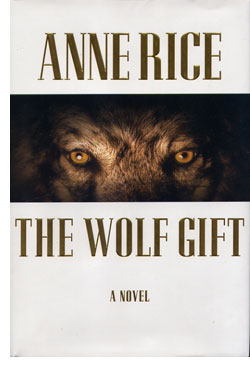
The Wolf Gift (The Wolf Gift Chronicles #1) by Anne Rice

Reuben didn't know that when he went to see the house on the cliff  to write a story for the paper that it would be a definitive moment in his life.  At 23, he was still a young story teller but innocent to many things.  In a matter of hours that would all change in a vicious attack by a beast. With his life in the balance, Reuben was transported to the hospital, only to discover that he was changing.  This metamorphosis led to things like increased strength and vigor, as well as an acute sense of hearing.  Before he knew it, the change was upon him and Reuben found that he was no longer simply a human male but a wolf creature whose nature was to hunt the evil dooer.  In a previous time when man had not advanced far scientifically, this might not have been so bad but in the age of secret government labs, and DNA testing, his new talents could potentially be more danger than gift.

I have read just about everything that Anne Rice has ever written and I went into this novel with a great deal of excitement, only to find myself struggling to finish by the time I reached 1/3 of the way through.  The Wolf Gift is absolutely ponderous and filled with ridiculous purple prose.  Throughout the novel, Rice continually uses three or even four words when one will suffice.   It further didn't help that The Wolf Gift was filled with info dumps and I must say that this completely surprised me.  Rice has always been a master of showing rather than telling. We didn't need continual descriptions of the house or what people were wearing and at times I resorted to skimming for the sake of my sanity.

Much of the novel felt like a cheap philosophy class. There have to be better ways to explore the nature of good and evil than this trite book.  At times I felt like she was testifying, despite the fact that many of her characters were atheists.  Evil, despite what Rice believes, is not always about perspective.  If someone is harming or abusing a child for instance, they are simply an evil fucker. There is no grey and there is no nuance; some things are simply irredeemable.

Friday, May 11, 2012

Female Vampires: Children, Villains or Servants

'Vampire Pam (True Blood) Fan Art' photo (c) 2009, Angie22Arts - license: http://creativecommons.org/licenses/by/2.0/


Looking at Urban Fantasy we see a lot of vampires. A lot of vampires.  Sparkly vampires, sexy vampires, daylight walking vampires, sexy vampires, magic vampires, sexy vampires, viking vampires, sex vampires - did we mention sexy vampires? Yes, lots and lots of sexy vampires.

Who are men. Nearly always men - especially when we look at Urban Fantasy on television. Men men and more sexy men wall to wall - and very very few women. Of course, part of this is because most of the human protagonists are women and Urban Fantasy is extremely heteronormative and will only pair them off with a male love interest. But looking at the few female vampires we can dig up and it’s not a great sign - we seem to have 3 models: children, servants and enemies.


Much of the models that we see in vampire stories involve an ancient male vampire and a young, often innocently virginal human female.  You would think that when a relationship forms between a female vampire and a young human male that the pattern would simply repeat, but such is not the case. Female vampires are quite often infantalised, though they are at times well over a thousand years old.  The best example of this is Rebekah from The Vampire Diaries. She is 1000 years old and in comparison to every other vampire on the show, she is absolutely childlike.  Rebekah has thus far concerned herself with proms, dances and even becoming a cheerleader.  Why oh why would a person who has seen so much history be interested in these things, especially after spending so many years trapped in a coffin?

When Bill was forced to turn Jessica into a vampire on True Blood, she was just a young teenage girl who had not seen much of the world.  True to form, she was also a virgin. When she discovered that she had been changed, Jessica delighted in cursing, as this was something that she was not allowed to in her parents home.  It was the act of a child rebelling against that which she had been taught.  Much of Bill and Jessica’s relationship takes the form of father/daughter, based in the fact that Bill is her creator.  He only reluctantly takes responsibility for Jessica, after Eric makes it clear that he will not.  Jessica has matured over the years and has really begun to figure out exactly who she is; however, thanks to being turned into a vampire when she was still a virgin, her hymen reforms after each act of sexual intercourse, thereby constructing her as a perpetual virgin.

In Interview with a Vampire, Lestat turns Claudia into a vampire after finding Louis feeding from her, in the hope of forcing Louis to stay with them.  In the novel, Claudia was only about 6 years old at the time she was turned, though she was portrayed to be between 10-12 in the movie.  Even when Claudia has long past the age where she would find dolls interesting, Lestat continues to gift her with a doll on the anniversary of the day he turned her.  Claudia is desperate to grow up and put away childish things but she cannot because she is trapped in the body of a child, though she has the mind of a grown woman.  Her age means that she is forever dependent upon an adult vampire.  Claudia never does achieve her freedom and dies at the hand of the theater vampires, her very existence seen as a threat. 

Monday, February 28, 2011

Fangs for the Fantasy Podcast - Episode 4

This week we discuss Vampire Diaries, Being Human, Charlaine Harris, Southern vampire Mysteries and the horror of Aurora Teagarden, True Blood, Kelley Armstrong, Octavia Butler's Fledgling, the Vampire Diaries Books and Ann Rice

Monday, January 17, 2011

Podcast: Vampires in Mystic Falls


This week Vampire Diaries in on hiatus. We discuss Charlaine Harris' Aurora Teagarden and Shakespeare series, LA Banks The Minion, Patricia Briggs, Kim Harrison's Hollow's series, Stephenie Meyer's Twilight and Ann Rice's Vampires

Also an important recording that notes Tami and Renee admitting to being older than Sparky and how much amazingly younger than them he is.


Listen to internet radio with Vampires In Mystic Falls on Blog Talk Radio