Showing posts with label house of night series. Show all posts

Friday, December 14, 2018

POC as Origin Story


An ubiquitous element of the superhero genre is the origin story. How did this extraordinary individual get these amazing powers? Is he an alien from a dead planet powered up by our sun? Was he bitten by a radioactive spider? Was she forged from clay and empowered by the Greek gods? Did he have a ridiculous budget and some deeply unhealthy coping mechanism after the death of his parents?

In Urban Fantasy we see a trend of another origin story to explain the special magic a protagonist has. Being a POC - or having a POC ancestor at very least.

To be clear here, we’re not talking about having a magical POC protagonist. This is Urban Fantasy, your characters will have magic or other woo-woo, it’s kind of what this genre is about and we’re definitely in favour of several of those characters being POC.  Awoke, The Shadowmancer, The Keys Trilogy, Rayne Whitmore Series, World of the Lupi and many others are not problematic because they have POC who happens to have magical abilities - far from it. They have magic and are POC but at no point did the books try to suggest that their woo-woo exists BECAUSE they are Black or Asian.

Equally we’d expect many of these POC, their lives and their magic to be affected by their ethnicity and culture. We love and celebrate books like The Black Dog’s Drums, which excellently incorporates Yoruba derived religions into the setting, the world building and the characterisation. The same applies to the Habitat Series and the Egyptian elements of the Shadowchasers Series. The Jane Yellowrock Series links a lot of Jane’s woo-woo to her being Native American - but being Native American also informs her characterisation and her history. It’s not just a convenient label to justify her accessing exotic woo-woo. The Changeling Sisters has a lot of the magic related to Korean, Latinx and Hawai’ian culture - but that’s because it has Korean, Latinx and Hawai’ian characters whose ethnicity is an integral part of who they are, the world building and the story. Ultimately they work because there is considerable research and respect for the source material - something we can see with depictions of western mythologies like Irish and Norse in, for example, the Iron Druid Series.

We want more of this, so much more; with both white and western dominated media there are so many stories this genre could be telling by integrating POC and the mythologies and magic of other cultures and I’m still mourning that some of these series have come to an end.

But that isn’t achieved by having books treat Voodoun beliefs, Rroma heritage, or Native American ancestry as the same as a Freak Lab Accident, super-soldier serum or a Green Lantern Ring.

A glaring example of this, as well as why it’s so problematic, comes from Midnight Texas. This has the special prize of having Manfred have his psychic powers in the books because of a Native American ancestry. And in the TV series because of his Romani ancestry. It says a lot about how a minority culture has been represented that you can easily exchange one for another and not really change the story, magic or anything else.

Ancestry is a common trick in these origin stories - after all, if Superman can get his powers from being an alien, why can’t Jeremy in the Otherworld series get his hands on some quasi Japanese Ofuda from his absent Japanese mother? Hemlock Grove threw in some basic Romani stereotypes to go with their using being Romani as why characters were psychic and… werewolves somehow. Twilight is also notorious for creating an entirely fake Native American mythology to justify the presence of a pack of werewolves. The appalling on several levels Houseof Night series also went with that Native American woo-woo - deciding to have the protagonist, Zoey, be Cherokee - but only so they could introduce lots of woo-woo and turquoise and smudge sticks and a whole fake mythology while the Mercy Thompson Series is pretty notorious for treating all the Native Americans in the book as walking avatars of woo-woo. Literally all of them.

In all of these cases the actual ethnicity, culture or characterisation that should stem from having a POC character is absent. The writers weren’t interested in creating fleshed out, well researched and developed POC characters or in respectfully portraying and representing non-western cultures in a way that showed research and regard. They want the woo-woo. They want the different, the exotic, the alien.

In many ways it’s similar to how many book and TV series will introduce a monster from a non-western culture for a more “exotic” episode-of-the-week that we’ve spoken about tbefore… why have a werewolf when you can have a wendigo? And it shares the same flaws -  deciding one of your main characters is POC or has POC ancestry purely so you have some backstory for their woo-woo isn’t representation or respectful. It’s appropriative and it’s belittling - it clearly sends the message that the writers are pretty indifferent about these actual cultures and just wants something suitably dehumanised and “exotic”, something that is sufficiently “other” to most of their readers to justify why they would have such different powers. For DC that meant an alien from Krypton. For Urban Fantasy a Romani or Cherokee are considered alien enough.

Friday, July 6, 2018

White Knights, Easy Moral High Ground & Hollow Heroes


Often, writers look for short cuts. Quick easy tropes, themes, concepts or scenes to helpfully convey an idea to the audience without necessarily going into too much detail. This can be an excellent way of quickly getting a point across without being sidetracked. It can also be lazy, shallow, characterisation and world building

One such habit is what TV Tropes calls “Kicking the Dog” itself apparently a Hitchcock reference. Basically having your villain do something pointlessly cruel to show that we have a genuinely evil person here. Their evil is pointless, it’s shallow, it achieves nothing other than cruelty for the sake of cruelty

This simple villain labelling is now being rebranded from "kicking the dog" to "being a bigot, as media in general at least pretends to be more aware of marginalised people and prejudice, now starting to use bigotry as the dog kicking. Your Designated Bad Guy won’t kick a puppy, but they will drop the N-word or F-word or say something grossly and gaspingly misogynist.

The flip side to this is when our designated hero - or otherwise designated good guy, gets a special White Knight moment. Bigotry happens and they get to stand up and nobly declare that Prejudice Is Wrong, guys, sometimes with a convoluted PSA dumped into the story to make it clear how very much this character Does Not Approve of these things.

On the face of it this sounds like a good and noble intention - after all challenging bigotry is always good, right? But the point of these scenes are not to challenge bigotry or declare bigotry as wrong - these scenes use bigotry to build up their main character as a nice person we should support. The prejudice they’re challenging is somewhat irrelevant - the character could achieve the same effect by hugging a kitten or volunteering in a soup kitchen or being nice to their granny. The actual victim of the prejudice is generally forgotten or irrelevant; any analysis of the prejudice is incidental to the main point: that the Hero is a Good Person. It’s like the scene in Game of Thrones when Daenerys is hailed as “Mhysa” and raised up by a crowd of brown people: that scene wasn’t about liberation, freeing people, ending slavery - it was about the greater glory of Daenerys.

It’s not even a half way decent indication that the writers are even basically aware of the issues they’re challenging. Some classic examples include Mist using some random extras using the f-word to insult Adrian and Jay, eventual good guy and heroine’s love interest, championing him. This is from a show which managed to be one of the most epicly homophobic shows we’ve seen: and this was certainly not a show that covered the homophobia Adrian faced even remotely well. Or there’s the infamous House of Night Series where Zoe has several convoluted moments where she calls out homophobia, racism and sexism when faced with blatant, easy take downs to remind us she’s a good person (while doubling down on ableism, because someone once challenged the author on her repeated use of ret*rded so she had to include a DEFENCE of that). Yet this series fails on… just about every possible level one can fail on and most certainly does not develop any of these marginalised characters in anything resembling a decent fashion.

Friday, July 8, 2016

The Awful Racism of the House of Night Series


It’s time to look again into the abyss that is the House of Night series, grab your gun and set your sights on those barrels and shoot those fish.


Like… well… everything, the House of Night Series doesn’t exactly do well when it comes to race, despite having several POC. Or perhaps because it has several POC as the way these characters are treated is, well, typical for the House of Night series

Firstly there’s Shaunee and perhaps the most annoying element of this “character” is how little character there is there. She’s a member of the Nerdherd and like the rest of the that little gang, she exists to serve Zoey, love Zoey, and be Zoey’s minion. She is a member of Zoey’s circle. She is a sycophant, she isn’t really a character. In fact, most of the time she’s only half of a character since the authors got tired of this writing stuff and decided to just share a personality with two characters.

Let’s be clear here, Shaunee appeared in the very first book and was present in all 12 of the main books to some degree. And in all that time the closest thing she had to an actual storyline is to not keep finishing Erin’s sentences. That’s the closest Shaunee ever comes to actually being a human being. 12 books. 12. She’s supposed to be a major character and she has no real storylines or presence

What she does have is sassy quips, because that’s what her role is - to be the sassy Black friend with the witty dialogue. This is exacerbated by Erin - Shaunee’s white “twin” who basically has identical mannerisms to Shaunee. And no, this is not ok. A stereotypical sassy Black woman is a problem, a White woman who ACTS like a stereotypical sassy Black woman just adds an extra level of cringeworthiness to the whole proceedings.

It doesn’t help that the author also loves to put severely problematic speech in the voice of her minority characters. So Shaunee will outright praise some really gross fetishistic description (honestly, every single time Shaunee is described it sounds like someone quoting a Starbucks menu with the “cappucino mocha chocolate”), even commenting on one nasty fetihistic line with “thank you for appreciating my Blackness”.

Just because a white author puts her awful racial descriptions in the mouth of a Black character doesn’t make it ok. Especially since if you’re also going to make comments about “good” (straight) hair or “obvious weave” when deciding to degrade designated evil Black women. Your straw Black characters don’t make your racist fetishism acceptable.

This also brings us to Kramisha, the other prominent Black character (and, beyond Zoey and her grandmother, which I will get to, the only other really prominent POC, certainly prominent ones who live. We have some vague background POC red fledglings - who just basically appear to have some dubious descriptions but then fade into obscurity) who is introduced in Hunted. Kramisha is an oracle - which basically means she exists as one of the many many many sources of terrible cryptic prophecy for precious Zoey.

And that’s it. She has no storyline. She has no real character. She also speaks in African American Vernacular English. Or what the author thinks is African-American Vernacular English which is very very different and pretty cringeworthy to read:


There are several things wrong with this quote.  First off, the author of this series is White and she is invoking what is clearly a family conversation to which she would have little to no access to in the first damn place.  It’s never as simple as just don’t trust white people.  There’s no context to this commentary and there’s no nuance whatsoever.  Secondly, the attempt to use a pattern of speech that Cast is clearly not familiar tokenizes and reduces said speech. It reads wrong because it is wrong.  The sentences feel half finished and unformed without any sort of depth.  Juxtaposing Cast’s work to authors like Alice Walker, Sapphire, and Zora Neal Hurston who legitimately utilized African-American Vernacular only serves to show how badly Cast failed to capture the spirit of the communication she was attempting to co-opt for the purposes of characterisation. There are just some things you have to live and breathe to be able to give life to them on the page.  Cast was clearly out of her depth when she decided to turn African-American Vernacular into her tourist destination.

Look not every character has to or even should speak the Queen’s English (though if your characters are saying “bullpoopie” then yes yes they should) and definitely marginalised communities have their own accents and dialects that shouldn’t be erased. But this is all this character is - the oracle who also throws in sassy, neck rolling, snapping caricature who speaks and acts like this because the author has decided to just throw a “sassy Black woman template” over her oracle without having any actual personality or character (or any respect or research for the actual speech pattern). A minority character behaving in a stereotypical manner can be problematic (often it is a problem because of the very narrow ways that minorities are portrayed than the character itself being inherently bad) - but they can still be a character besides that. But when all they are is a stereotype? Then that’s just a tool, a shell, a racist caricature taking up space that you can’t be bothered to fill with a real character

Friday, June 10, 2016

The Awful Misogyny of the House of Night Series


After many many weeks of unspeakable torment (for which Cyna (who did suffer along) and Mavrynthia and Merriska will face eternal condemnation for), I have finished the House of Night Series.

Where’s my damn medal? Where’s my award? Where’s my squad of UN cheerleaders hailing my name?

Maverynthia knows how I've suffered

Over these weeks I have pointed out many many many, oh dear gods so many, problems with each of these books in my reviews. But with many of these long series the issues are not the individual books, even if the fuckwittery raised in those books was indeed beyond anything I anticipated, there are far more problems with the ongoing themes of the series as a whole

Even if pointing out what’s wrong with this series makes this look difficult.

From the beginning the House of Night series tells us that vampire (or vampyre, since these books are so terrible that spelling flees them in terror) society is pro woman. It’s matriarchal, female led and everyone reveres a female deity. Femininity is revered and vampire society is vastly more advanced and forward thinking than terrible sexist human society


This is one of the examples that, while telling rather than showing is a bad literary tool, it is infinitely better than telling while showing the complete opposite. Because if there’s one thing worse than a book saying “this is feminist!” without showing it, it’s a book saying “this is feminist, you ‘ho!”

Because if this society is really all about the awesomes of women, it does a terrible job of conveying that to the actual characters - the actual female characters. Every book is absolutely overflowing in specifically anti-female language: slo, slut, hag; over and over again. They’re not just insulting others, it’s aimed specifically at women for being female - the main characters: Zoey, her Nerdherd and Aphrodite, display constant venomous derision for any woman they deem beneath them. This has to be the simplest step to creating an actual woman-honouring society: do not default to misogynist slurs every other sentence.

It’s no surprise that a pro-woman book that can’t even go a chapter without throwing sexist insults also has some other serious flaws in it’s oh-so-progressive matriarchal society. One glaring element is gender roles: which look pretty much exactly like our patriarchal society

Oh they have women in leadership positions, certainly (though it has to be said that, while we have characters like Thanatos and Sgiach manage to be powerful leaders for a brief period of time, we also have a whole lot of evil female leadership from Neferet and outright incompetent and pure absent leadership from the High Council. Honestly, the female leadership of Vampire society has not exactly covered itself in glory), but through the rest of society? We see female healers, female priestesses. We see as witches and spiritualists… we do not see them as warriors, as fighters. Those roles are firmly coded male.

This is reinforced from the very beginning of the series with teachers openly shaming a boy in class because he won’t be proper warrior to protect the womenfolk. That’s it, that’s his role, that’s his future - this isn’t his dream, this isn’t his ambition: this is his life as ordained by society. His one worthwhile role. This continues through to the last book where Eric Night, vaguely pointless antagonist, is duly shamed by the other men for not being a “warrior” until he steps up and insists on being a protector (whether he can or not isn’t actually addressed. He is a male vampire, he needs to protect and not doing so is a matter of shame)

Monday, June 6, 2016

Redeemed (House of Night #12) by P.C. Cast & Kristin Cast


Hear ye hear ye, oh gentle people who read Fangs: it has been a long journey, there have been lows and… well, lower lows. There has been suffering and sadness (all mine) and even glee (when a book is finished) but I have finally finished Redeemed and, with it, completed the entire House of Night Series. Do take a moment to blame Cyna and Mavrynthia and Merriska for the suffering I have endured.

So to the review, starting with the good.

 
Nothing to see here. Move on.

 Well that didn’t take long.

So this is the book where Neferet finally gets hers and where we conclude the journey of Neferet’s terrible, baffling villainhood. I’ve said before it’s bizarre that she became the main villain when Kalona was around. I’ve said before that her motivation made no damn sense and is offensive besides. And her quest for power is dubious because, unlike the gifts she gets from Nyx and gets to keep (and yes I will be getting to the terribleness of Nyx in a moment), her evil death power involves her constantly begging shadow-snakes to do her bidding.

But this book is where we take her motivation and run with it past any sense. She has decided she’s a goddess so she needs to be worshipped. Which means taking over a hotel and recruiting lots of human worshippers by locking them up inside, making them call her goddess and occasionally putting on floor shows for her. Seriously, the big evil Neferet spends a substantial part of this books demanding her event planner put on shiny displays for her amusement and possessing random hotel staff with shadows so they can call her “goddess” and bring her wine.

Basically, she spends the whole book playing with dolls. The dolls are human slaves, but since they’re either possessed robots the amount of actual worship she gets is negligible. She also has a minor hissy fit because there’s not enough 1920s costumes to go around for one of her little parties

Seriously, this “goddess” spends all her time a) drinking all the wine b) randomly killing people and c) playing fancy dress

She also hates modern names, as we’re told at length. And denim. She’s a caricature of ridiculous at this point. She also decides to exposition to an empty room. No, really, she just outright starts telling huge recaps to an empty room. There’s not even a minion to monologue at, just flat our says it to the air. That includes her confession that the two guys Zoey killed were actually by Neferet.

She also conveniently tells this to the police because having her archenemy locked up is apparently bad and she stopped mak… sorry, she never started making sense.

This means Zoey goes form the most epic self-pity to “yay I didn’t murder anyone” (except those two black guys) there’s no blood on her hands (except those two black guys) and she doesn’t have to go to prison (except for those two black guys she killed. Hey can someone please remember this?) It’s really glaring which lives are valued.

So with the plot line of the last 3 books pretty much erased (they were all fighting to prove Neferet was evil and dealing with Zoey’s murder of people they decide matter) that leaves them to do… not much of anything. I mean, Thanatos and Shaunee do their shield and the rest of the gang kind of… mingles. There’s some humans who arrive to hide. There’s a lost cat to get out of a tree and… and there’s pages and pages of them not doing a whole lot.

Tuesday, May 31, 2016

Kalona's Fall (House of Night #11.5) by P.C. Cast and Kristin Cast


I think the easiest way to sum up this short story is to re-write it in a way that makes sense (for House of Night anyway). So I’m reading Mother Earth as a troll who absolutely loathes Nyx while Nyx is that House Guest who won’t take a fucking hint (she taught Nyx everything, clearly). I can now follow the plot which now seems a lot more coherent. So:


Mother Earth: Ah Earth, so peaceful and special, just me and my children…

Nyx: Helooooooooooooo

Mother Earth:… you’re still here? All the other immortals fucked off years ago

Nyx: No, I’m going to stay here forever and ever…

ME: Oh. Yay. And I see you have tattoos now

Nyx: Aren’t they wonderful

ME:… yes… I’m sure. In no way does it look like a sugar high six year old was let loose on you with a sharpie.

Nyx: Look the book has illustrations!

ME: Thankfully that means less text.

Nyx: I love Earth and my fae just love frolicking here

ME: You mean your slaves that exist to serve you love taking holidays as far away from you as they can possibly get? Funny that…

Nyx: I’m just so lonely…

ME: I wish I was… I know, if I give you a companion you can spend more time anywhere I’m not. Sun, Moon, get down here and create some poor sap to endure Nyx!

Nyx: Oh thank you! Hey, they’ve created two?

ME: Oh, how surprising. I totally didn’t do that on purpose so they would both compete for your affections and drive you to distraction. Not At All.

Wednesday, May 11, 2016

Revealed (House of Night #11) by P.C. Cast and Kirstin Cast


Neferet’s machinations continue to kill more people, only this time in a very prominent, public fashion. Faced with a possible backlash from humanity, the vampires of the House of Night need to act quickly to expose Neferet and protect their own reputation

This book also brings us a lot of Neferet’s back story


Perhaps realising how utterly inadequate Neferet’s Curse was about actually giving Neferet an actual motive to be the big bad. So this book spends a whole lot of time going through Neferet’s history to try and give us a better reason for why she is the Worst. Unsurprisingly, it petty much fails. We have three options:

Firstly, from Neferet’s curse we have the ongoing supposition that Neferet is evil because she is broken. She was one of Nyx’s super special ones hence the reason she got lots of shiny healing gifts she didn’t give a shit again (because Nyx has TERRIBLE judgement or, again, is just trolling everyone)

Secondly, her cat died. Seriously. She couldn’t deal with the loss of a pet. This is a hard, painful lesson many children learn. Neferet decides she hates Nyx and all she stands for because her cat died

Thirdly: She’s kinky. Because Neferet likes to be rough in the bedroom and punish her naughty naughty lovers she is evil and corruptible. In fact, she may even be kinky BECAUSE of her terrible past from Neferet’s curse. It’s not even a matter of her inflicting it on lovers without their consent – one of the stories from her past is the lengths she goes to to find a man who WANTS her to punish him. But no, she’s kinky that means she’s corrupt and evil (and he’s corrupt and sick) and they’re all corrupt and broken.

At least on some level we have Erebus –

- Wait, we need to talk about Erebus. Why is Erebus the god of sunlight? He shines in sunlight, he shines all right and sunny. Erebus is the Greek… not even god, more avatar/chthonic entity of pure darkness. Do the authors just pick names at complete random for funsies? Don’t they even try to do some research. Seriously all it would take is wikia. Google. It’s not hard.

- anyway we have Erebus accusing Kalona of being responsible for corrupting Neferet. But the reason why she’s susceptible to that corruption in the first place is because of her evil naughty sexuality in the first place. And, really, all this attempt to place some responsibility on Kalona comes off far more as a path for Kalona’s redemption with Nyx (his uber redemption) than any real attempt to explore Neferet.

Monday, April 18, 2016

Neferet's Curse (House of Night #10.5) by P.C. Cast and Kristin Cast


It’s time for another short story in the House of Night series to give terrible back story no-one asked for and manage to make already terrible things worse

Now, on the plus side this book does have a very haunting depiction of abuse and sexual assault and rape within the family, especially back in such an utterly patriarchal era where women are constantly abused and demeaned as hysterical and nonsensical and not to be trusted to look after themselves. Emily, who will become Neferet, is utterly helpless and with very few avenues to actually escape.

That includes being ruthless and hurting people she considers friends because she just has so few avenues that she has to take any to actually free herself and protect herself.

Of course, that desperation is kind of undermined by the fact that Emily is not exactly a nice person anyway. I don’t entirely disagree with this, the idea that she would have been a saint before becoming Neferet would be ridiculous. At the same time she is a woman of her time – and is unlikely to care over much about the poor she would consider beneath her beyond a kind of demeaning pity (of course, she doesn’t even manage that). To the surprise of no-one, this book fails to draw the line between depicting bigotry and challenging bigotry, like so many other books.

The main problem is now how Emily’s captivity is portrayed as she grows ever more afraid and lost and desperate. Nor how her saviour seems to be so much less than she hoped for (I actually really like how her saviour turns out to be utterly flawed and not what she really wants. I actually like that skewering of the white knight ideal)

The problem is the very concept of this book.

Tuesday, March 29, 2016

Hidden (House of Night #10) by P.C. Cast and Kristen Cast


Neferet continues to be evil – and has decided the next step in her evilness is to kidnap and sacrifice Sylvia Redbird, Zoey’s grandmother. Naturally Zoey and the gang run to the rescue, even though the Vampire High Council is providing no support for their efforts. They also need to be careful with their public persona as Neferet is starting to launch a public relations battle with the human authorities.

It does give Aurox a chance to make a choice about who he wants to be and which side he is on.


We need to take a moment to look at the overall story arc of these books – because I’m on book 10 now and it’s not quite holding together.

The overall meta is that Neferet is a big bad evil who must be stopped. And if you preserve your thinking to that very shallow depth (understandable since deep thinking and the House of Night Series go together like Canadians and tropical weather) then that kind of holds together. Neferet does evil things, Zoey and co then respond to stop her. But what does Neferet actually want? And, no “evil” is not a motive. So we have Neferet rather belatedly acquiring a motive: she wants “control” rather than just power (which I’m taking to mean no accountability. Which I’ll let pass… except all of Neferet’s power now seems to come from her having to repeatedly bleed and beg for help from her Evil Cow. How does she have more power than she had before?). And to get this power she’s going to make humans and vampires fight each other and then she can swoop into the ashes and be confident she’ll take over

Ok, let’s suppose for a moment that this plan has a chance of working when she’s pretty much setting herself up as a number one target in the giant war she’s planning on starting. Let’s let that go for now and instead ask:

WHY THE HELL ARE YOU IN TULSA?!

Look if you want a global conflict, it’s not going to start in Tulsa (no insult to Tulsa, the same applies to my home city or most cities on the planet). In fact, her attempts to manipulate humanity have netted her some shaky control over the mayor of Tulsa. I paused a moment to see if she meant the Governor of Oklahoma. Or a senator. State senator? No, the Mayor of Tulsa. That’s the extent of her power. It’s not even the state capital or the biggest city in Oklahoma! It’s the 47th biggest city in the US. It doesn’t have a significant vampire presence – the most important vampire in this city was Neferet herself.

Tuesday, March 22, 2016

Lenobia's Vow (House of Night #9.5) by P.C. Cast and Kristen Cast


Unlike the last short story I read set in this world, this book does not strike me as entirely pointless. Lenobia isn’t dead, she’s a semi-important character and this story is useful. After all, a plot point in the main series is that Neferet has introduced a horse-loving human (that sounded wrong, especially in a series with the shagging of evil bulls) in order to get under Lenobia’s skin, especially since she has sworn an oat never to love a human again.

That begs several questions! That needs expanding and explaining! That can give us a great insight into Lenobia’s past and the no-doubt epic circumstances that have shaped her and caused her to swear such an epic vow that is causing her so much trouble to this day…

…except it kind of undermines all of that.

Because the whole set up made me picture Lenobia having an epic, tragic, terrible love affair. Perhaps she loved someone over years of great passion but, alas, the aging of the vampire inevitably took him away from her. Or the prejudice of the mortal world wouldn’t let them be together. Some epic reason why she had lost all faith in humanity as potential love interests – either human society or human frailty has convinced her that this would never be possible.

Which turns out not to be true at all! Instead it turns out that she fell in love with someone after knowing them for a few weeks (no more than 6, in fact considerably less) when she was 19 and then they died due to magical means. And she hasn’t sworn her oath because she thinks love between a human and a vampire is impossible – but because she is FAITHFUL to this dead man.

The man in question was a mixed race Black man (referred to as “mulatto” and “quadroon” in this book due to the era) who was convinced there love could never be because of racism. Lenobia continually dismissed this (which came across as a complete inability to listen to the world he was describing) and to try and convince him she decided to epicly declare she would love him or no other man! (So he better run away with her or she would be lonely forever – which, by the way, is coercive and gross).

Tuesday, March 8, 2016

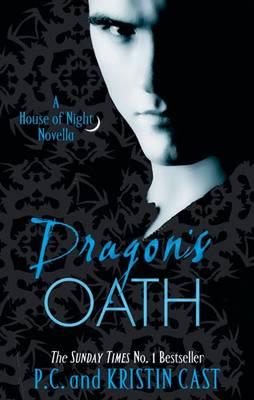
Dragon's Oath (House of Night #8.5) by P.C. Cast and Kristen Cast


There is something absolutely wonderful about a short story from the House of Night series – it doesn’t have enough room or enough people to be nearly as awful as the main series. Yes, this book hereby gets the prize for being the first House of Night book that I DON’T think will inspire an invading alien species to wipe us out because the universe needs to be spared our bullshit.

This makes the book good in comparison to the series – but not good.

As I say with every short story as part of a series, I look for a point. What does this story add to the larger story of the books? Why should readers read this book as part of a greater whole? Because the best short stories both add to the larger series, without being essential (so a reader can skip them without being lost in the main plot but still add interesting new elements to the main story).

And I can’t say I see a big point on this book. We get an insight into Dragon and Anastasia… but firstly both of these characters are dead. It’s not like they’re characters who are going to have continued affect on the book series. Secondly, they’re not exactly influential characters. I honesty would find it bemusing if any fan of the series (of course I find “fans” of this series bemusing in general) could genuinely say they were intrigued by these characters. I mean, beyond “she loved Dragon and she died” what pertinent information did we have about Anastasia? What was so intriguing or important about her that anyone really needed to read her story?

The same applies to Dragon – was there any reason to care about this character? Like Anastasia, he was a cardboard cut-out of a character – the guy who can use a sword. That was his pretty much only definition of him.

Thursday, February 4, 2016

Destined (House of Night #9) by P.C Cast and Kristin Cast


Life at school becomes more tense and Zoey and her friends insist on parading a murderer around the grieving loved one of his victims and Nyx insists on not intervening with the super evil Neferet still in control

With ties of family and honour, Dragon and Kalona face hard choices: while the new being Aurox must decide exactly what he is.


Time to open another bottle of the Good Booze because it’s another House of Night review (or, as I’ve come to think of it, my penance for the terrible evil I must have committed in a former life).

The first point that struck me about this book was that I realised why Zoey’s mother died last episode – because Jack and Anastasia died. These two deaths could never ever be about Zoey. Even after a series of making everything about Zoey, this was too much a stretch. So Zoey’s mother died – and the other deaths are pushed quickly into the background. Damian gets to be occasionally “soggy” but now all deaths are eclipsed because now we have Zoey pain to focus on

I have ranted about this in so many books but the redemption/forgiveness themes in this series are truly and utterly awful.

Take Dragon. Dragon’s wife of several centuries was murdered by Rephaim the bird boy who was magically redeemed last book. Dragon is incessantly shamed and demonised in this book because this terribad evil man will not forgive his wife’s murderer when said wife’s ashes are not even cold. The idea that Rephaim should stay away from school and give this poor man a little space so he wouldn’t have to see his wife’s murderer every day (it’s not like he’d lose out on an education – this school has a terrible curriculum and Rephaim himself is over a thousand years old so how much of a high school education does he need?) is considered outrageous. Rephaim’s desire to experience life as a “normal teenaged life” outweigh’s Dragon’s soul crushing grief

Wednesday, January 6, 2016

Awakened (House of Night #8) by P.C. Cast and Kristin Cast


Zoey is taking a holiday to avoids all the drama and sad things that have afflicted everyone (but which makes her super sad because she’s so special). The bad guys are not respecting her wish for a happy holiday so Zoey will eventually have to get back into the action

Meanwhile the redemption of Rephraim continues, because what’s a little murder when you’ve decided a guy is going to be your freaky birdy love interest?


Zoey spends a lot of this book hanging out on the Isle of Skye-author-isn’t-quite-sure-about-the-difference-between-Ireland-and-Scotland-but-likes-guys-in-kilts (Scotland doesn’t use Euros) deciding she wants to take a time out because it’s all so sad and hard and everyone else tries to think of ways to get her back into the action. Also I’ve been to the Isle of Skye – it’s not just a made up place but the author has just overlaid the whole island and made it vampire world.

Y’know I’d be sympathetic – but the shit she’s been through is not any deeper or smellier than what everyone else has been through (hey, remember Dragon mourning his wife of several centuries? Or Aphrodite changing species? Or Stevie-Rae and the Fledglings dying and coming back? Remember any of this?) and none of them had their soul shattered and then decided to take a prolonged island holiday. This follows book after book after book of everyone worshipping Zoey and centring her grief to the complete exclusion of everyone else’s. Stark’s death? All about Zoey. Stevie-Rae’s death? All about Zoey. Heath’s death? All about Zoey. Has anyone even told Heath’s parents yet? Anyone? Having an all-about-Zoey holiday so she can be all schmoopy with Stark the Redeemed Rapist and have a whole new set of vampires declare how super duper awesome she is just causes migraines.

And that’s ignoring the multiple prophecies all saying that if she doesn’t get her arse back into gear then the whole world is going to fall apart. No, screw prophecies, that is with her KNOWING Neferet is out there doing terribad awful things, but hey time out holiday time because precious Zoey!

Let’s hit another annoying element (and there are so many!): Rephaim’s redemption storyline – in fact, no, cut that. This isn’t a redemption storyline. Redemption storylines suggest some level of trying to make amends for the shit you’ve pulled. Redemption storylines mean actually working to earn forgiveness and being a better person. Wave the woo-woo of Nyxness and suddenly declaring yourself team good guy is not a redemption storyline.

Yet that’s basically what Rephaim does. As we all saw coming (with the inevitability of a train racing towards us while we’re tied to the tracks), Rephaim loves Stevie Rae (and she has a thing for bird guys) and that means all is good! Nyx even totally comes to seal the deal!

Wednesday, December 30, 2015

Burned (House of Night #7) by P.C. Cast and Kristin Cast


Zoey’s soul has been shattered but, sadly, because my suffering has not ended that means everyone is running around trying to save her.

Meanwhile Stevie Rae is determined to make even worse relationship decisions than Zoey. That sounds like a near impossible task, but she is up to the challenge.


This book is… so very typical of the House of Night series.

We have a plot line that completely rests on Zoey even though it really should be about someone else – Heath. Heath is the one who died – but no, it’s all about Zoey and her shattered soul. Y’know, I’d be a teeny tiny bit of sympathetic towards her if every last death in this series wasn’t all about her. Heath just follows Stark and Stevie Rae as yet another death that was all about precious precious Zoey.

So with Zoey properly centred as all important, nearly everyone else (except Stevie Rae, which we’ll come to) runs around trying to help her. This involves, inevitably, cryptic clues, poetry and everyone spending far far far far far too long trying to interpret everything because Nyx is incapable of being clear and the rest of the cast don’t have two brain cells between them.

Of course all of this happens with Neferet and Kalona planning terrbad naughty things and with Neferet manipulating the Council to try and make them believe she’s still on team good guy. And Nyx, while happy to send cryptic poetry, happy to send prophecies, happy to have little conversations with Aphrodite and Zoey and is even willing to slap Kalona upside the head in the Otherworld. But she STILL cannot bring herself to send her precious High Council a memo, or informative bowel problems or anything. Seriously, you’d think they’d be due a text or something. A tweet. Smoke signals, carrier pigeons (or raven monsters) something, anything. Nyx is trolling, pure and simple.

But while we’re discussing Kalona let’s touch on the intolerable retcon and redemption we can see hoving into view with inevitable awfulness: Kalona is going to be redeemed. I know this is coming because we spent time in this book AGAIN saying how sad and tortured poor Kalona is with an added side dish of how terribad evil Neferet is. Yes, she is definitely promoted to biggest of big bads and directly connected to the Darkness more than Kalona (more than that later) and is even imprisoning and forcing the poor tortured evil Kalona. I’ve said before, this series is much much more invested in having a female villain. The last two books have tried very hard to downplay Kalona’s villainy while bigging up Neferet’s awfulness.